• Skip to primary navigation
  • Skip to main content
  • Skip to primary sidebar
  • Skip to secondary sidebar

Plant Based U

Fat-Free and Low Fat Vegan Plant Based Recipes

  • Home
  • Recipes
    • Raw Vegan Recipes
    • Cooked Vegan Recipes
    • Eat to Live Dr. Fuhrman Recipes
  • Products
  • Coaching
  • Videos
  • Articles
  • About
    • What Is Low Fat Vegan/Whole Foods Plant Based
    • Resources
  • Contact

vegan

Fb-Button

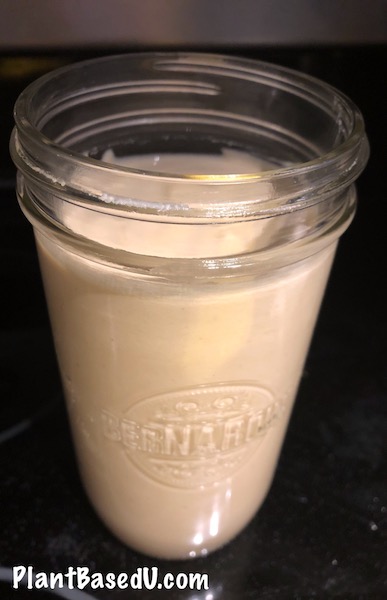
Oil Free Vegan White Bean and Cashew Mayo Recipe (Plant Based)

August 16, 2019 by Veronica Grace 6 Comments

Fb-Button

OilFreeVeganCashewWhiteBeanMayoPlantBased

Although egg free mayo is widely available in a lot of stores, it’s not really a recommended food for health because of how processed it is and that it’s based primarily on oil. So when you’re looking for a healthier version a homemade oil free plant based mayo can be really helpful for jazzing up sandwiches, wraps and other cold salad recipes.


I  especially recommend using this mayo for vegan friendly recipes like tofu “egg” salad, potato salad, or chickpea “tuna” salad. If you’re someone who makes a lot of wraps or sandwiches you might go through this quickly, but if not you can divide the recipe in half or even separate half and freeze it for later. I would use this plant based mayo within a week as it contains fresh ingredients and zero preservatives. What I did is use half of it to make tofu egg salad and the other half to make potato salad for lunches.

FTC Notice: This post includes affiliate links which go towards supporting the blog.
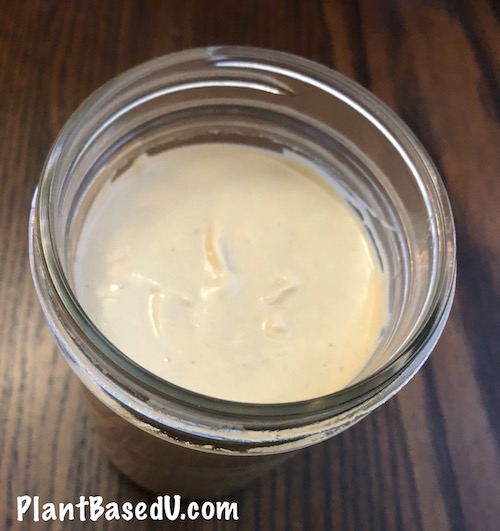
OilFreeVeganCashewWhiteBeanMayoPlantBased

Oil Free Vegan Cashew White Bean Mayo (Plant-Based)

Ingredients: 

½ cup cashews, raw and unsalted (If you don’t have a high powered blender soak them in hot water for 1/2 hour prior.)
1 15 oz/425 gram can of cooked white beans, OR 1.5 cups fresh cooked white beans, drained and rinsed (white kidney beans, cannellini, great northern etc.)
3 tbsp of dijon mustard (or mustard of choice)
2 tbsp fresh lemon juice (or substitute extra apple cider vinegar)
2 tbsp apple cider vinegar
2 cloves of garlic
1 tbsp nutritional yeast
1 tsp kala namak (black salt) or Herbamare or sea salt (If you’re not making egg or potato salad with this you can just use Herbamare or Salt if you don’t  want a sulphurous egg flavour)
1/4 tsp white or black pepper
*Water  to blend if using a low powered blender. Not necessary if using  a Vitamix or Blendtec


Directions:

  1. Place ingredients into Vitamix or blender or food processor  in the order above. (Skip the extra water if using a high powered blender.)
  2. A) Turn on your Vitamix and use the tamper to push  everything down into the blade and blend on medium high until you see a creamy consistency.
    B) If using a regular blender use just enough water as needed to blend and sttop and  scrape down the  sides with a spoon and continue blending until smooth.
  3. Once completely smooth, store in a glass jar in the fridge.

 Storage:

Use within preferably within 5 days, but may last up until 7 days if stored air tight. Put any extra in a freezer safe container before  it  spoils to freeze for later.


Variations:

For tofu “egg” salad and potato salad the kala namak (black salt) gives it that egg-like flavour. If you’re using it for chickpea “tuna” salad or other veggie sandwiches  and don’t want that egg-like flavour you can use regular sea salt or my favourite: Herbamare instead.

Try it with different types of mustard too if you prefer a sweeter or spicier one as well.

What is your favourite sandwich  or wrap to use with vegan mayo?


Filed Under: Cooked Vegan Recipes, Dressing, Sauces Tagged With: cashew, lemon, mayo, nutritional yeast, plant-based, vegan, white bean

Angry Objections and What Makes a Healthy Plant Based/Vegan Diet

October 6, 2016 by Veronica Grace

Fb-Button

Nographic

FTC Notice: This post contains affiliate links that go towards supporting the blog.

I thought I’d do an article about dealing with controversies you may experience and topics you may still be confused about when learning about a whole foods plant based diet. So I’d like to take the opportunity to share with you an overview to give you an understanding of why I promote what I do and why.

I know I can’t please everyone of course, but I do try to help the majority of people the best I can. Sometimes though I receive nasty comments, emails or Facebook messages though from upset, irate or crusading individuals who focus on the one “supposedly important” belief they hold that I don’t agree with. I wonder if these people actually realize how they come across and that I am a real person like them, and I am only trying to educate, focus and help as many people as possible eat as best they can.

The internet is not always a kind place, let me tell you and sometimes it’s even worse when you have an online business and public persona to attack. I will admit that it’s hard for me to not care what other people think and it does hurt my feelings to receive nasty or rude comments via email or another social outlet for my business. This is the nature of the internet these days, and many people hide behind their computers and criticize others more harshly than they would these same people in person. There isn’t really a solution to this, but I will just ask that you consider that everyone behind a computer is a real person and think twice before becoming one of these angry online posters. Beliefs and lifestyles make people very emotional and it’s quite easy to get up in arms about a difference of opinion and try to convince someone that they are 100% wrong and you are 100% right.

I don’t pretend to argue that I am 100% right about everything, but I do my research and do stay well informed. I trust the plant-based doctors I stand behind such as Dr. McDougall, Dr. Fuhrman, Dr. Esselstyn, Dr. Barnard, Dr. Ornish and Dr. Campbell, and I do agree with almost everything they promote. The differences between our beliefs is pretty small, and it can be because of my own experience or my physical or financial circumstances in some small cases. But I still trust their judgement and like to share their conclusions and research with my readers. I don’t just promote anything willy nilly and it can be frustrating when people get mad at me when my reasoning is substantiated.


The most frequent criticisms I get are actually about things that almost all of the aforementioned doctors agree with or support though (apart from 1 or 2 items and i’ll explain why) so it is sometimes disappointing hearing this negativity when I am supporting good information. Generally this criticism comes from people who still eat meat, believe carbs are bad and fats are good, are either for or against raw foods, are food snobs/food police, believe in moderation in everything (including bad things) or don’t know what my website is about.

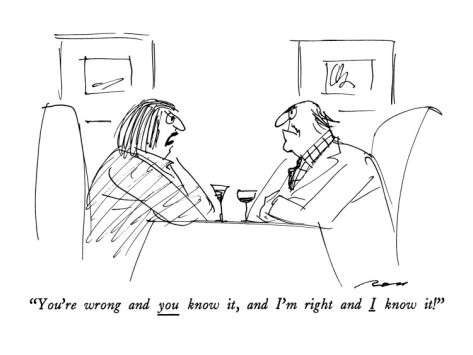
WrongCartoon

Some of these contentious topics for my readers are:

  • Me eating and promoting a vegan or plant based diet (avoiding all forms of animal products)
  • Me eating and making 100% oil-free cuisine and using whole plant fats in small quantities only
  • Me not eating 100% organic or gmo free (i.e. eating  regular produce and corn or using corn starch occasionally)
  • Me using canned goods occasionally in recipes
  • Me using glutinous items such as wheat in recipes
  • Me recommending certain vegan supplements
  • Me making cooked food recipes (not 100% raw) and having raw recipes and labelling them for the blog

So I wanted to bring this into perspective. All topics might not apply to many of you, but I think it’s helpful to discuss why I stand behind some of these beliefs and hey you will probably learn a few things too!

Vegangraphic

The Animal Food Controversy

Based on the amount of new traffic and subscribers I get, I believe that a big portion of my readers aren’t actually vegan or plant-based at all. Some of them might be striving to be as plant-based as they can and learn how to eat less meat and how to cook more veg and this is great. I’m not necessarily trying to force anyone to eat all vegan with my website, but I am trying to encourage them to not need to fall back on meat and dairy because of a lack of desire for plant foods. Some people feel the need to tell me that being vegan is dangerous or bad for health and I wonder why they feel the need to tell me this. There is more support now than there has ever been for a well balanced plant based diet. There is no reason to not be able to educate yourself on this issue with the amount of free information out there so please don’t fret that eating this way is dangerous or bad for your health. (Excluding serious allergies, which is a different matter and doesn’t apply to general public.)

My stance on animal foods: Eat as many plant based as you possibly can for YOUR HEALTH and the environment. Please don’t eat meat and animal products simply because you think you HAVE to or you’ll be deficient in something, or because you are afraid not eating like everyone else is too uncomfortable. Everyone has different dietary restrictions and philosophies these days. The chance that you are going to be the “only” weirdo eating different or plant based is smaller and smaller. If you are going to eat animal products – please please be choosy! Only eat them very occasionally, make sure they are high quality (not fast food) and pick something you enjoy. Don’t do it to make other people happy, fit in, or because you’re scared to not eat meat every meal or every day. You control your health, you control your choices. Please decide based on information, not out of fear. To eat or not eat animal products is 100% in your control.


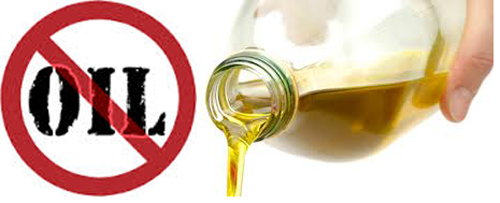
NoOil

The Oil and Fat Issue

Despite what you may have heard olive oil, butter, lard, coconut oil, flax oil and any other oil IS NOT health food. Let me be clear on this. Whole foods are healthy, refined foods should not be labeled as healthy. The companies that own these refined products spend millions every year convincing you why you NEED to buy their refined so called “health” food. White sugar, white flour and any kind of oil are not health foods. They contain 100% simple sugar or 100% fat. So if you already know sugar isn’t a health food, you shouldn’t believe oil is a health food. It has no fibre, no water, no vitamins or minerals and there is no reason to be adding MORE oil to our diets when every single packaged food and restaurant item is cooked or drizzled in oil. How could you possibly be oil deficient in this world? It doesn’t happen. We have a problem with too much omega 6 in our diet which comes from animal foods and vegetable oils. Coconut oil is a saturated fat, it doesn’t have omega 3, olive oil is a monounsaturated fat, it does not have much omega 3’s and a lot of omega 6’s. For the “healthy” omega 3’s (also known as polyunsaturated fats) we actually get all we need from whole fruits and vegetables (which do contain small amounts naturally), and it’s also found in higher quantities in chia, flax and English walnuts. Please see registered dietician and plant based enthusiast Jeff Novick’s video excerpt on youtube From Oil To Nuts (or you can get the whole Oil to Nuts lecture here) and his articles Myth of Moderation Part 1 to get more detailed information. If you have any confusion about which fats are actually good for you and the truth about olive oil and coconut oil please check out those resources.


My stance on fat: I’m not sure why some readers mistakenly believe I am somehow against fat in general. I am not against whole food fats, and I do not tell people they have to eat fat free, nor do I call myself a fat free chef. What I do though is only use whole forms of fat in small quantities and keep it to once a day only. For instance i’ll use a little nuts or nut butters in a salad, a little avocado or guacamole on a bean taco/burrito, or make a dressing with hemp seeds, tahini or chia seed. If I have fat in my dinner, I don’t have any extra fat in breakfast or lunch. Why? Because fat is the most concentrated form of calories next to white sugar and white flour, and oil is the highest calorie food by volume in the world. So a little actually equals a lot, and a sufficient amount. Also it helps to keep my fat intake low at home as sometimes eating out the restaurant food will be higher in fat anyways. We need to reduce the amount of meat, dairy, butter, margarine and oil we have in our diets. Use whole fat IN a recipe, and don’t cook in oil (a refined fat).

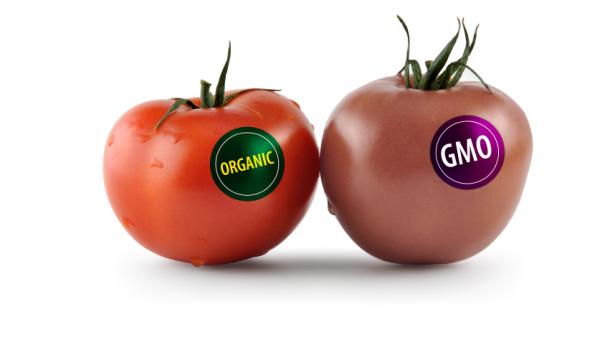
organic-gmo

Organic and GMO

I’ve noticed many people in Europe and California (where they can get lots of organic and non gmo foods) are very critical of others not eating 100% organic. Did you know that Dr. McDougall also lives in California and doesn’t insist that all of the food his clients and event attendees eat be 100% organic? Of course he and all of his colleagues are aware of organic and GMO’s, (they are doctors, researchers and scientists you know) and they promote whole foods plant based instead. Why? Because whole plant foods actually contain very little fat (fat cells store toxins) and pesticides aren’t found in as high amounts compared to conventional animal products. Even eating conventional and GMO plant based foods isn’t a big concern to the plant based doctors, as they haven’t seen any evidence of people getting sick eating this way. Some people are more sensitive to pesticides than others, but this is not the majority of people and not the most important issue for the general public.


My stance on organic and GMO: Like I said in my recent article, I don’t eat 100% organic. I can’t afford to for #1, and #2 where I live in Canada there isn’t the ability to get everything fresh and organic. Food is shipped in from the USA or other countries for the majority of the year. I personally have never had a problem eating conventional foods. I still wash and peel most things, but actually since becoming plant based I never get colds or illnesses anymore. I think cutting out meat, dairy and oil are the most important things to worry about. Eating lots of organic meat, butter, cheese and oil every day is not healthy just because it’s organic! Please put this in perspective. Eat as best you can afford. We don’t all have the luxury to spend thousands on food every month. I already spend almost $1000 a month on conventional food as it is for my recipes and testing! Do the best you can. 

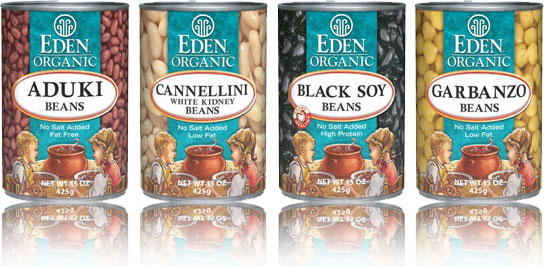
CannedEdenBeans

Canned Goods

Occasionally I used canned goods in my recipes, sometimes for my convenience sometimes to make recipes more accessible to others short on time. Some readers are very concerned about using canned goods and refrain from eating any at any cost and criticize me for being lazy or using “dead food” to make recipes with.

My stance on using canned goods in cooking

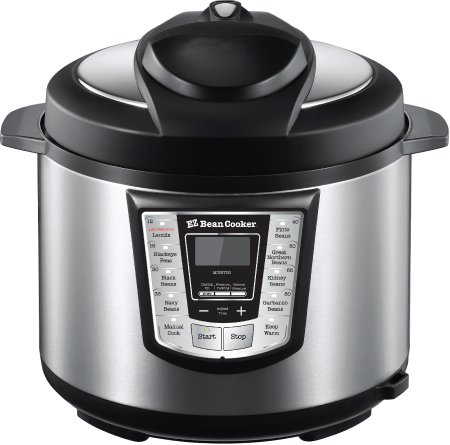
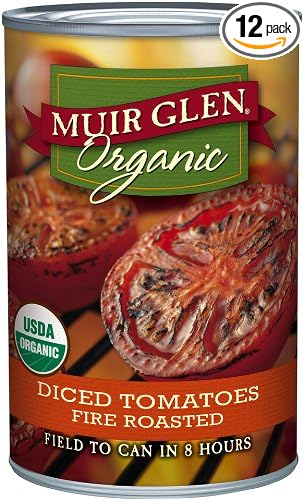
I certainly don’t turn to canned foods for the basis of every meal as I prefer to use fresh vegetables and beans when I can. I don’t like the taste of canned foods over fresh ones by any means, but I do use canned tomatoes as my most commonly used canned item. Next would be canned beans when I’ve run out of fresh cooked beans. Now I know all about BPA in canned goods and I am not recommending that anyone choose canned goods that contain a plastic BPA containing lining. (These linings are generally white). So I like to use items without BPA such as Muir Glen Organic Fire Roasted Tomatoes – my favorite for canned tomatoes and Eden Organic Beans – as they are oil and sodium free. But you can also find canned goods that are conventional without a BPA lining. Look for ones that say BPA free, or when you open them have a metal inner lining instead of white plastic. I don’t have a lot of awesome tomatoes year round being in Canada so I use canned tomatoes more often, but I look for ones that are BPA free and low or lower in sodium and that works for me. None of the plant based doctors are concerned about canned goods damaging your health, so this is up to you whether to include them or not. If you can grow your own fruits and vegetables and/or can them yourself, then great. If you want to cook your own beans from scratch I recommend the EZ Bean Cooker Do your best!


gluten

The Wheat and gluten (and carbs) being bad craze

Gluten free and low carb diets are all the rage right now, mostly promoted by paleo style eaters who try to convince everyone that wheat, gluten, grains and starchy carbs are generally bad for health and make you fat. They recommend of course that instead you eat loads and loads of meat, fat, oil, sometimes dairy (depending who the guru is), lots of green vegetables (cuz they’re “low carb”) and a scant amount of fruit (mostly berries as they believe sweet fruit which has carbs is bad). The unfortunate thing is that while it is certainly healthy to omit processed foods and get rid of all white flour and white sugar from your diet, you will not necessarily continue to thrive and lose weight eating a high fat diet. Many people feel ok initially and then feel burnt out and crave carbs like crazy over time. Omitting whole grains, and root vegetables simply because grains contain gluten and root veggies have starchy carbs makes it hard for many to feel satisfied leading them to eat more and more meat and fat. This can be bad for your heart and arteries, put you at risk for cancer and leave you feeling lethargic, headachy, cranky and make you want to binge on simple sugars and “cheat” on your diet.

My stance on wheat products, gluten and carbs

I don’t want anyone who is not diagnosed as having Celiac Disease being terrified of wheat and gluten containing products. If you do not feel seriously ill with cramping, bloating, vomiting/diarrhea within 20 minutes of eating wheat products you probably don’t need to get tested for Celiac Disease or a wheat allergy and be terrified that wheat and gluten is “making you fat”. Celiacs (many have Irish ancestry fyi) that feel bloated and fat have another issue, the allergic reaction to gluten is causing their abdomen to become distended and their intestines are inflamed and irritated. Depending on the severity of their allergy to gluten they can feel very ill for 24 hours to a few days which makes it difficult for them to go about daily life. If you are very sick all the time from eating a standard American diet then you will want to talk to your doctor and undergo some testing to find out what the problem could be. But Celiac Disease will only affect roughly 1 in 100 Caucasian people and it can be much much lower in other ethnic groups.

I have eaten gluten free and tried gluten free products for a while and actually feel much worse in the end eating them than whole grain products. Why is this? Because gluten free breads and snacks use refined rice flour, almond flour, coconut flour and other refined low in nutrient products and bind them together with A TON OF OIL to get it to stick. Without gluten (which is a sticky protein that makes dough elastic and stretch) a lot of oil and fat is needed to achieve edible baked goods. In fact gluten free products contain less nutrients (as they are not fortified) and MORE calories and MORE fat than whole grain wheat  bread or  baked goods. I also have friends with Celiac Disease who actually didn’t fare too well eating gluten free packaged products anyway and ended up giving up all processed food in order to feel better. Gluten free junk food like white bread, pizza, cakes, cookies etc. is STILL junk food. It’s not healthy just because it’s wheat and gluten free.


So if you are afraid carbs are “making you fat” switch refined carbs such as white sugar and flour containing products for whole food versions. You don’t have to eat bread, cake, cookies, pasta, pizza, tortillas etc. if you are trying to cut down on calories. Instead try steel cut oats instead of toast or cereal for breakfast, brown rice instead of pasta for a side dish, barley instead of pasta in soup, and use lettuce leaves for wraps or sandwiches instead. You can reduce the amount of refined carbs you eat and up the amount of whole grains, whole fruits and whole vegetables you eat and achieve weight loss without feeling hungry and “under carbed”. Whole foods that are high in water and fiber can fill you up and satisfy you without the need for refined sugar and refined flour.

dietary-supplements

To supplement or not to supplement

With Dr. T. Colin Campbell’s new book “Whole: Rethinking The Science of Nutrition” that came out this year, some readers have been upset by my mentioning or promoting vegan supplements. Dr. Campbell explains why he is against supplementation in his book and how to eat a plant based diet without the need for any.

My stance on supplements

I got some blood tests done in January to check for a number of things vegans/vegetarians should check on, and I was low in Vitamin D and a little low in calcium (which requires Vitamin D to absorb properly). My B12 was fine as were all my other markers, but I’m only 31 so I’m not at huge risk for deficiencies and have been eating plant based for 4 years now. Just to be safe (as I do travel a lot and don’t always eat enough leafy greens every single day) I use Dr. Furhman’s Gentle Care Formula supplement, Dr. Fuhrman’s DHA supplement and an extra vegan Vitamin D3 supplement. That’s my personal choice. I mention good supplements because I have so many new readers and subscribers who have illnesses and deficiencies and are not plant based or able to fully commit to eating plant based. That’s why I still point some people to Dr. Fuhrman’s supplements. If you are fully committed to a plant based diet and are eating a wide variety of quality produce each and every day, you probably don’t have to worry about anything other than Vitamin D and Vitamin B12 (and you can supplement if you find you are low on those in your yearly blood test). Also most supplements the general public are taking contain inappropriate amounts of Vitamin A, Vitamin E, iron, copper, beta carotene and folic acid which can be toxic in large doses. Dr. Furhman’s supplements do not contain those ingredients and contain appropriate and safe levels for all vitamins and minerals. If you are going to supplement PLEASE do not use standard mass produced brands such as Centrum or Centrum Silver and choose a supplement without Vitamin A, Vitamin E, iron, copper, beta carotene and folic acid as we get enough of that eat a plant based diet.

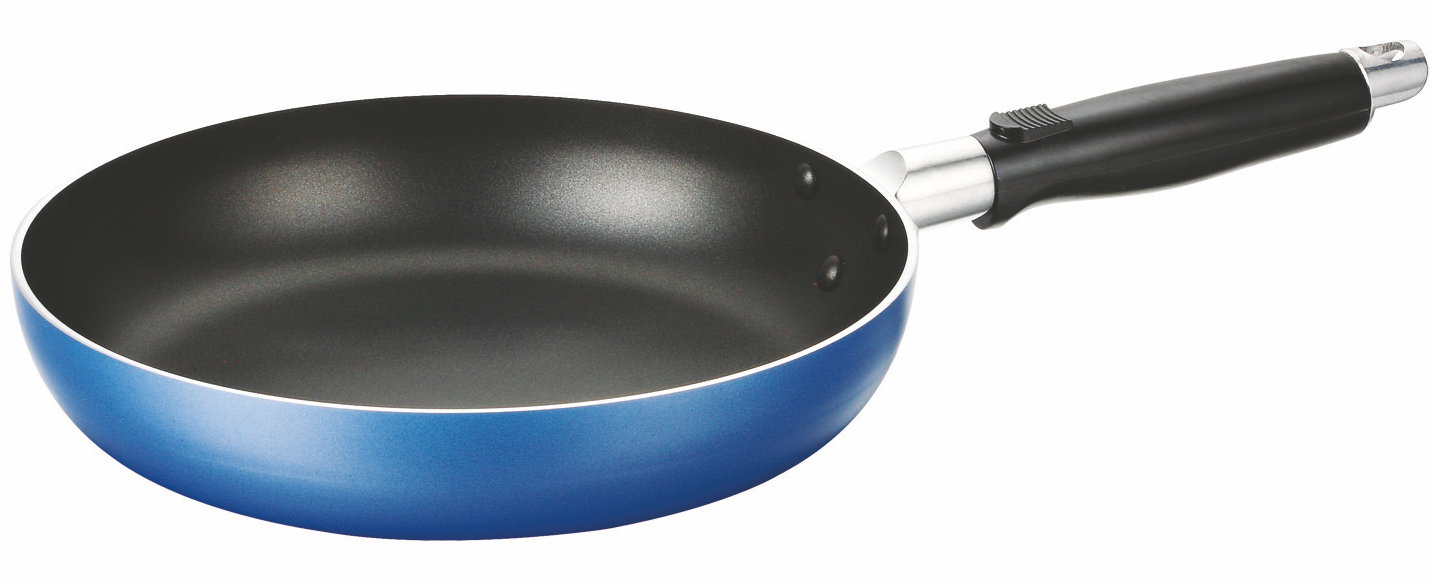
Non-stick vs alternative cookware (ceramic, stainless steel, copper etc.)

I’ve already written an article recently on non-stick cookware because so many of my readers were questioning my use of teflon pans. You can read it here.

My stance on non-stick cookware

It is far unhealthier to cook in cast iron, aluminum or stainless steel with Pam, oil, butter or lard than it is to cook in water in a non-stick teflon pan. Once you’ve used your pan once, and you cook on medium high heat you are at very little risk for any PFOA fumes forming and causing you harm. Bottom line – no one has gotten sick from using non-stick teflon pans and they are very safe nowadays. The only problem could be if you left it on high heat with nothing in it smoking for a while and you saw fumes forming. With proper use there is no need to worry!


Raw-Food-vs-Cooked-Food

Cooked food vs raw food

I have readers that are fans of either raw vegan food, cooked vegan food or both. I first started out by creating raw food recipes with my Savory Raw Dinner Recipes program for those wanting to eat 100% raw or mostly raw but still low fat and oil free. I had never had much cooked vegan food or even vegetarian ethnic food and have since taught myself how to cook homemade vegan dishes as well. Some readers are terrified/annoyed at my cooked food recipes and some others are afraid of some of my raw recipes on the blog because I labeled them “raw” and it sounds like a fad/cult diet.

My stance on cooked food

I really missed steamed broccoli and baked potatoes and baked yams eating a 100% raw food diet. I had also never eaten many beans or lentils and once I learned how to cook those I was really attracted to eating beans and rice or lentils with rice. They’re inexpensive, filling and easy to make and I enjoyed eating them more than raw food entrees that were mostly nuts with raw zucchini, carrots and cucumbers as the only veggies.

I don’t believe cooked food is poison and do enjoy a lot of veggies plainly steamed or baked. All of the plant based doctors recommend steaming, boiling and baking for healthy cooking methods so I don’t find there is anything to worry about. However I still enjoy eating some of my produce uncooked, such as fresh fruit, green salads and green smoothies. I don’t usually eat cooked meals 3 times a day, one to one and a half meals are usually raw with fresh produce.

My stance on raw food

Some people can be successful eating a high raw or 100% raw diet. For me, it limits the amount of recipes I can create and makes it difficult to feed my family without serious complaints of eating room temperature or cold food day after day. My family was not very happy eating raw food when they saw me, but were more accepting of eating cooked vegan dishes. Omitting meat seemed to be easier for them once I had cooked vegan dishes with lentils, beans or tofu.


I still love eating fresh produce and all of my green salads are raw. I make my own raw dressings from fresh fruit, fruit juice, nuts or nut butters and a little vinegar and spices. I only label recipes as raw on the blog not to scare people away, but just so search engines can direct people looking for specifically raw recipes to my website. I still enjoy making recipes for everyone and keep them oil free and low fat with a wide variety of fresh raw and cooked plant foods. So please don’t let labels or crazy trendy restaurants scare you away. I make delicious normal food for every day people!

In Summary, the most important things to remember for healthy eating are:


  • Eat plant based or as close to plant based as you can. Don’t eat animal products because you feel you have to to please others or fit in.
  • Eat whole foods for the majority of your meals – even if you can’t afford 100% organic or GMO free. Canned foods are ok, just look for BPA free cans.
  • Don’t use oil because you think it’s healthy for you, or you “need it”. Get the facts.
  • Don’t fall for the gluten free/low carb fad. It’s promoted by people wanting you to eat loads of meat, fat and oil (and they sell oils and supplements too) Eat whole grains, not refined sugar and flour to feel great and lose weight.
  • Cook oil-free – even if it means using non-stick cookware. Which is actually not dangerous like you may have previously thought. There’s actually hundreds of times more PFOA fumes released in the liner of microwaveable popcorn bags than from even new non-stick cookware, and there’s almost zero produced with well used cookware.
  • You don’t have to supplement if you eat 100% whole foods and plant based, but if you aren’t you can consider supplementing with a quality supplement.
  • Eat a variety of fresh and cooked fruits and vegetables. Mix it up and eat the foods you like!

So I think I’ve covered everything and there’s no need for anyone to reprimand me for being uneducated in any of these issues and freak out. 🙂 Thank you for reading, and let me know what you think in your comments below and as always let’s be kind and respectful to each other.


Filed Under: Articles Tagged With: animal products, are canned goods toxic, are non stick pans safe, controversy, cooked food, low carb, oil-free, organic vs gmo, paleo, plant-based, raw food, should i eat gluten free, vegan, vegan supplements, which oil is healthy

Raw Vegan Plant-Based Mexican Cilantro Corn Chowder

May 22, 2015 by Veronica Grace

Fb-Button


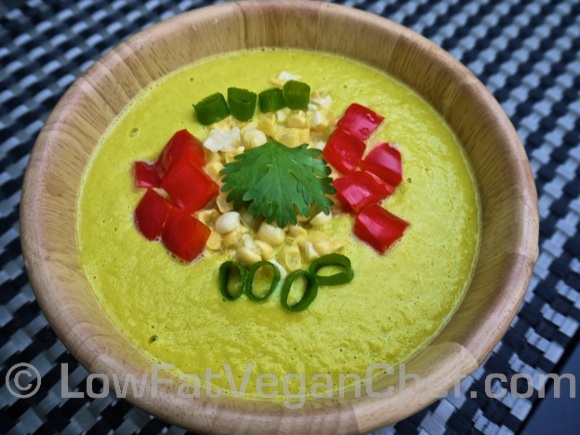
Raw Vegan Mexican Cilantro Corn Chowder

This recipe is featured in my 2 part Savory Raw Dinner Recipes DVD set.  It is super easy and very delicious!

When I was thinking up raw soups to make, that would look great and I would enjoy eating, I got the idea of packing in more and more veg into it instead of having it be all heavy from nuts or lots of avocado. The solution was to add some fresh yellow bell pepper, for flavour, bulk, and colour. It really adds to this simple combination of corn and avocado and took it to a whole new level.


Whenever I show people pictures of this soup, they can’t believe it’s raw and think it looks so great. Well it tastes even better too. You can also get very creative with the garnishing.  I went for a very simple look to display the solid soup ingredients and garnishes. Of course if you make the recipe you can add as much as you like. You can also make this a little spicier by adding more chili powder.

The beauty of raw soups, is that they are quite fast to make (aside from cutting fresh corn off a cobb, you can use frozen if you must) and you can blend them until they are the temperature you want in the Vitamix. So they can be room temperature, warm or quite warm. Just blend for 30-60 seconds for room temperature 1-2 minutes for warm, and then once you get past 2 minutes you are essentially really heating the soup and can cook it a little.  So keep this in mind, depending whether you want a room temperature raw soup, or a transitional warm “raw” soup.

This plant-based corn chowder will please even the most skeptical people of raw vegan soups. Just blend it a little longer so it’s warm and not cold if you’re using corn and bell peppers straight from the fridge.

Please let me know what you think! I love your feedback. For more delicious recipes check out my Savory Raw Dinner Recipes 

Creamy Raw Mexican Cilantro Corn Soup

Ingredients:

3 cobs of corn
2 yellow peppers, cut into chunks
1 small onion, cut into chunks
2-3 cloves of garlic, diced
1 small avocado or 1/2 large
1/2 cup cilantro diced
2 1/2 tsp cumin
1/2 tsp herbamere/salt
1 1/2 large limes juiced
1/2 red pepper, diced
diced chili peppers or chili pepper powder to garnish
green onions to garnish
Directions:

1. Cut the corn off the cob. (Make sure you have a sharp knife, a bowl or plate to catch the corn, and a towel. It’s messy!)

2. Put half of the corn, both yellow peppers, avocado, onion, garlic, half of the cilantro, cumin, lime and salt into the Vitamix or food processor.

3. Use the Vitamix tamper to push ingredients down into blade and blend until creamy. (If you don’t have a Vitamix and need to add a little water to make it blend, do so)

4. Pour into 2 bowls. Add remaining corn, and red peppers. If you like it spicy add diced chilli peppers.

5. Garnish with cilantro, red pepper, green onions and a sprinkle of chili pepper powder.

Serve!

How did you like this soup? Did you know you can use the base of this as a raw salad dressing too?
Filed Under: Raw Entrees, Raw Soups, Raw Vegan Recipes Tagged With: cilantro, corn, raw vegan, soup, vegan

How To Make Thanksgiving Vegan or Plant Based and Still Enjoy It

November 6, 2014 by Veronica Grace Leave a Comment

Fb-Button


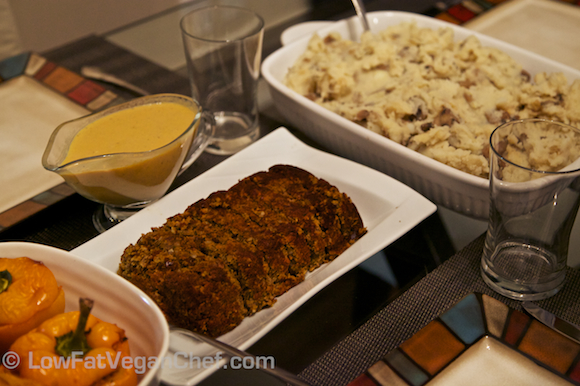
Low Fat Vegan Chef's Thanksgiving


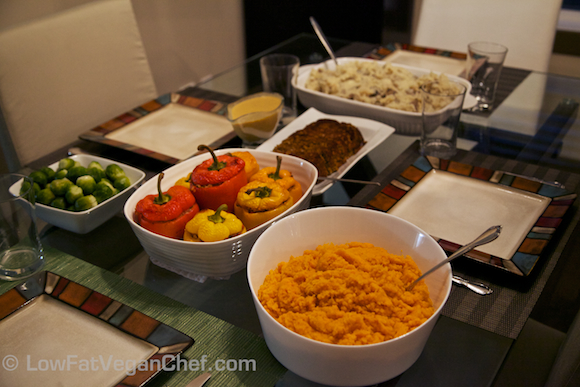
Our Thanksgiving is already long gone in Canada, but I saved this post for my American readers as many of you have a hard time deciding on what to make and spend a lot of time worrying if your guests or family can survive a meal without turkey or ham on a big holiday. Lol. Well never fear I can help give you some ideas for  filling out your plant based Thanksgiving menu with ease.


Low Fat Vegan Chef's Thanksgiving


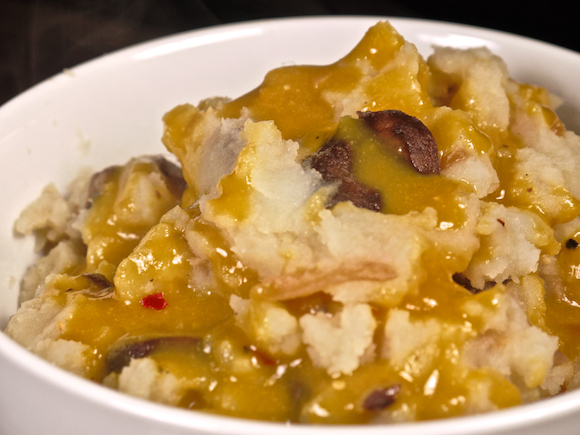
I make everything from scratch and find that whipping up mashed potatoes and mashed yams/sweet potatoes an absolute BREEZE in my pressure cooker. I actually have 2 now, one is an EZ Bean Cooker pressure cooker that I can set manually for cooking anything else other than beans as well, so I fill one with potatoes, one with yams and then I don’t have to sacrifice stove top space and watch the pot. This is a huge time saver and I use my pressure cooker every holiday to makes my potato recipes.


Low Fat Vegan Chef's Thanksgiving


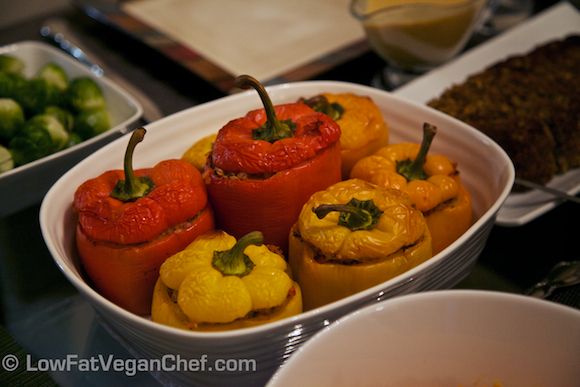
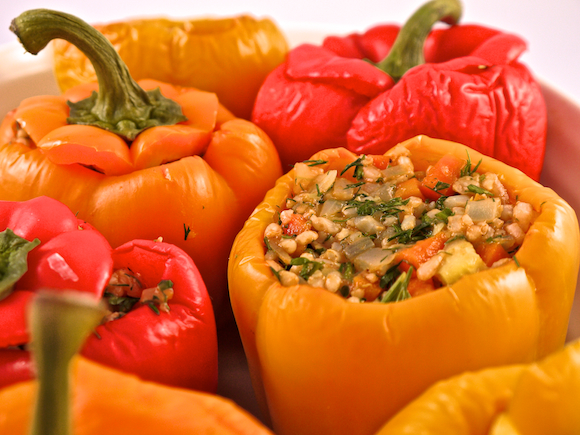
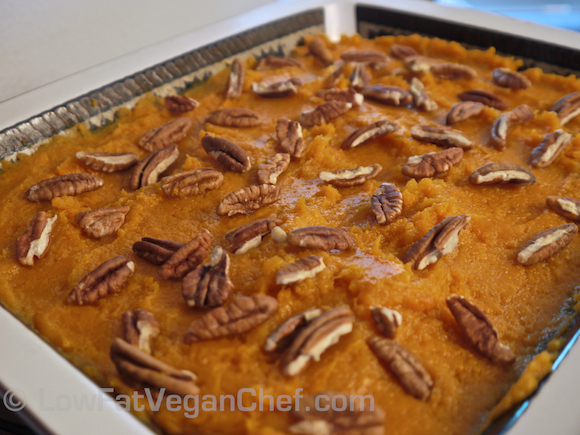
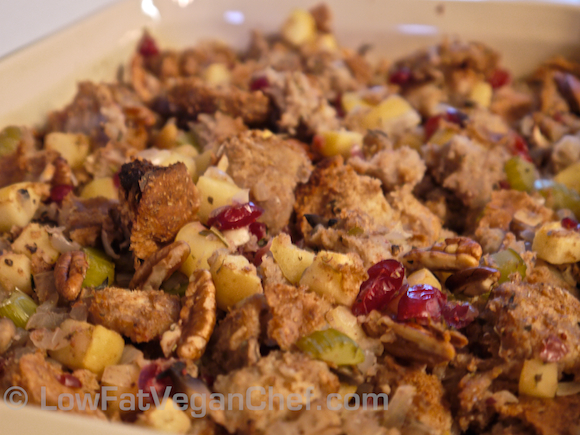
A few things I’ll mention, I actually forgot about making stuffing this year as I focus more on making my lentil loaf recipe, stuffed peppers and mashed potatoes. No one seemed to mind though and having an alternative side of Greek Stuffed Peppers was actually a healthier option than traditional stuffing.   The other thing is that I ran out of pecans and didn’t have any for my mashed yams but they were still delicious none-the-less. I also just realized that this Thanksgiving dinner was essentially gluten-free as well so everyone with dietary restrictions can enjoy it! And best of all we had so much leftovers for the rest of the week it was SO nice not having to cook each day. (As my lentil loaf recipe makes 2 loaves and I made a double batch of gravy!)


Here are my favorite veganized Thanksgiving dishes to share with you since many of you will be dining plant based or trying to dine mostly plant based this year and still feeding some carnivores too! All of these recipes have been tested on my family and their non vegan friends, so I assure you they are crowd pleasers. 🙂


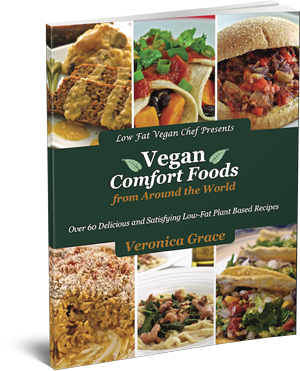
Some of these recipes are featured in my blog, and some are in my recipe cookbook Vegan Comfort Foods From Around The World has loads more delicious and hearty entree recipes for every occasion.

Vegan Thanksgiving Menu Ideas

Raw Vegan Salads:

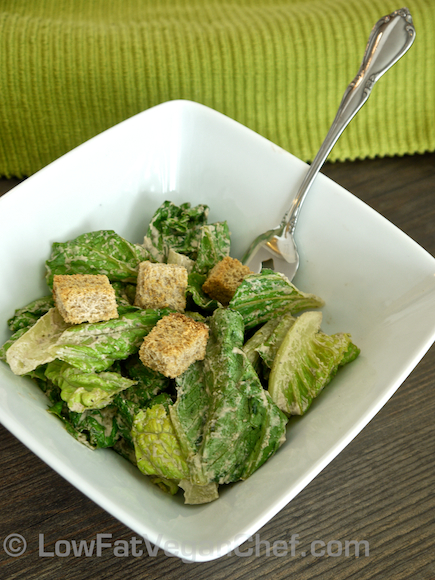
Raw vegan Caesar Salad

The Best Caesar Salad


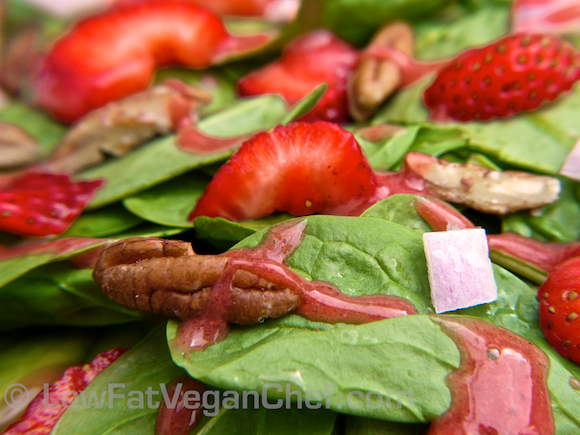
Low Fat Raw Vegan Chef's Strawberry Pecan Spinach Salad

Strawberry Pecan Spinach Salad

Vegan Thanksgiving Entrees:

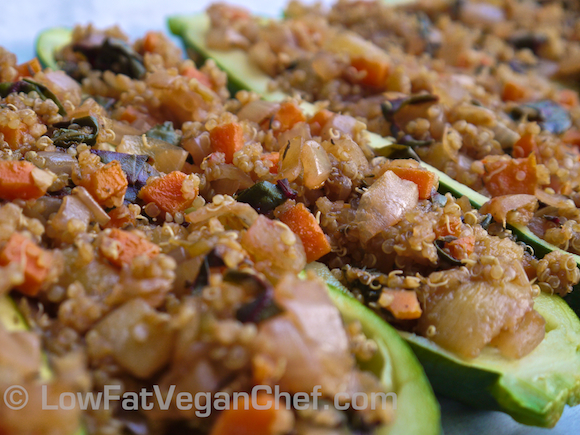
Quinoa Stuffed Zucchini Boats


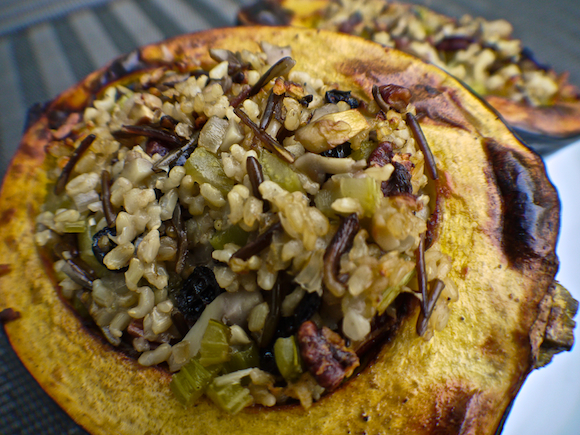
Holiday Stuffed Acorn Squash

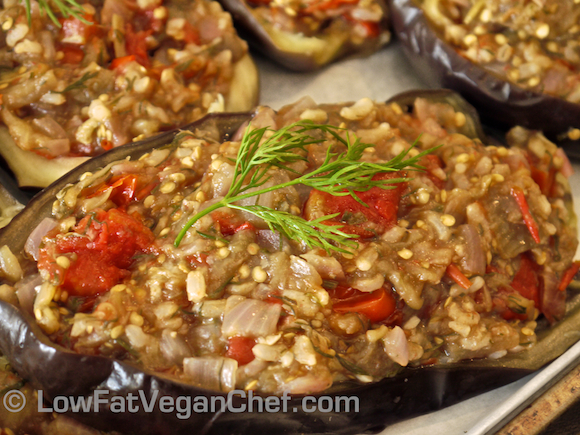
Greek Stuffed Eggplant

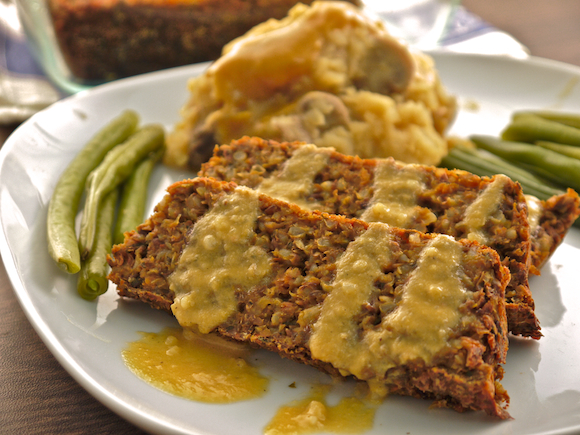
Herbed Lentil Loaf with Miso Gravy

Greek Stuffed Peppers


Vegan Side Dishes:

Holiday Baked Maple Yam Pecan Casserole

Cranberry Apple Pecan Holiday Stuffing

Garlic Mashed Potatoes with Brown Gravy

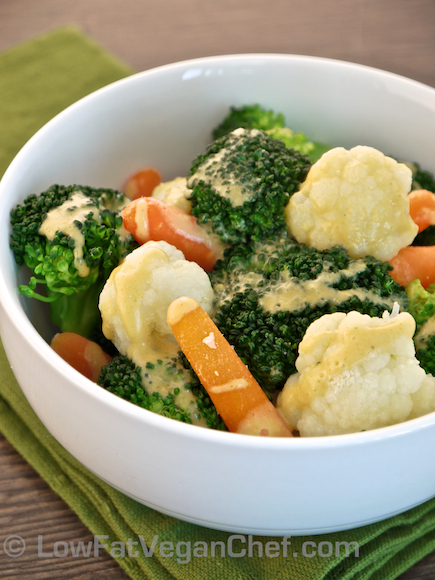
Steamed Vegetables In Cheezy Sauce

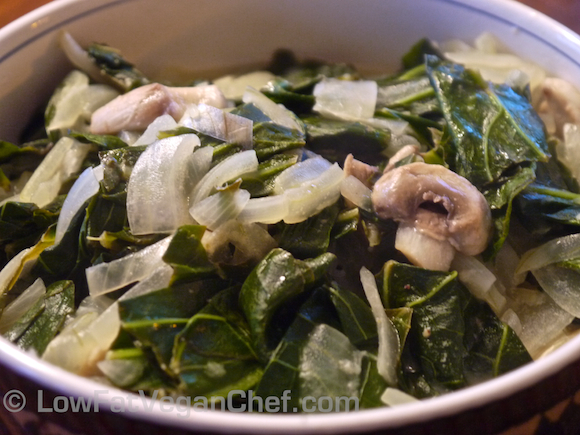
Tangy Collard Greens in Coconut Milk


Vegan Decadent Desserts (These are not low fat):

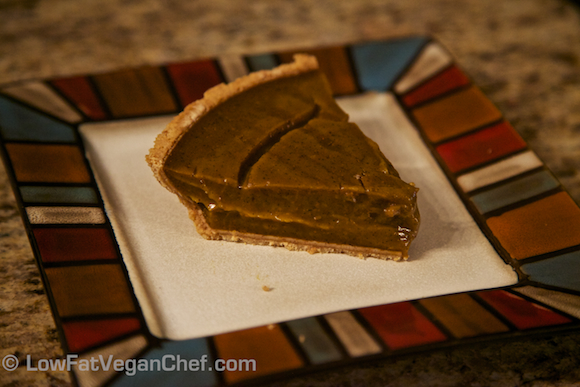
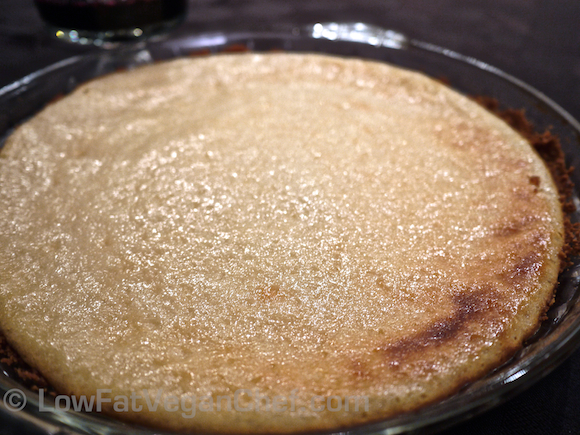
Low Fat Vegan Chef's Thanksgiving Pumpkin Pie


Vegan Pumpkin Pie

(mine was based on this recipe here, I skipped the oil and t I put it in a pre made graham cracker crumb to save on time and added more spices to my tastes)


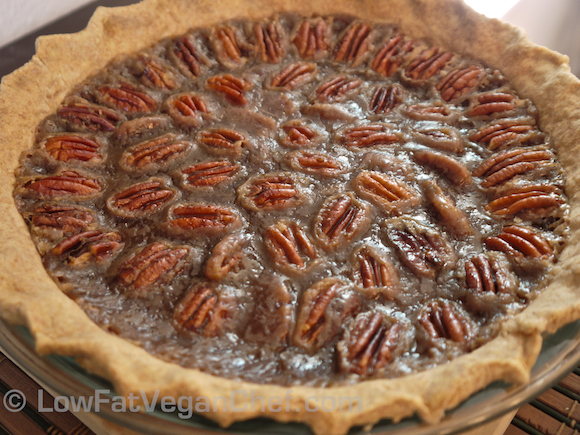
Holiday Vegan Pecan Pie

Vegan Cheesecake with Blueberry Compote


Vegan Lower Fat Desserts: 

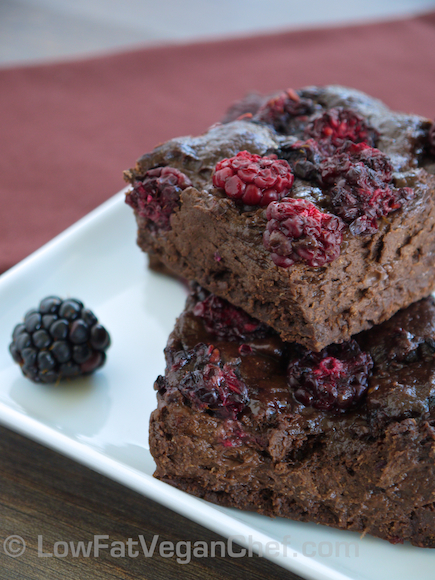
Fudgey Black Berry Brownies

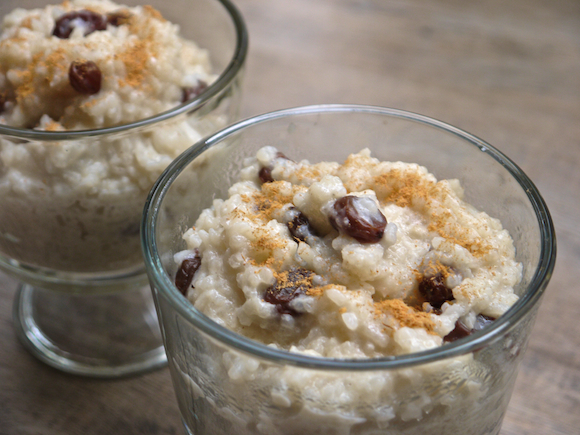
Vegan Rice Pudding

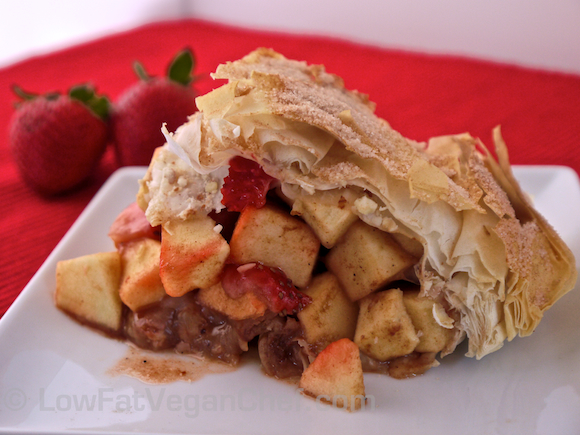
Apple Strawberry Strudel Pie

There are lots of delicious and healthy recipes to choose from. I hope that I included some of your favourites or gave you some inspiration to try something new. 🙂
So if these goodies entice you be sure to check out my book  Vegan Comfort Foods From Around The World and grab it before Thanksgiving is here! (Available in digital and physical format.)
What are you looking forward to having for Thanksgiving this year?

Filed Under: Dinner, Holiday, How To Tagged With: fat-free, gluten-free, greek stuffed peppers, low-fat, mashed potatoes, sweet potatoes, Thanksgiving, vegan, yams

Plant Based U’s Favorites for 2014 By Veronica Grace

October 21, 2014 by Veronica Grace 3 Comments

Fb-Button


Low Fat Vegan Chef’s Favorites for 2014


Here I will share some of my well known and new favorites that I want to rave about. Do any of my favorites make your list this year?

Favorite Kitchen Appliance:

EZ Bean Cooker (Great for ALL pressure cooker style recipes and not just beans) See my video demonstration here I use my pressure cooker a lot, I even have two! Mashed potatoes, mashed yams, vegetable broth, beans, lentils, and soups can all be made very easily in this digital and safe to use pressure cooker. Simply add your dry ingredients, add sufficient water and spices, turn the lid to the locked position and use the auto program for beans, or manual timer for other recipes and voila! Cooking is a breeze.

Favorite Kitchen Gadgets:


Benriner Mandolin Slicer Mandolins are great to use when you don’t have a food processor or a gourmet knife and want to make quick slaws, salads, potato chips and more!

OR get even fancier and make shoestring potatoes, zucchini noodles, or carrot and beet curls with the Benriner Turning Slicer I love making vegetable curls to add to salads and tacos. Everyone loves how pretty they look and and are always impressed.

Favorite Seasoning:


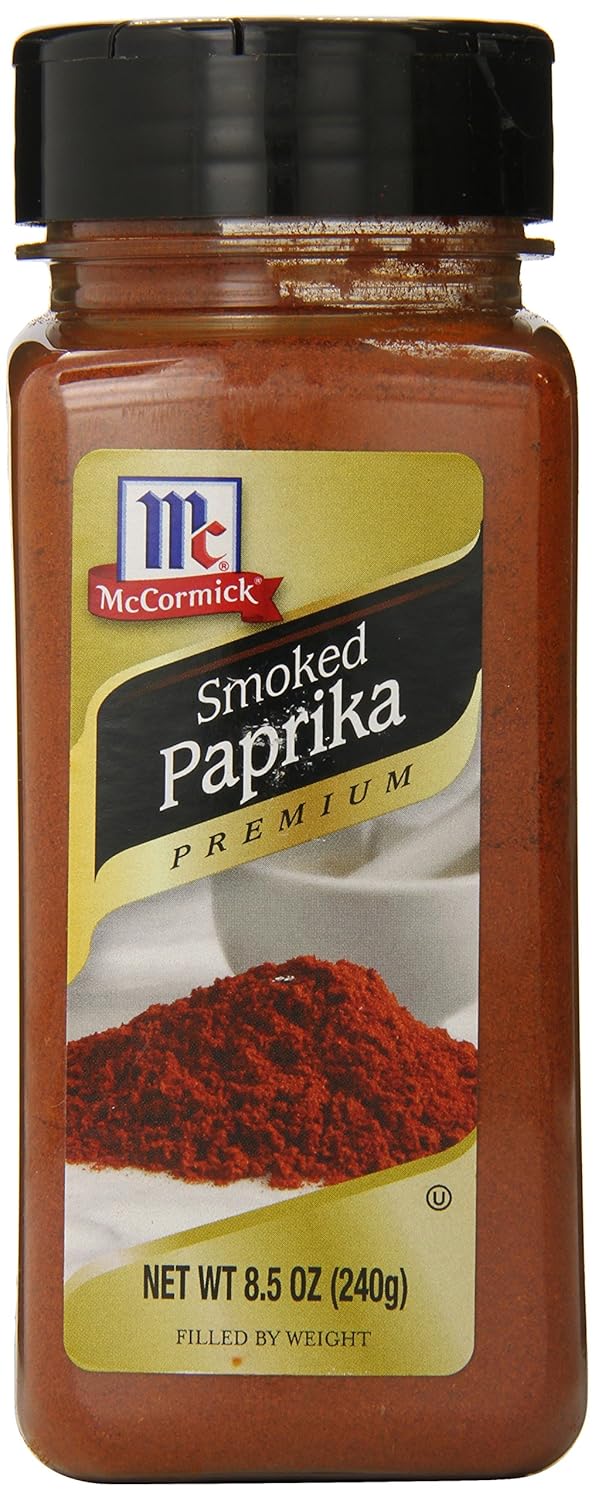
McCormick Smoked Paprika I use smoked paprika in all my Mexican, Tex-Mex, Indian and even some Italian dishes for a more interesting flavor. If you’ve never had it before, you have to try it. I do not like regular paprika at all, but I love the sweet smokey flavor of smoked paprika and find it livens up all my favourite recipes.

Favorite Recipe Ingredient:

Muir Glen Fire Roasted Tomatoes make every other canned tomato jealous, and for good reason. These slightly sweet smokey tomatoes are a great base for pasta sauces, curries, soups, stews and chillis. I always buy them in bulk to make sure I have them on hand and find every recipe tastes better when I use these over plain tomatoes.

Favorite Organic Skincare Line:

My friend Annmarie Gianni makes these delicious and almost entirely edible skin care products that are organic and wild crafted. No harmful chemicals, parabens, sulfates or harsh cleansers here just delicious smelling skin rejuvenating cleansers and creams. Available in normal, dry and anti aging formulas for all ages. Get a sample kit of YOUR choice for only $10 including free worldwide shipping!

Favorite Supplement Brand:

Dr. Fuhrman’s Supplements are premium, whole food formulations that are not only safe, but highly effective as well. Many traditional store bought supplements contain too much folic acid, Vitamin A, Vitamin E, Selenium, Iron and Copper. Dr. Fuhrman’s formulations are non-GMO and contain only the safest amounts of the recommended daily intake of vitamins and minerals with some having the added benefit of Vitamin D3 which many vegans lack.

Favorite Blog Recipe:

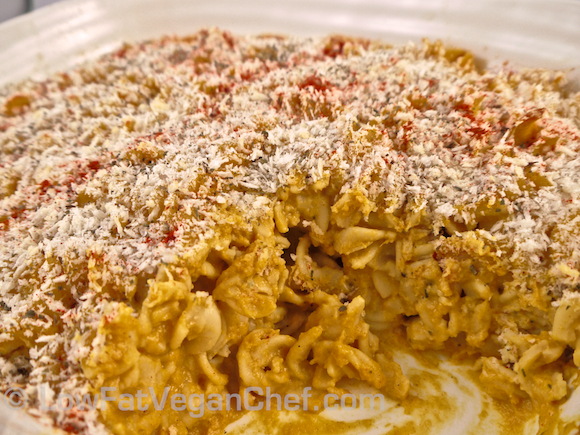
Baked Butternut Squash Mac and Cheezy is probably my top blog recipe because cheese lovers and vegans alike can rejoice in this healthier whole food version of their old favorite. I’ve made this recipe so many times I can’t even count, and it’s one of my family’s favorites too. (Psst. It also uses smoked paprika hint hint!)

Favorite Current Plant Based Recipe Book:

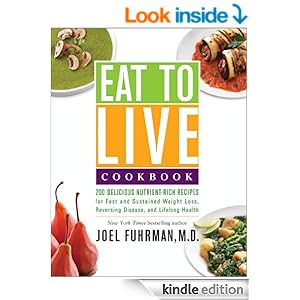
Eat To Live Cookbook  by Dr. Fuhrman  This book contains over 200 easy to follow recipes, goes over the basics of what not to eat and what to eat more of, and introduces you into the world of making your own dressings and sauces. I find this approach very appealing because it is how I learned to season and taste test recipes and adjust them to my liking. I was doing this before I even knew about Dr. Furhman so I find this wonderful that we both like to cook the same way and build recipes to taste from fresh ingredients.

Favorite NEW Plant Based Book:

Whole: Rethinking the Science of Nutrition by Dr. T. Colin Campbell (also the author of the world-famous China Study) is a great read for those who are often confused if their current diet really is enough to live a long healthy life. If you want to know more about why a whole food plant based diet isn’t the norm and how to stand up to naysayers then this book is for you.

Favorite Plant Based Blog:


FatFreeVegan.com is one of the original oil free plant based blogs and is probably already on your list of go to recipes and food porn. But just incase it isn’t on your radar yet, please check it out. I had the pleasure of meeting Susan in person at a Vida Vegan Con event and it was nice to spend sometime with a link minded lady in a world of tempting high fat vegan treats. 🙂

Favorite Other Blog Recipe:

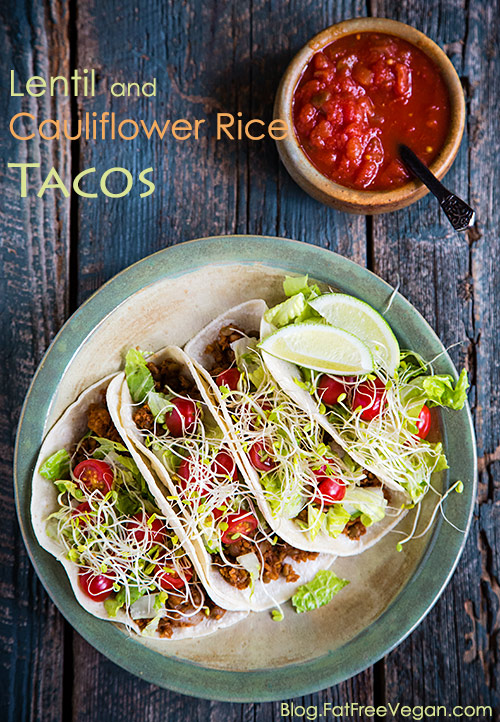
Lentil and Cauliflower Rice Tacos by Susan Voisin You have to check this out, she is a master at making cauliflower taste delicious and your taste buds will be dancing with this recipe!

Favorite Vegetarian Restaurant in Canada:

Nourish Bistro is hands down my favourite vegetarian restaurant because it is so incredibly unique in flavor. Everything they make is handmade, often local and very seasonal but that’s not even a primary reason for me to love it. They use whole foods such as fruit, nuts, seeds and sprouts to flavor and garnish all of their unique dishes so it’s not like anything you’ve ever had before. They have strawberries and beans on their nachos and burritos and ground cherries and sprouts on their curries. Everything is beautiful and they’ve been slowly growing a following over the past decade, they are even now the #1 tourist restaurant in Banff. If you ever get the chance, please go and let the owners know Veronica sent you. 🙂 (I’ve also been bugging them to put together a recipe book for years as well!)

Favorite Vegetarian Restaurant in the USA:

Natural Selection in Portland is my favourite US based restaurant because it’s the kind of cuisine that I would never make myself at home and is a luxurious treat once in a while. The menu changes weekly and the head chef Aaron Woo truly cares about his craft. Although not totally vegan, they always have vegan and gluten free options.  My next runner up is Millennium in San Francisco where you can get a truly fine dining experience all meat free and feel like a celebrity.

Favorite Vegan Friendly Travel Destination:

Chiang Mai, Thailand has a large Buddhist, Expat and University population for this moderately sized city. It’s very easy to eat fresh fruit and vegetable dishes at the street markets on the go and some of my favorite snacks were: fresh pineapple slices, peeled pink pommelo (sweeter than grapefruit), jackfruit, durian and Thai coconuts. There’s also an abundance of vegetarian (mostly vegan) restaurants around the city as well as numerous places to take Thai vegetarian cooking classes. There’s also an annual 9 day vegetarian festival every October which means many local vendors make all their food vegetarian and skip the meat as well. I highly recommend putting Chiang Mai on your bucket list of vegetarian travel adventures!

What are your favorite dishes, ingredients, gadgets, restaurants and travel destinations?

Filed Under: Articles Tagged With: guide, vegan, vegetarian

Reader Recipe: Plant-Based “Cream” of Celery Soup (Vegan)

February 3, 2014 by Veronica Grace 11 Comments

Fb-Button


celery

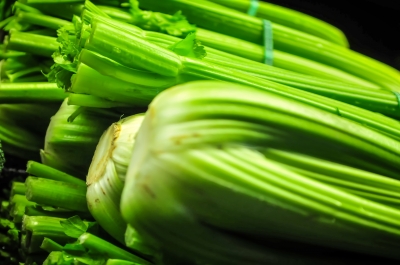
Photo credit: digidreamgrafix FreeDigitalPhotos.net

I received a wonderful recipe last week from a fellow reader named Elke White who was so kind to share this with all of us. What’s great about this cream of celery soup recipe is that it is exactly like I would have designed myself! Simple, oil free, low in fat and using fresh ingredients. Making soups this way are super easy and a great way to use up extra veggies in the fridge, or just an inexpensive meal with leftovers you can save for later in the week.


The key to a low fat vegan creamy soup recipe is actually potatoes, they’re fat free and add some heartiness and creaminess to the soup without any need for oil or cream. If you desire a little more of a creamy texture you can use a few tablespoons of almond milk if you desire, but I think this soup is delicious as is.

Feel free to also use this recipe as a template for any cream of vegetable soup recipe, you can try different root vegetables and create all sorts of combinations!

Plant Based “Cream” of Celery Soup (Vegan)

by Elke White (a fellow reader of PlantBasedU)

Ingredients:

2 packs of celery (1 1/2 – 2 pounds)
3 large potatos, cooked and cubed
6 cups homemade vegetable broth or 4 cups Imagine No-Chicken broth and 2 cups water (do not use tomato based vegetable broth)
1 large onion, diced
1/2 tsp salt (or to taste)
1/4 teaspoon black pepper
1/4 tsp nutmeg
1 tsp dried thyme or 1 TBSP fresh
2 TBSP fresh parsley

Directions:

1. Peel the strings from the outer layer of celery ribs and discard. Dice remaining celery and set aside.
2. Sauté onions in water on high heat until clear, lower the heat and add salt, pepper, nutmeg, and thyme (add a little more water if needed, to keep spices from burning or sticking).
3. Add vegetable broth and celery, bring to boil, then add parsley and simmer (covered) for 30 minutes.
4. Add potatos and simmer for an additional 10-20 minutes or until all vegetables are soft enough to blend.
5. Use stick blender and blend until soup is creamy, or place a small amount at a time in a traditional blender and puree until smooth.

Variations:

You may also want to try adding 3 large diced carrots, or 2-3 leeks instead of the onion to switch up the flavours in this soup. 🙂

What’s your favorite cream of vegetable soup recipe? Have you ever made a vegan version before? 

Filed Under: Cooked Vegan Recipes, McDougall Program, One Pot Meals, Soups and Stews Tagged With: celery, fat-free, gluten-free, nut-free, plant-based, potato, soup, soy-free, vegan

Meatless Monday: Plant-Based Slow Cooker Sloppy Joes (Vegan Recipe)

November 10, 2013 by Veronica Grace

Fb-Button


Low Fat Vegan Chef's Meatless Slow Cooker Sloppy Joes (1)

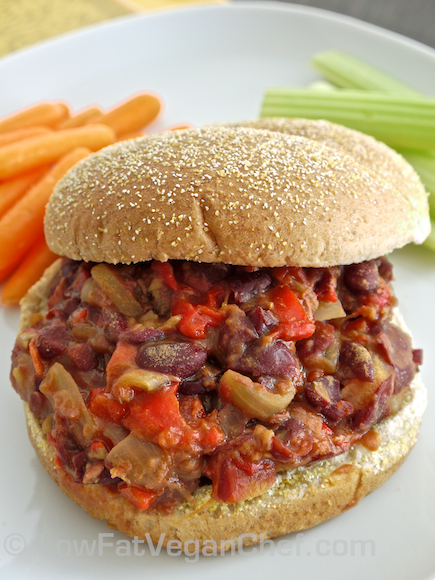
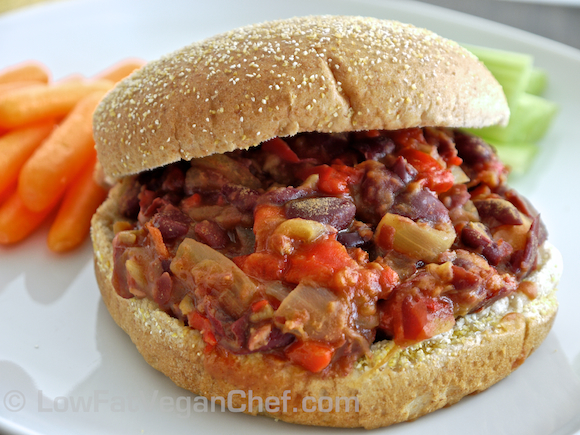
It is snowing like crazy where I am right now and I am making good use of my slow cooker these days. Sometimes it’s just too chilly to spend much time in the kitchen, so I like to chop up some veggies and throw some beans into the slow cooker for an easy meal. These meatless sloppy joes are a super easy recipe that I guarantee ANYONE can make… if you have a knife and a slow cooker (or alternatively a pot and a stove) you can make this recipe. Promise.

For more plant based slow cooker recipes I just throw things in with some herbs and spices and then adjust the seasonings at the end, but if you’re new to using the slow cooker for plant based recipes I know you’ll appreciate actual measurements! So that’s why I’m happy to help and share this recipe which is featured in my cookbook Vegan Comfort Foods From Around The World.


You can also serve this plant based sloppy joe recipe on rice or quinoa as well and eat it more like a chili too! Just tweak the spices to your liking and you can use this as a guideline for many different variations. 🙂

Low Fat Vegan Chef's Meatless Slow Cooker Sloppy Joes (2)

Vegan Slow Cooker Sloppy Joes

Serves 8

Ingredients:

2 15 oz. / 425 g. cans no-salt red kidney beans (or 4 cups fresh cooked)
2 large onions, sliced and chopped
2 large red bell peppers, sliced and chopped
1 14.5 oz. / 411 g. can fire roasted, crushed tomatoes or tomato sauce
8 cloves of garlic, minced
¼ cup / 60 ml. organic ketchup (low sodium)
1 Tbsp. Dijon mustard
½ Tbsp. blackstrap molasses
1 tsp. chipotle or chili powder
½ tsp. roasted cumin
½ tsp. smoked paprika
8 hamburger buns or rolls (Gluten free if desired)

Slow Cooker Directions:
1. Drain the kidney beans and pour into a shallow dish.
2. Arrange the ingredients in the slow cooker starting with the onions, then beans, peppers, tomatoes, with garlic and seasonings on top.
3. Cook on low for 5-6 hours, or high for 3-4 hours. Stir and taste. Add more spices if desired. Mash part of the stew with a potato masher to thicken the sauce.
4. Serve with large hamburger buns or rolls.


Stove top Directions:

Add some vegetable broth to the bottom of a large pot and when hot add the onions and cook for 5-6 minutes. Add the remaining ingredients and cook until tender. Mash part of the mixture until chunky to thicken and serve.

Variations:
This recipe can double as a quick chili. Just add more beans or diced vegetables and remove the ketchup and mustard. Alternately you can serve this with rice or quinoa for a 100% whole food meal.

Additional Tips:
Mash the beans really well as they need to absorb the liquid. If you don’t, it’ll be too runny. 🙂

For more delicious recipes check out my cookbook Vegan Comfort Foods From Around The World (with many many recipes you won’t find on the blog!)

Have you ever made sloppy joes before? What about meatless ones?  

Filed Under: Cooked Vegan Recipes, One Pot Meals Tagged With: fat-free, gluten-free, meatless monday, nut-free, sloppy joe, soy-free, vegan

How To Stop Eating Cheese and Go Plant Based!

November 1, 2013 by Veronica Grace 4 Comments

Fb-Button

Cheese might be the #1 food that prevents many vegetarians and omnivores from believing they could eat vegan, let alone be happy eating that way. I often have people telling me “Oh I could NEVER do what you do, I love cheese too much”. Some seem even proud to be obsessed with cheese! lol

So if you feel upset or frustrated at the thought of not eating cheese regularly, don’t worry you’re not alone.

Cheese is naturally highly addictive to humans because it’s both fatty and very salty and contains casein (a dairy protein that has been shown in studies to be as or more addictive than opiates believe it or not!)


The combination of these factors makes it extremely hard for anyone to willingly give it up cold-turkey, especially if you’re used to pizza, cheese and crackers, cheezy pastas and more.

But let’s say you already know that cheese and dairy products aren’t good for you because you’ve read books like The China Study or seen the film Forks Over Knives (and you want to protect yourself against cancer, diabetes and heart disease).

How do you make healthy recipes taste good without cheese?

Dairy Free Option #1: Substitute Vegan Cheese

 
(for beginners)
 
Depending where you are on your vegan journey you could switch to a vegan cheese for starters such as Daiya Vegan Cheese Cheddar. I don’t often use it, only very occasionally as it still contains oil and is high in fat, but it may be helpful to make a plant based transition for you or family members who need a little sprinkling of something cheezy for certain recipes. Daiya cheese is fairly salty though so a little goes a long way, use about half as much as you normally would to start.

Dairy Free Option #2: Make Faux Cheese At Home

 
Another option is to use a mixture of crumbled tofu with miso paste and nutritional yeast to create a sort of tofu ricotta mixture that is tangy and feels
creamy like regular ricotta. (I show you how to do this in my Comfort Foods From Around The World recipe ebook here)

If you are looking for a creamier cheese to drizzle you can try using cashews and blend it with some water, garlic, lemon, miso paste and liquid sweetener to create a nut cheese. This can be added to pasta for mac and cheese or steamed veggies or baked potatoes.

For lower fat cheese sauces check out my Comfort Foods ebook again (which also has an amazing Baked Mac & Cheese Recipe – but it’s actually good for you!)

Dairy Free Option #3: Go Without and Use Other Seasonings

 
Eventually you want to be able to enjoy healthful foods without resorting to cheese like toppings (because they are often high in salt and fat).


I recommend using more veggies and adding fresh herbs and more seasonings to make recipes taste delicious without added cheese.

For example, for pizza roast or sauté veggies in different seasonings and load up a healthy pizza crust with lots of pizza sauce and a variety of veggies. I often like to add sautéed mushrooms, sautéed zucchini, sautéed onions, wilted spinach,fresh basic, fresh garlic, red onions, pineapple, artichokes (packed in water), peppers etc. If you want something creamy on top you can take thin
slices of avocado and put it on top of the pizza after it’s cooked for that creamy texture (or drizzle with cashew cheese sauce or low fat cheese sauce)

For pasta sauces I like to use fresh garlic, basil and onions to kick up the flavor to canned tomatoes or bottled sauce and cook it and blend it together so it has more flavor. If your sauce is tasty you won’t need cheese for that tangy salty flavor.

While your cheese cravings won’t likely disappear overnight, please know that they will greatly diminishes you start eating less and less of it and trying new foods.

Did you know that your tastebuds actually regenerate every 10-14 days? So you can train your tastebuds to want other foods instead of cheese (same with sugar and salt too).

Just like any other addiction, the more you have it the more you want it. So try to gradually reduce your cheese and dairy consumption until you no longer think about it.

Once you are accustomed to eating a low fat, oil free diet even vegan cheese can lose its appeal and seem like nothing more than salty oily goo. I quite enjoy eating homemade vegan pizza as more of a flatbread topped with lots of veggies and find it doesn’t need anything else.

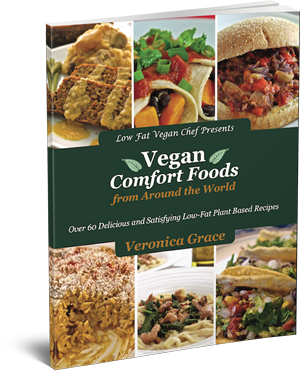
For tasty plant based meals that don’t require any fake meat or fake cheese check out my cookbook Comfort Foods From Around The World:

Vegan Comfort Foods From Around The World 3D


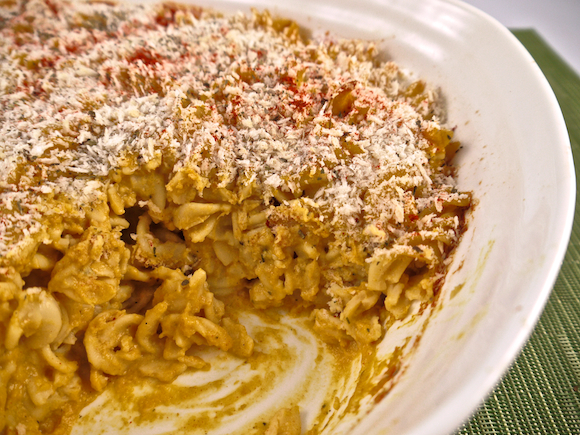
Vegan Baked Butternut Squash Mac and Cheese

Vegan Baked Butternut Squash Mac and Cheese

Baked Butternut Squash Mac & Cheese preview this recipe featured in the book here

Learn how to make a healthy version of your old favourites using things like nutritional yeast, miso paste, squash and tofu instead for that creamy cheese like flavor.

I hope I’ve given you some helpful tips on how to banish those cheese cravings. Just take it one day at a time and soon cheese will be in your rearview mirror and you won’t even be missing it at all.

What’s your favourite substitute to use instead of cheese in your recipes?


Filed Under: Articles, How To Tagged With: how to, plant strong, stop eat dairy, stop eating cheese, vegan

Plant-Based Soy Curls, Squash and Kale Soba Noodles in Peanut Sauce

September 8, 2013 by Veronica Grace 9 Comments

Fb-Button


SoyCurlSquashPeanutSobaNoodles

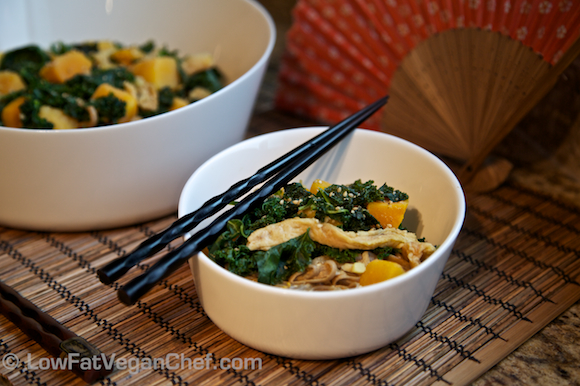
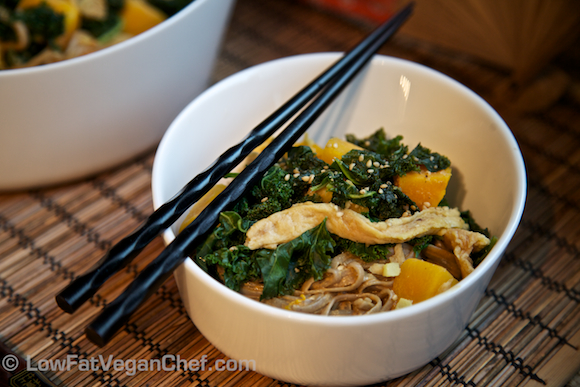
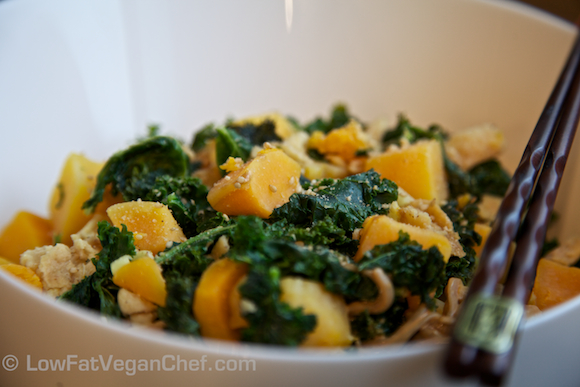
This plant-based peanut soba noodle dish is a recipe I decided on making after rummaging through my dried goods and freezer. I had bought a package of soba noodles so long ago I don’t remember when and I thought, you know I haven’t made any vegan Asian noodle dishes since my Vietnamese Vermicelli Noodle Salad (which is omg delicious btw). So I started looking online for something with noodles and butternut squash and I found this recipe online by  Bryanna Clark Grogan of Vegan Feast Kitchen which is not really what I made, but it gave me the idea of putting butternut squash with kale, noodles and peanut sauce. Yum! 🙂

SoyCurlSquashPeanutSobaNoodles (1)

I decided to make this recipe lower in fat and steamed the butternut squash and kale (instead of roasting in oil) and I used a lower amount of peanut butter for my sauce. I also added some Soy Curls to it which actually make it taste a little like chicken noodle salad. Soy Curls are made from non-GMO soy and are really easy to make. Just soak in water to rehydrate and sauté in a pan with seasonings. It’s totally optional for this recipe, you can choose to use some tofu or tempeh instead if you like.


Feel free to use any kind of noodle you like, green or starch. This soba noodle recipe is very versatile and I’m sure you can come up with lots of variations to make use of what you have on hand. Scroll down for the recipe!

SoyCurlSquashPeanutSobaNoodles (2)

Vegan Soy Curl, Squash and Kale Soba Noodles in Peanut Sauce

Serves 4

 Ingredients:

1 cup Soy Curls/1 package smoked tofu/1 package tempeh
1 9.7 oz/ 275 g package buckwheat soba noodles (I used Organic Sweet Potato & Buckwheat Noodles) or other egg free noodles
1 bunch of kale, de stemmed and cut into bite sized pieces
12 oz/340g package cubed butternut squash or 1 lb peeled and cubed (or 1 large sweet potato/yam peeled and diced)
2 cloves of garlic, minced
Salt and pepper to taste
Sesame seeds to garnish *optional

Plant-Based Peanut Sauce:

1/2 cup peanut butter or almond butter
1/2 cup water
2 1/2 tbsp maple syrup or other liquid sweetener
1-2 tbsp low sodium soy sauce or gluten free tamari *or to taste
2 tbsp rice vinegar
1 tbsp minced ginger
2 cloves of garlic
1 tsp Sriracha or other hot chili sauce *or to taste

Directions:

1. Soak Soy Curls in warm water with a little salt and garlic powder or no salt seasoning if desired.
2. Blend sauce ingredients together
3. Bring a large pot of water to a boil.
4. Next water sauté or use low sodium vegetable broth to cook kale, squash and Soy Curls (or tofu or tempeh) in a large skillet or wok. Season with a little bit of salt and pepper as desired.
5. Meanwhile, cook noodles in pot of water according to directions on package and drain in a colander and set aside.
6. In a large bowl or pot toss the noodles with the blended sauce and plate. Garnish with sautéed kale, squash and Soy Curls. Sprinkle with sesame seeds or Gomaiso if desired.
7. Serve.

I hope you try this delicious recipe! What’s your favorite asian noodle dish? Do you make anything at home?

Filed Under: Dinner, One Pot Meals, Pasta Tagged With: almond, Asian, gluten-free, greens, kale, noodle bowl, peanut, sesame, soba noodle, stir fry, vegan

My Top 10 Most Frequently Made Low Fat Plant Based Recipes

August 27, 2013 by Veronica Grace 7 Comments

Fb-Button


I’ve been doing some list making over the past few weeks as you might have noticed because a lot of you are finding it really helpful to have a bigger picture overview for tools, gadgets and easy recipes. I like being helpful so this is fun for me sharing my top 10 favorite fast vegan recipes with you as well! 🙂

I don’t cook fancy all the time, in fact most of the time I’m just like everyone else and want to get a healthy meal on the table quickly. So I’ve compiled a little list of the top recipes I fall back on when I don’t know what else to make, or am running low on new or “exotic” ingredients. I usually have all the staples necessary for these recipes on hand and it makes it easy for me to make again and again.

Sometimes I don’t follow the amounts of vegetables or seasonings exactly each time and season to taste as it’s easier than measuring everything out. So I wanted to share with you what I make when I can’t think or don’t have time to think of coming up with something new.


Most of these are dinner recipes but there’s a few you can use for breakfast or lunch as well.

Let me know if I picked any of your favorites!

Low Fat Vegan Red Lentil Tarka Dal (1)

1. Red Lentil Tarka Dal

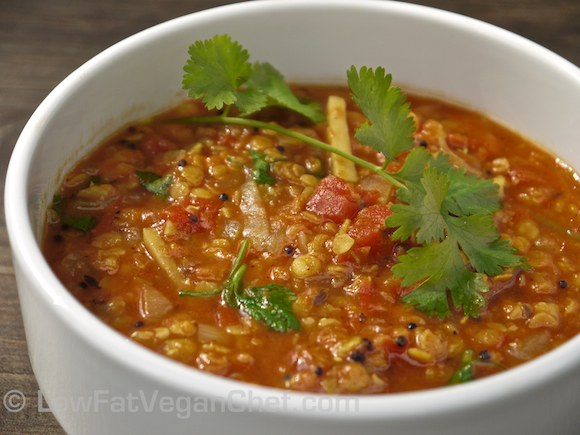
I really love this curry because it’s so fresh and flavorful and doesn’t require any fresh vegetables. So I make this when I’m down to things like onions, ginger and garlic and if I’m lucky I have some left over cilantro in the fridge. This dal is super simple and you basically only need red split lentils, canned or fresh tomatoes and water or vegetable broth and Indian spices. I serve it with Basmati or brown rice. It’s truly a delicious fat free meal.

ZucchiniRotiniMarinara-1

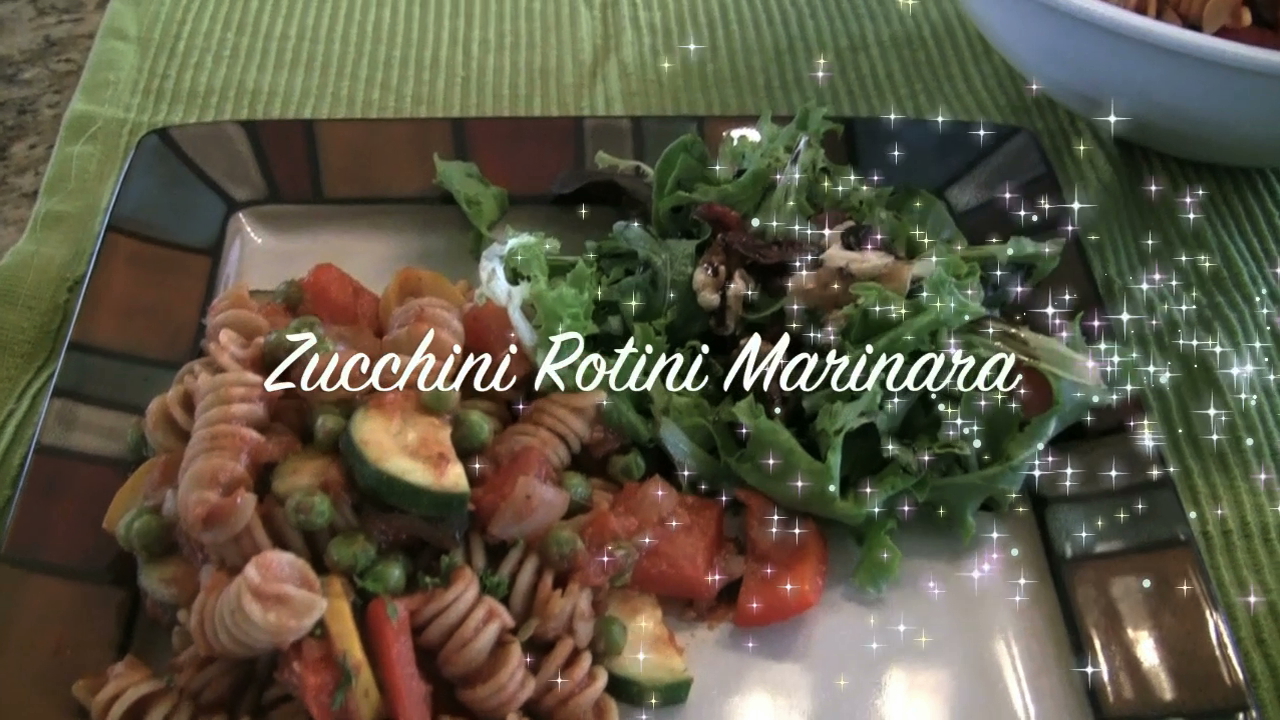
2. Rotini Marinara with Vegetables

Once upon a time I bought this giant box of whole wheat rotini from Costco and I STILL am eating from the same package. Buying 1 box of pasta at Costco pretty much negates needing to buy any more or any other kind of pasta for a long time lol, so every week or two I make rotini marinara or pasta primavera with fresh or frozen vegetables. It’s really nice to mix it up and use whatever I have left and it never gets old, it’s still one of my favorite quick recipes.

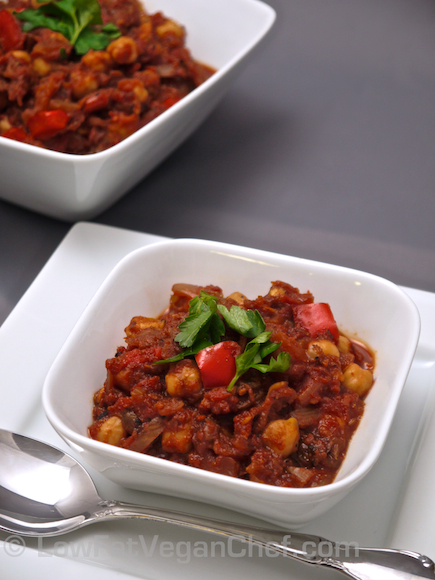
Soy Curls with Chickpeas and Tomato Sauce

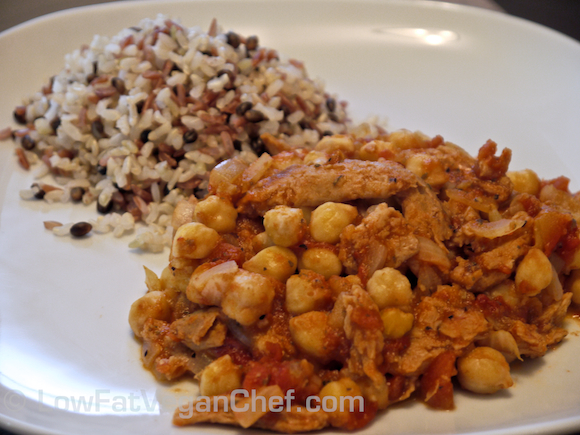
3. Soy Curls with Chickpeas in Tomato Sauce

Canned tomatoes or tomato sauce is well utilized in my kitchen as it’s an easy way to create a delicious fat free sauce and it can be seasoned with Mediterranean, Indian or Mexican spices really easily. I always have some chickpeas on hand and dried Soy Curls (which I pick up every time I go to Portland). You can use tempeh or tofu or skip it all together, but I like the texture of soy curls as it is a little meaty and goes really well with chickpeas in this recipe. Soy curls are also nice because they are compact and can be rehydrated so one package actually lasts for quite a few meals. If you like Chana Masala or Chicken Cacciatore you’ll like this.

Deluxe Dijon Tofu Scramble With Mushrooms, Broccoli, Pepper and Zucchini

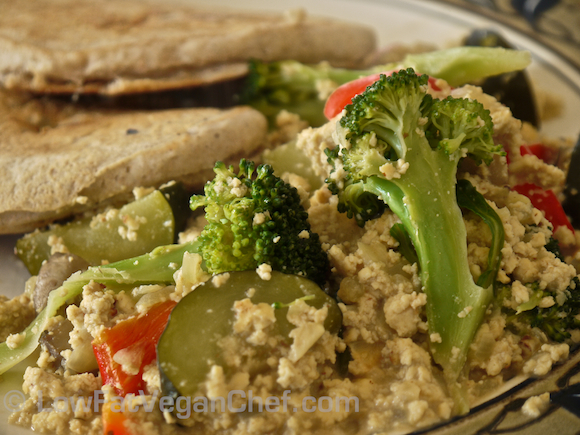
4. Deluxe Dijon Tofu Scramble

I don’t really make or eat breakfast, but on weekends sometimes I make brunch. Whenever someone wants a hot breakfast or brunch I make this and it’s great for using up leftover veggies in the fridge, as I usually have half a bell pepper, or zucchini or some broccoli or mushrooms. You can also use whatever leftover veggies and greens you have in your fridge and throw this together. To make this faster I like to use pressed tofu (you can find it organic) as it’s already firm and doesn’t have much moisture in it so it’s great at absorbing flavours.


Asian Vegetable Stir Fry Tahini Bowl

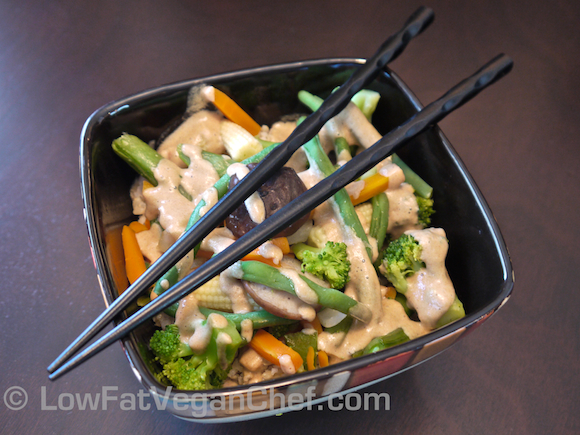
5. Vegetable Stir Fry with Tofu and Tahini Sauce (sometimes I add pressed or smoked tofu as well)

Stir fry is probably the easiest thing to make especially if you have some frozen vegetables and dried rice. I like to change it up and make a little tahini sauce from scratch to top it with instead of using bottled sauces. I don’t use any Asian bottled sauces as most of them contain MSG and have a lot of sugar and sodium in them. This way I can control the flavor of the sauce and make it to my tastes with things like fresh garlic, ginger, soy sauce and spices. You can also change it up by using different fresh or frozen veggies and different nut butters.

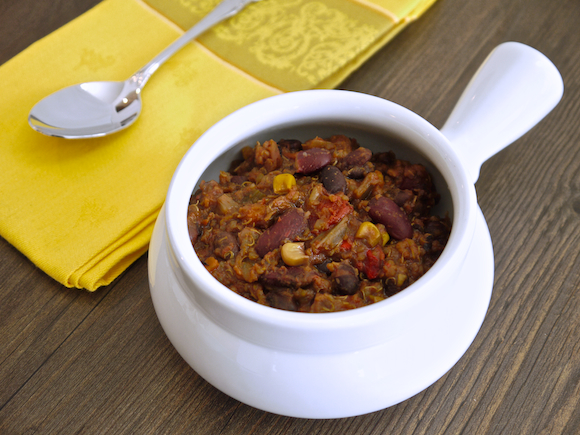
Quinoa Veggie Slow Cooker Chili

6. Quinoa Bean Chili

This is my most used slow cooker recipe. Whenever I have to feed a lot of people for a potluck or a family gathering I make this. My chili is super hearty with fresh cooked quinoa, black beans, kidney beans, corn, bell peppers, carrots, celery and tomatoes. I’ve fed it to many non vegetarians and they honestly don’t miss the meat. The quinoa is a great ground beef substitute because of it’s small and spongey size and it’s a great alternative to fake meat or soy protein for those who can’t have soy. Did I mention it’s also gluten free? Yeah so I make this recipe because it suits almost everyone’s dietary needs.

EggplantChickpeaCurry (1)

7. Chana Masala from Vegan Comfort Foods From Around The World or Eggplant Chickpea Curry

Another one of my favorite curries is a chickpea curry in tomato sauce. It’s also extremely easy to make if you don’t have any vegetables left and are down to canned chickpeas or canned tomatoes. Or you can use fresh cooked chickpeas by using my favorite new tool the EZ Bean Cooker and keep this recipe truly fast and affordable. Don’t be intimidated by curries, this one is extremely easy to make and you’re going to be thrilled with how tasty and filling it is.


Vegan Baked Butternut Squash Mac and Cheese

8. Baked Butternut Squash Mac and Cheezy

This mac & cheese is my favorite recipe as you’d never guess that there is butternut squash in it and it is very satisfying being baked with panko breadcrumbs.The secret is using miso paste, nutritional yeast and smoked paprika for a delicious vegan cheese sauce. It’s one of my most complimented recipes by family and readers alike, so I hope you try it!

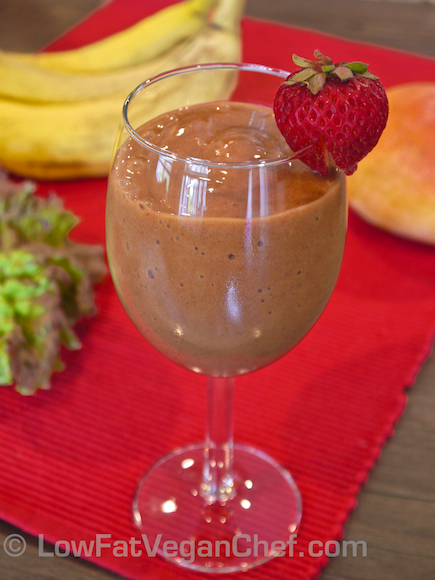
StrawberryBananaGreenSmoothie

9. Smoothies!

I make smoothies for breakfast, or lunch whenever I don’t have time to make anything else, or I have ripe fruit to use up. Check out my smoothie selection on the blog and get some ideas for easy and tasty fat free smoothies you can enjoy for a quick meal.

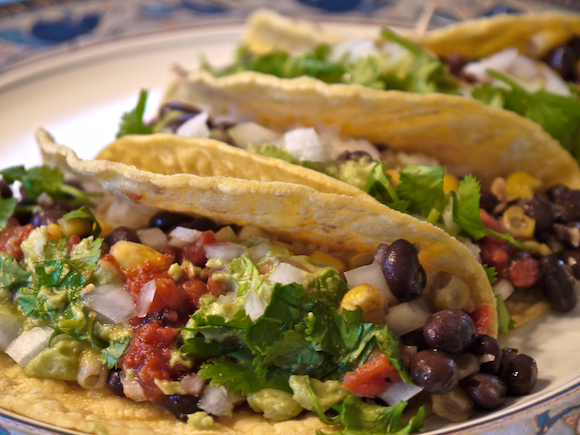
Vegan Black Bean And Corn Tacos Low Fat Vegan Chef

10. Black Bean and Corn Tacos

Someone once joked to me that I must only eat tofu tacos as a vegan, and I kind of laughed because I actually have never had tofu tacos. I always make black bean and corn tacos because they feel naturally Mexican, simple and fresh. I serve these tacos often when I don’t have a lot of time and have a lot of people to feed. Then I make up some fresh guacamole and pico de gallo and everyone has a blast loading up their tacos with their favorite toppings. Long gone are the days of boring Old El Paso recipes from a box (like we do in Canada and parts of the USA). Have some real Mexican food the healthy way. Who doesn’t love tacos right?

I hope I’ve given you some inspiration for fast recipes you haven’t thought of before. Which recipe are you most looking forward to trying?

Filed Under: Articles, Cooked Vegan Recipes, Dinner Tagged With: dinner recipes, fat-free, favorite vegan recipes, gluten-free, list, low-fat, top 10 vegan recipes, vegan

  • Page 1
  • Page 2
  • Page 3
  • Page 4
  • Go to Next Page »

Primary Sidebar

Follow Us:

Newsletter

Get The Low Fat Vegan Starter Kit

natural organic skin care line

Free Skincare Samples

Earn Free Crypto At Binance

Earn Free Bitcoin on Gemini Exchange

Earn $10 in Bitcoin With Gemini Exchange
Dr. Fuhrman
Dr. Fuhrman
Dr. Fuhrman

Tags

80/10/10 apple avocado banana blueberries breakfast broccoli Carrots celery chickpeas cilantro corn cucumber Curry dill dinner easy Eat To Live fat-free gluten-free how-to Indian Dishes lemon low-fat mango mexican mushrooms nut-free oil-free pasta pineapple plant-based raw raw vegan rice smoothie soup soy-free spinach tofu tomato tomatoes vegan vegetarian vitamix

Secondary Sidebar

Recipes:

  • Cooked Vegan Recipes
  • *My Recipe Books
  • Breads and Baked Goods
  • Breakfast
  • Brunch
  • Burgers
  • Casseroles
  • Curries
  • Desserts
  • Dinner
  • Dips for Veggies or Chips
  • Eat to Live-Dr. Fuhrman Recipes
  • Engine2Diet
  • Ethiopian Dishes
  • Greek
  • Green Dishes
  • Holiday
  • Indian Dishes
  • Mexican
  • One Pot Meals
  • Pasta
  • Pizza
  • Quinoa
  • Salads
  • Sandwiches and Wraps
  • Raw Vegan Recipes
  • 80/10/10
  • Raw Breakfast
  • Raw Desserts
  • Raw Dips
  • Raw Dressings
  • Raw Entrees
  • Raw Juices
  • Raw Salads
  • Raw Smoothies
  • Raw Snacks
  • Raw Soups
  • Sauces
  • Side Dishes
  • Slow Cooker Recipes
  • Snacks
  • Soups and Stews
  • Spices/Seasonings
  • Sushi
  • Thai
  • Vietnamese

Copyright © 2026 · Foodie Pro & The Genesis Framework