• Skip to primary navigation
  • Skip to main content
  • Skip to primary sidebar
  • Skip to secondary sidebar

Plant Based U

Fat-Free and Low Fat Vegan Plant Based Recipes

  • Home
  • Recipes
    • Raw Vegan Recipes
    • Cooked Vegan Recipes
    • Eat to Live Dr. Fuhrman Recipes
  • Products
  • Coaching
  • Videos
  • Articles
  • About
    • What Is Low Fat Vegan/Whole Foods Plant Based
    • Resources
  • Contact

carrot

Fb-Button

Bun Chay (Vegetarian Vietnamese Vermicelli Herb Noodle Salad)

March 24, 2013 by Veronica Grace 15 Comments

Fb-Button

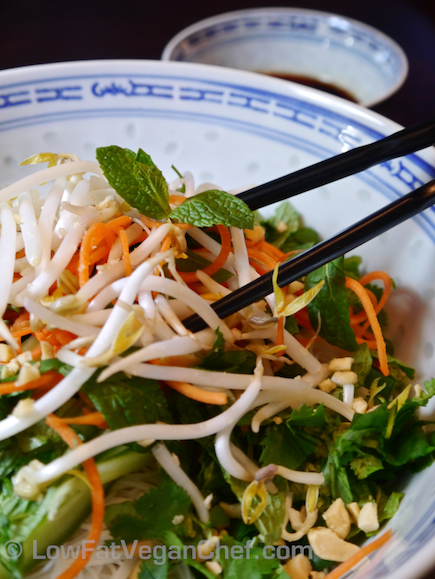
I love how fresh and light vegetarian Vietnamese food is. Vietnamese dishes don’t tend to be very vegan friendly because many items have chicken stock or fish sauce in them, so you may not always be able to find something that is truly vegan at a Vietnamese restaurant. Bun Chay is a vegetarian vermicelli noodle salad seasoned with fresh herbs, bean sprouts and Nuac Chom (a fish based sauce.)
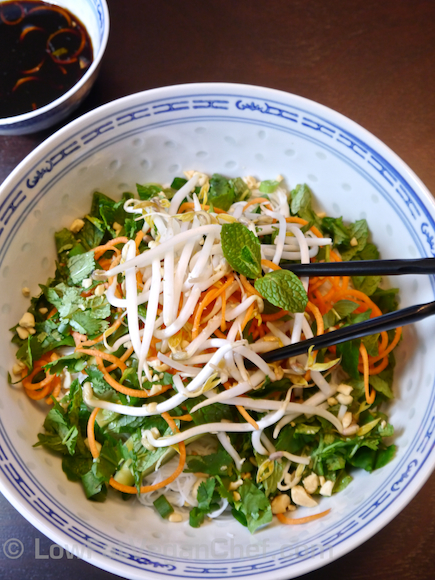
So I wanted to show you how you can make Bun Chay totally vegan at home. This is a really fun and impressive recipe to make for one, or even a dinner party. If you can slice some veggies and toss them together to make a regular salad, trust me you can make this! It’s super easy and fresh and you can customize it with your favorite vegetables or proteins like tofu or tempeh as well.
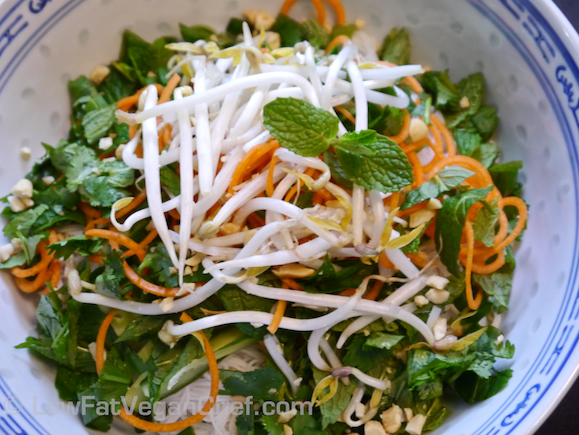
This salad also keeps well and can be taken to work for a healthy lunch (just make sure to keep the dressing separate). If you’re longing for a recipe to mix up your salad routine, this is it! It’s very low in fat, as well as filling. I hope you like it!

Bun Chay (Vegetarian Vietnamese Vermicelli Herb Salad)

Serves 4

Salad:

250 g/8.8 oz package of rice vermicelli noodles (thin)
1 carrot, peeled and shredded or spiralized
2 Persian/small seedless cucumbers, julienned
1-2 cups fresh mung bean sprouts
1 cup fresh cilantro leaves, chopped
1 cup fresh mint leaves, chopped and/or 1 cup Thai basil leaves, chopped
4 green onions, thinly sliced
1/4 cup peanuts, crushed *optional

Vegan Nuac Cham (Sauce for Bun Chay):

1/4 cup lime juice (1 1/2 large limes)
1/4 cup vegetarian fish sauce (see recipe here)
1/3 cup hot water
1 tablespoon rice vinegar
3 -4 tablespoons granulated sugar
1 garlic clove, minced
1/2 – 1 thai chili, finely chopped *optional
2 tbsp shredded carrot *optional

Directions:

1. Bring a large pot of water to a boil. When boiling, turn off the heat and add the noodles and stir to break up.
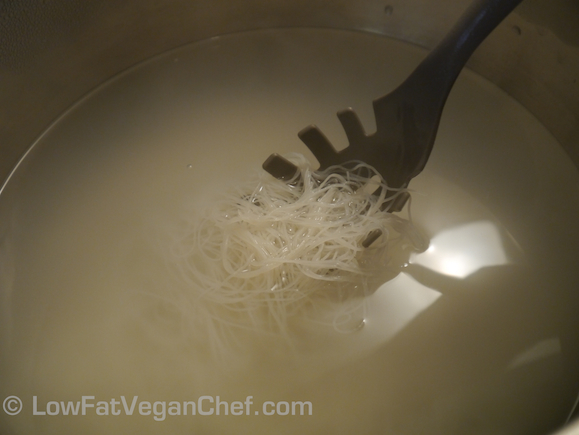
2. Let noodles sit for 2 minutes.
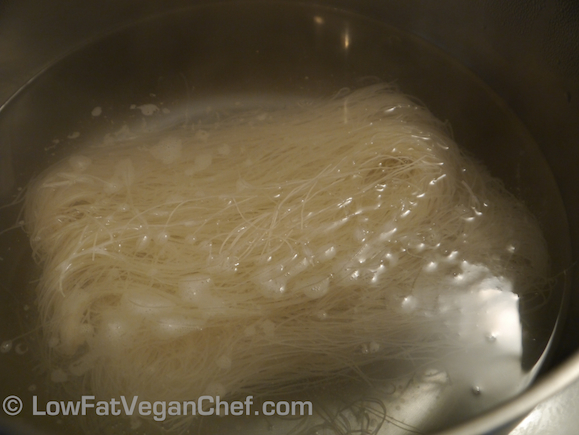
3. Drain noodles and run in cold water to shock them. Drain in a colander.

4. Prep veggies.
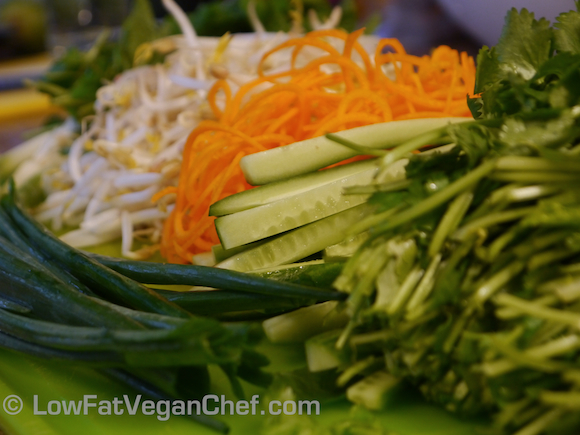
5. Arrange noodles in serving bowls. Garnish with carrots, cucumber, chopped herbs, mung beans and peanuts.
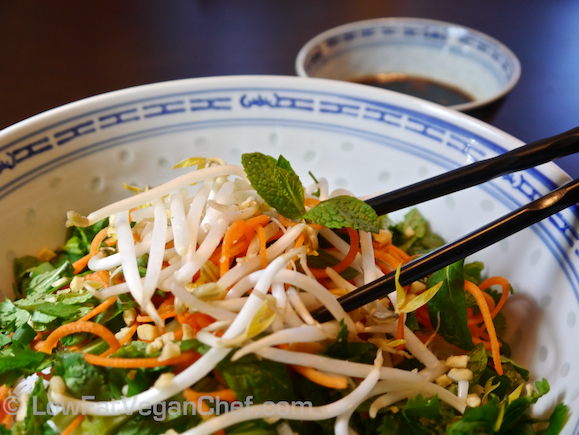
6. Combine ingredients for Nuac Cham sauce in a bowl and whisk until sugar dissolves. (You want it to be strong tasting as the noodles are bland and will soak up the flavor.)
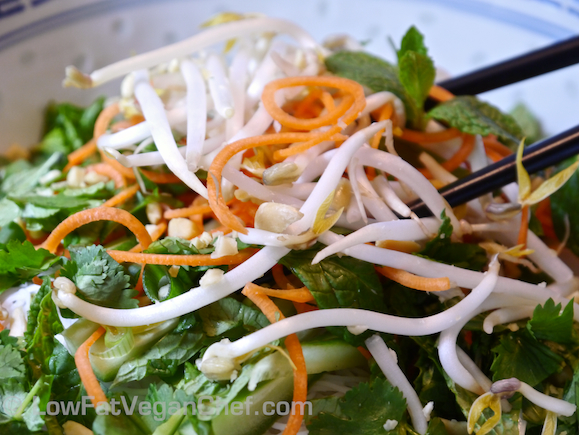
7. Serve Bun Chay with a side of Nuac Cham. Pour sauce over it and toss well to combine.

Additional Tips:

Please note that Thai basil has a very different taste than regular Italian basil, so if you cannot find it, please use mint and cilantro (coriander) instead. Thai basil has green and purple tipped leaves and has a very exotic flavor.

I used a Japanese turning slicer to spiralize my carrots. I find them prettier this way instead of just shredding them. This is what I used.

If you can’t find Persian/Iranian (mini seedless cucumbers) use English cucumbers.

Make sure to put lots of herbs in this salad as it will be very mild tasting, you get most of the flavor from the Nuoc Cham sauce and the herbs. Otherwise it will mostly be rice noodles, carrots and bean sprouts.

If desired you can serve it with some hoison sauce (I tend to avoid as it has msg) or Sriracha hot sauce. You can find these at Asian stores and sometimes regular grocery stores as well.

Have you ever had Vermicelli salad or “Bun” before? What did you think of it?
Filed Under: Cooked Vegan Recipes, Dinner, McDougall Program, Thai, Vietnamese Tagged With: Asian, basil, carrot, cilantro, cooked vegan, cucumber, mint, peanut, Rice Noodle, salad, Vermicelli, Vietnamese

Low Fat Vegan Carrot Pumpkin Spice Muffins

November 19, 2012 by Veronica Grace 6 Comments

Fb-Button

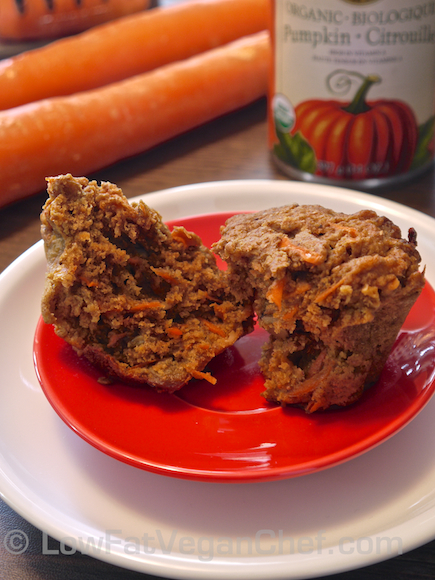
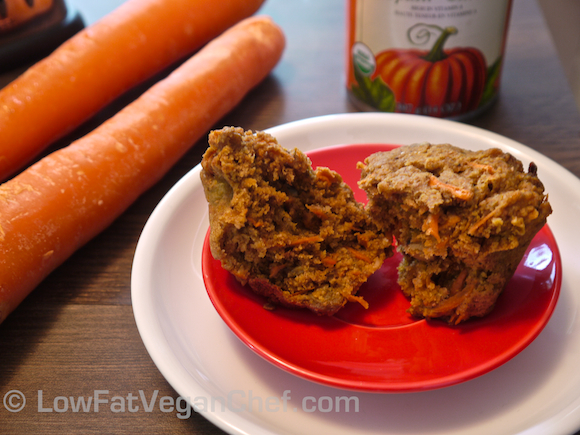
Hands up who likes carrot muffins? Now hands up who likes pumpkin raisin muffins?

Why not have both!

These muffins are inspired by a combination of Oh She Glows Carrot Spice Muffins and my own Pumpkin Raisin Muffins recipe.

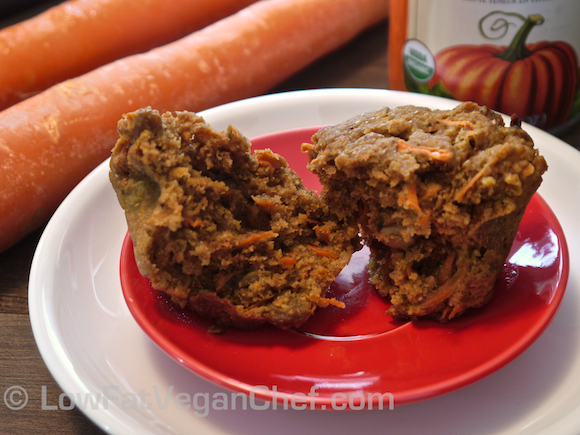
These Carrot Pumpkin Spice Muffins are so delicious that I’ve made several batches of these. Best part is no one will be able to tell they are vegan. They’re a really dense and flavorful muffin.

And it’s a great way to use up any leftover carrots in the fridge as well. During the fall I always keep a couple of cans of pumpkin in the pantry to make delicious pumpkin baked goods. This is a great alternative to pumpkin pie for a Thanksgiving or Holiday treat as well.

Bring them to work, potlucks, pack for kid’s/spouse’s lunches etc.  Everyone will be raving about these satisfying muffins and be asking for the recipe.

You may want to make 2 batches of these to use up a full 15 oz./425 g can of pumpkin. I have made them with less than 1 cup of pumpkin puree and they turned out just fine too.

Low Fat Vegan Carrot Pumpkin Spice Muffins

Makes 12 muffins

Dry ingredients:

1 & 3/4 cup stone ground whole wheat flour (or spelt, kamut, oat etc.)
1/4 cup cane sugar
1 tbsp ground chia seed
1 tsp baking powder
3/4 tsp baking soda
2 tsp ground ceylon cinnamon
1/2 tsp ground nutmeg
1/8 tsp ground cloves
1/2 tsp salt

Wet ingredients:

1/2 cup maple syrup
1 cup canned pumpkin (or fresh cooked, mashed)
1/4 cup water
2 tsp vanilla extract
1 1/2 cups grated carrot (3 medium ones or 2 large )
1/2 cup raisins
1/3 cup chopped walnuts *optional

Directions: 

1. Preheat oven to 400 F/204 C.

2. Combine dry ingredients in a medium bowl and whisk to combine.

3. Combine wet ingredients in a large bowl and stir.

4. Add dry ingredients to wet ingredients and stir until just combined.

5. Use silicon muffin tray, or a regular muffin tin lined with muffin cups and spoon mixture evenly for 12 muffins.

6. Bake for 23-25 minutes until toothpick in centre comes out clean.

7. Allow to cool before removing from pan.

8. Store in air tight containers or ziploc bags.

Have you ever had carrot pumpkin muffins before? What’s your favorite way to use canned pumpkin?

Filed Under: Breads and Baked Goods, Cooked Vegan Recipes, Snacks Tagged With: carrot, low-fat, muffin, pumpkin, snack, soy-free, walnut, whole grain

Raw Vegan Antioxidant Rich Apple Celery Carrot Beet Juice

April 26, 2012 by Veronica Grace 11 Comments

Fb-Button

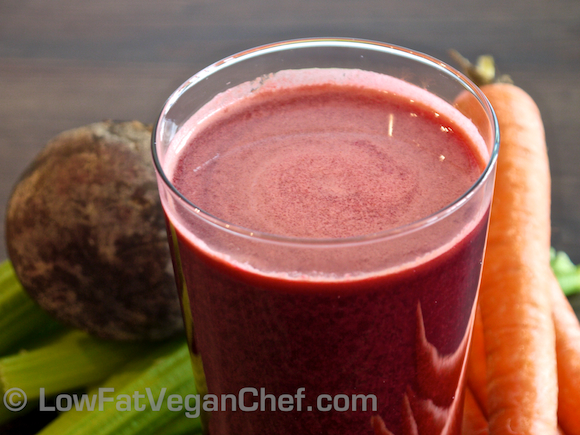
Low Fat Vegan Chef's Raw Vegan Apple Beet Carrot Celery Juice

Happy Friday everyone! I hope you’ve enjoyed your week so far. I know I have. I’m still in Kauai for a few more days and have been doing some kayaking, hiking, and snorkelling and taking lots of photos. If you’re curious to see what it’s like on Kauai (the oldest Hawaiian island) check out my Kauai Travel Pics post. It’s the end of their rainy season here so we’ve been getting a little bit of rain but nothing like what they get in the winter time. It’s about 82-84 F (27-29 C) a day here so it’s quite nice!

We’ve been eating a TON of Maui Gold pineapple here along with Hawaiian papayas, bananas, watermelon, cantaloupe, salads and veggies. Just keeping things pretty simple as I’m not really making specific recipes while I’m here. The Maui Gold pineapple is really out of this world, it’s so sweet and not acidic at all. I get the mini ones and I eat a whole one for breakfast and it doesn’t bother my tongue. Some of the larger pineapples we’ve got were pale yellow inside and not ripe enough and too acidic to eat, ripe dark yellow (inside) pineapples are really the best. We always smell the bottoms of our pineapples to see if they seem sweet or ripe. If your fresh pineapple smells like nothing chances are it’s been picked too early and isn’t ripe enough and will burn your tongue and taste tart.

Today I wanted to share with you one of my favourite veggie juice recipes. I don’t generally buy juices from juice and smoothie bars because #1 they are far to expensive and small for the price and #2 they are usually super foamy on top, and I can make them better at home. The juicer I have is a Breville and has this nice jug that has a foam blocker in it so when you pour the juice it skims off the top portion of foam before it goes into your glass. So this is nice. Especially for people new to drinking fresh juices (vs. something lie V8) who might be turned off by the natural occurring foam when you juice with a centrifugal juicer.

I love putting apples and beets together in juice the flavour is really rich and energizing. Apple and beets, carrots and beets, carrots and celery, and celery and apples all go great together flavor-wise, so when you combine them all you get a really tasty vitamin and mineral rich juice!

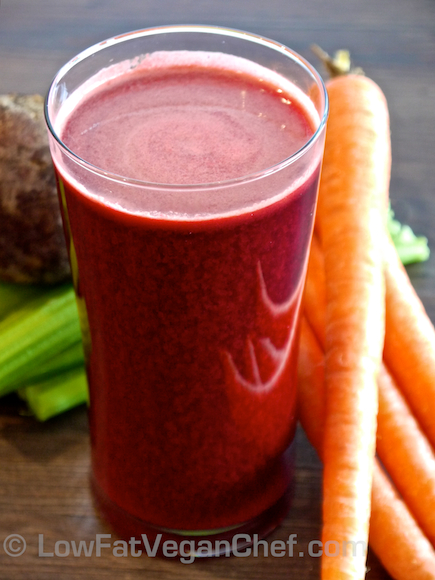
Low Fat Vegan Chef's Raw Vegan Apple Beet Carrot Celery Juice

Raw Vegan Apple Celery Carrot Beet Juice

Serves 2

Ingredients:

3 medium apples, peeled (unless organic)
1 large beet, peeled and cut if necessary
8 large stalks of celery (leaves removed)
3 medium carrots, peeled (unless organic)

Directions:

Prepare vegetables, peel apples if desired. Cut veggies into chunks if required for your type of juicer. Run everything through a juicer and serve immediately.

Additional Tips:

Feel free to 1/2 the recipe if you’d only like a small juice. I usually make a big one after a work out.

You may enjoy serving this juice over ice. Depending on your tastes you can add more or less apple, carrot or beets. People new to drinking fresh juices may enjoy more of an apple flavour for the base. If you are trying to juice all at once and want to save some juice for later, it should only be stored in a glass airtight mason jar. Fresh juice spoils quite quickly because it is raw and uncooked. It will not keep in the fridge unless it’s completely sealed and airtight. So make sure to use a jar of the appropriate size to ensure it’s filled to the top and sealed.

What do you think of this juice? What’s your favourite fruit+veggie juice recipe?

Also check out my photos of Kauai if you missed them.

Mobic

Filed Under: Raw Breakfast, Raw Juices, Raw Vegan Recipes Tagged With: apple, beet, carrot, celery, fat-free, gluten-free, juice, nut-free, raw, soy-free

How To Make Raw Vegan Veggie Stuffed Collard Wraps

January 24, 2012 by Veronica Grace 21 Comments

Fb-Button
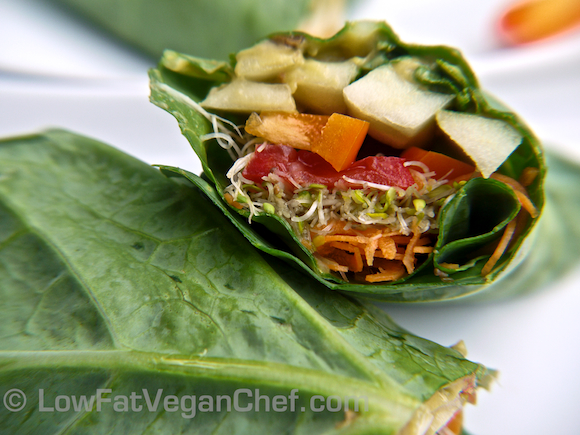
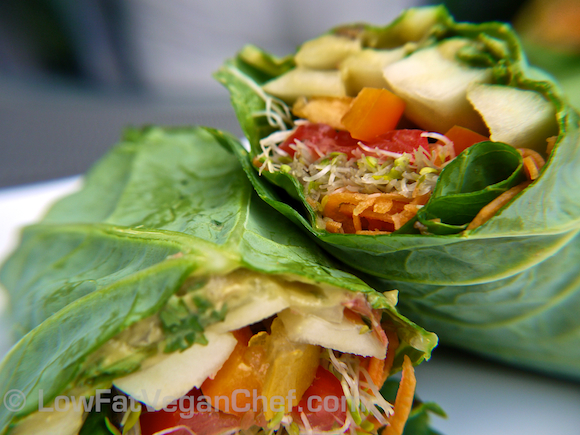
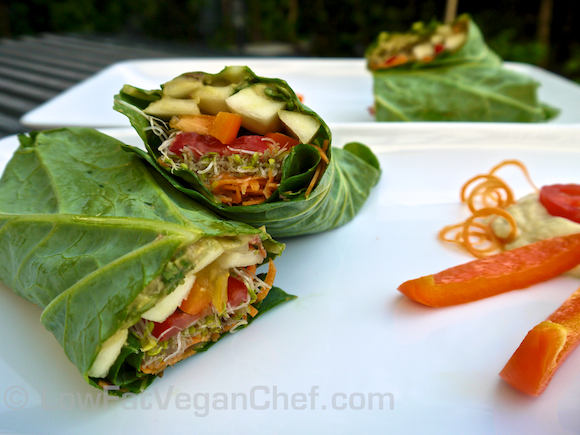
How To Make Raw Vegan Veggie Collard Wrap Sandwich

Raw Collard Wraps With Veggies, Sprouts and Guacamole

Are you looking for a quick and healthy wrap that’s maybe low in calories and more whole foods based? Or maybe you’re looking for a gluten or wheat free sandwich option. Well check out my raw veggie collard wraps!

So… I totally forgot to add these delicious collard wraps to my recipe program Savory Raw Dinner Recipes because they were so easy to make I did not write the recipe down! LOL. When I compiled the recipe book I did not have it on my computer and I forgot about it. So I’m posting it here for you instead. These raw collard wraps are really easy to make if you have access to large size flat collard green leaves and are really impressive to non raw foodies.

If you haven’t checked out Savory Raw Dinner Recipes, I highly recommend you do. I created the recipes and did all the photography myself. These are possibly the sexiest lower fat gourmet recipes you’ve ever seen. Even if you just enjoy some healthy food porn photos, you should check it out!

If you live in the south you can find collard greens at most grocery stores or Walmart, but if you live in the north or in Canada you’ll have to go to Whole Foods or your local community health food store.

In the South it’s about 88 cents (USD) for a bunch of collards. In Canada, it costs us about $2.99 (CAD) for a large bunch. Overall, it’s a pretty cheap wrapper to make a raw burrito or sandwich, just make sure you select a bunch of collards that have lots of large flat leaves, not bent, crushed or small leaves as you’ll more likely end up having to make tiny raw vegan tacos instead because you can’t wrap the collards like a burrito.

If you DON’T have collard greens, it won’t really turn out the same. The key to this wrap is the collard green’s very large, strong and pliable leaf. You can try using other greens, but what you’ll get instead is more of an open face sandwich/taco/boat that you sprinkle toppings in and eat kind of like a hot dog! Probably tastes the same, but will look different. You can try both style of raw wrap.

This is what a collard leaf looks like whole. You will see it’s flat and not curly like kale.

How To Make Raw Vegan Veggie Collard Wrap Sandwich

Raw Collard Wraps With Veggies, Sprouts and Guacamole


How To Make Raw Vegan Collard Wraps

Serves 2

For this recipe you’re going to need:

2 large collard green leaves, washed
1/2 ripe avocado (should give to your thumb when pressed)
julienned or spiralized carrot and/or beets
julienned cucumber
julienned pepper
julienned zucchini
A few sprouts (If you have, I used alfalfa, you can use sunflower, pea shoots etc)
Seasonings if desired: lime/lemon, salt, pepper, olives

Tools:

A sharp knife
Flat surface

Step 1: Lay your collard leaf out flat on a cutting board stem side facing UP. Next take your sharp knife (it needs to be sharp, and not a serrated one, I cut myself once sawing into my finger) and angle it down and into the stem of the leaf. Shave the stem from the leaf horizontally and away from you. You want to do this so you can roll and fold your collard leaf without it cracking and splitting. Keep shaving down the stem a bit at a time, until it is flush with the leaf and then cut the edge off the stem end so it is straight at the bottom. Test your collard leaf now to see if it will roll easily into a small burrito. If it does, you’ve got your collard stem thin enough. Once you do this once, you’ll understand what I’m talking about.

Step 2: Spread 1/4 of a ripe avocado (half of your 1/2 avocado) onto you collard leaf leaving an inch or two from the bottom end of the stem. Spread it in the middle area only, not all the way out to the sides and top. Season if desired over the avocado for flavour.

Step 3: Lay your veggies and sprouts nicely in the bottom portion to middle of your collard leaf, still leaving and inch or two at the bottom part of the stem. Keep everything in the middle and far away from the top and sides, just like you would fill a burrito.

Step 4: Roll the bottom stem end of your collard leaf up and away from you and make a full roll. Tuck in the sides of the leaf and continue rolling and tucking in as you go. Keep your roll tight so when you cut it your filling doesn’t fall out.

Step 5: Hold your wrap tightly and then carefully slice it in half. If desired you can skewer it with a toothpick to hold it together and set it on a plate.

Step 6: Repeat for the other wrap.

I would recommend sticking with a thick creamy filling like avocado, guacamole or my Lower Fat Hemp Hummus (from Savory Raw Dinner Recipes) instead of using a fruit or vinegar based dressing, as the taste of collards is quite strong and with just a vinegar or lemon base it won’t really be that delicious. Unless you’re like a hard core raw foodist, in which case you probably eat raw kale by the bunchfuls… every day… Just kidding! Rock on! 🙂

Serve this wrap with a raw soup, green salad or fruit salad.  This is not a low fat recipe, technically because the veggies and wrap have so little calories. This is why I did not use an entire avocado for the recipe, otherwise it would be very fatty. I want to emphasize that on it’s own this is a very LOW CALORIE wrap, pretty much a snack. Since we don’t want to load up on nuts, seeds and oil on a low fat raw vegan or 80/10/10 diet, this should be part of a meal. We enjoyed this with a fat free soup recipe from Savory Raw Dinner Recipes and lots veggie sticks with my raw hummus. You just can’t see it from the photo, but the soup was present!

I have seen some restaurants steam the collard leaves as well for those who prefer a milder taste (sort of like steamed cabbage in a cabbage roll) so that’s always an option if you’re looking for a softer texture in your wrap!

How To Make Raw Vegan Veggie Collard Wrap Sandwich


 What do you think of these wraps? What did you fill yours with?

Filed Under: Articles, How To, Raw Entrees, Raw Vegan Recipes Tagged With: carrot, collard, cucumber, gluten-free, greens, nut-free, pepper, raw, snack, soy-free, sprouts, wrap, zucchini

How To Make A Vegan Dragon Roll Sushi Roll (Uramaki) With Photos!

January 10, 2012 by Veronica Grace 5 Comments

Fb-Button
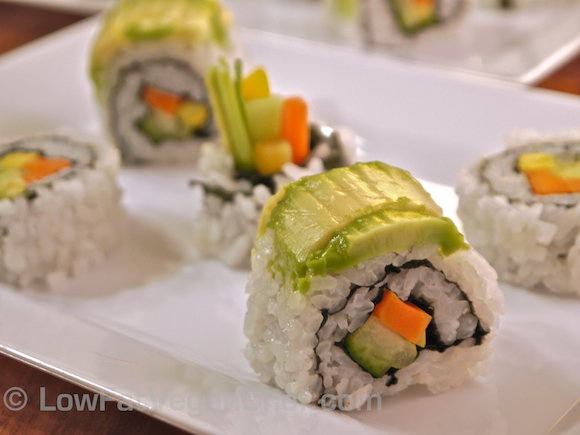
Vegan Dragon Sushi Roll Uramaki Inside Out Roll Avocado Vegetables

Vegan Dragon Sushi Roll

Dragon rolls are generally not vegan or vegetarian and filled with smoked eel and drizzled with eel sauce. But they look so pretty and are covered in avocado, which is vegan and delicious in sushi.

So here’s my version of a vegan Dragon Roll. It’s very similar to making my vegan California Roll, but we’re going to take the avocado out from the middle, and put it ontop of the roll instead and add some additional filling.

Makes 2 dragon rolls

You Will Need:

1/2 recipe of sumeshi aka sushi rice (found here)
2 pieces nori seaweed
4 sticks julienned cucumber (see my post on prepping veggies here)
4 sticks julienned carrots, steamed gently
4 sticks another vegetable of choice, I used julienned zucchini, steamed gently
4 strips sliced green onion (scallion)
1 small-medium avocado

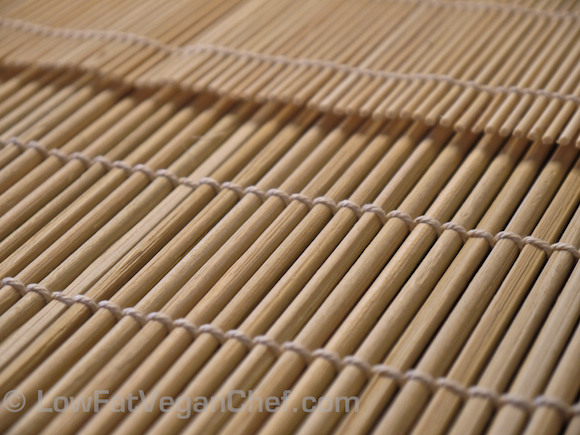
To make this vegan sushi roll we are going to use the thick style sushi mat. (The one on the bottom) It’s much stronger and will give a firm shape to the sushi. I bought a set of sushi mats in a cheap 2 pack on Amazon for about $7 with free shipping. You can also find a single mat for a few dollars on Amazon like this one . Asian stores will sell them as well.

How To Wrap Your Bamboo Sushi Mat For Uramaki – Inside Outside Rolls

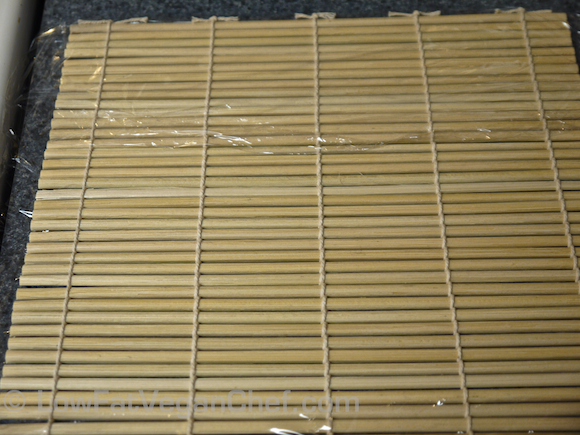
We’re going to wrap our sushi mat in plastic wrap/saran wrap. We do this because sushi rice is SUPER sticky and will make a mess on the bamboo mat, yet it comes off easily from the plastic wrap. Basically you’re going to wrap it like you would a present with wrapping paper, tucking in all the sides and the wrap should cling to itself to seal it.

Sushi mat wrapped on one side and sides tucked over

Take a piece of plastic wrap and put it on top of one side of the mat. Flip it over and then tuck in the side and top and bottom so that the back side is totally sealed.

Sushi mat with front side covered in wrap

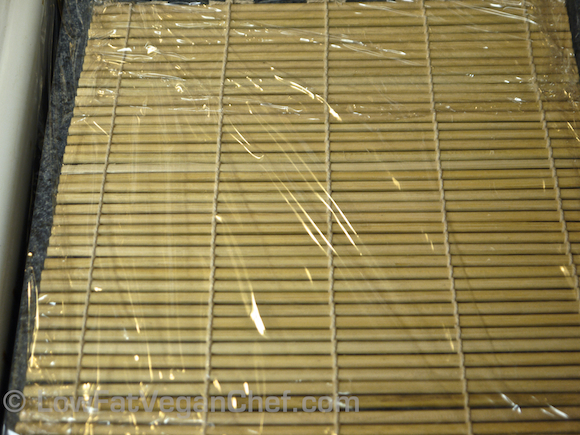
Next, take another piece of plastic wrap and place it over the front side (that has the sides tucked in) and flip it over and tuck in the sides and top and bottom again.

Sushi mat covered on all sides and pulled tight

Now your sushi mat is ready to make vegan Dragon Rolls.

How To Make A Vegan Dragon Roll (Uramaki / Inside Outside)

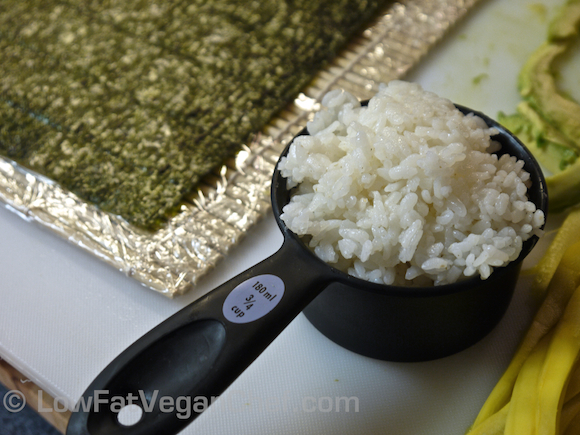
Step 1: Measure between 3/4 and 1 cup of sushi rice depending how much rice you want on your roll. (They are very filling, usually a person can only eat 2 of these rolls max because the rice is so filling.) I used a heaping 3/4 cup of rice and it was just enough for me.

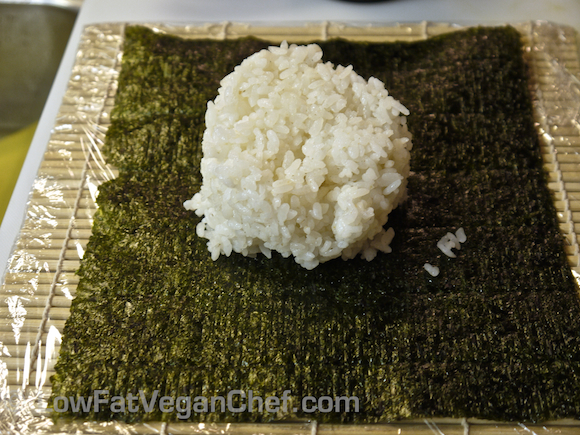
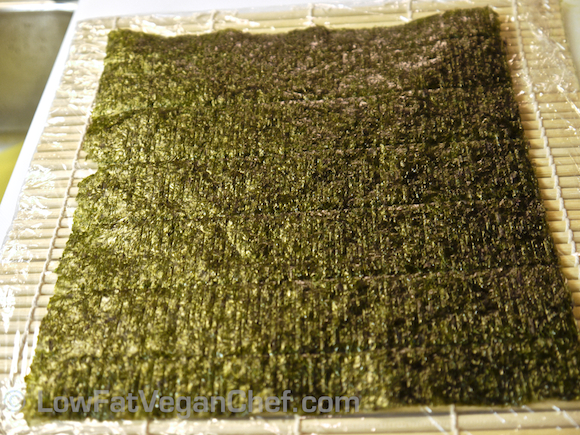
Step 2: Lay your nori sheet SHINY side up (with the dotted line side face down) This is the backside of your nori sheet and we’re going to cover it with rice. Dump your rice into the middle of the nori sheet.

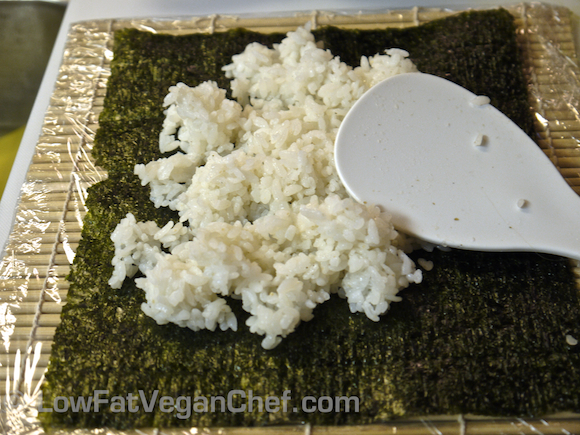
Step 3: Using your rice paddles (or very wet fingers) gently push the rice outwards and to the edges and the corners. This will take a while until you get the hang of it. You can leave a tiny space on the top and bottom of the sheet and this will make the roll easier to roll up.

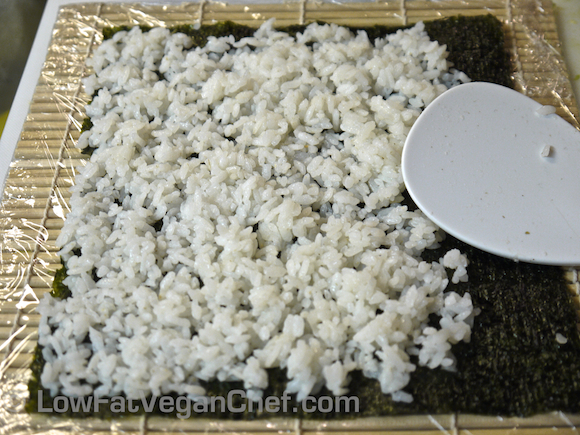
Continue spreading out the rice until you have a layer about 1-2 rice grains thick. It won’t be perfect, but as long as there are no big gaps it will be good.

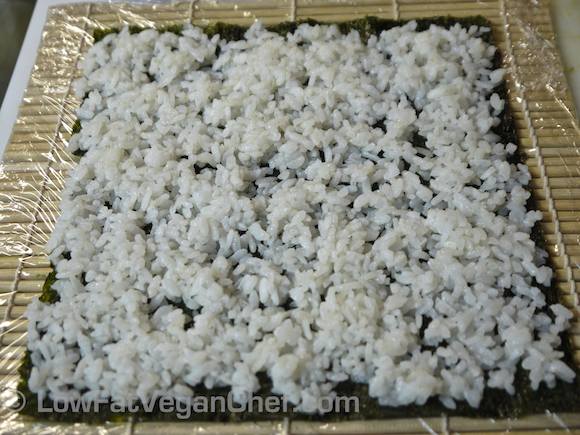
Step 4: Press your rice down on your nori sheet so that no grains are sticking up and it’s level.

Step 5: Pick up your nori sheet from the bottom, holding tightly and flip it over away from you. Now the dotted section side should be facing you.

Vegan Dragon Sushi Roll Uramaki Inside Out Roll Avocado Vegetables

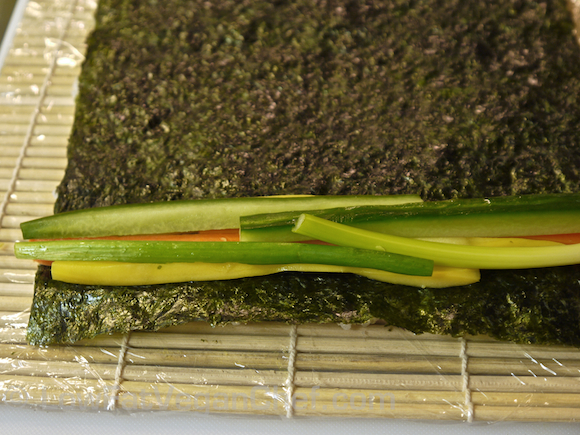
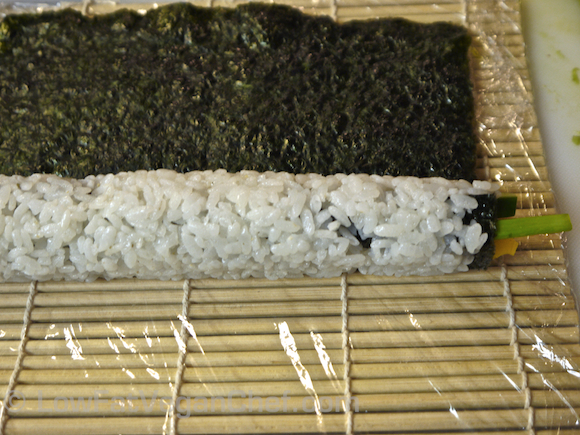
Step 6: Fill your nori sheet with desired filling. In this case for my vegan dragon roll, lay 2 strips of cucumber lengthwise, 2 strips of carrot, 2 strips of green onion and 2 strips of zucchini. Spread them out so they fill the entire roll. It can spill out a little over the side, but not too much. Your filling is going to lay in the first rectangular area of the sheet. After the little bottom bar.

Vegan Dragon Sushi Roll Uramaki Inside Out Roll Avocado Vegetables

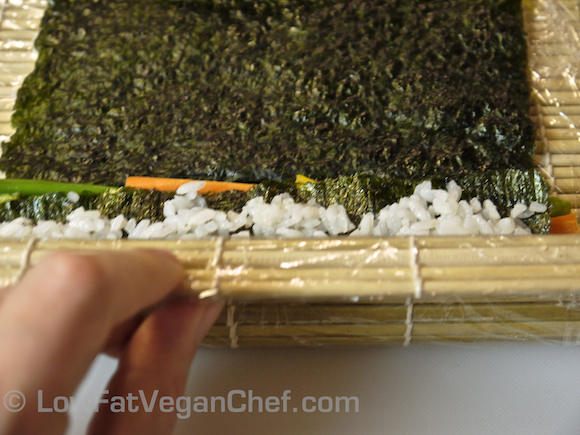
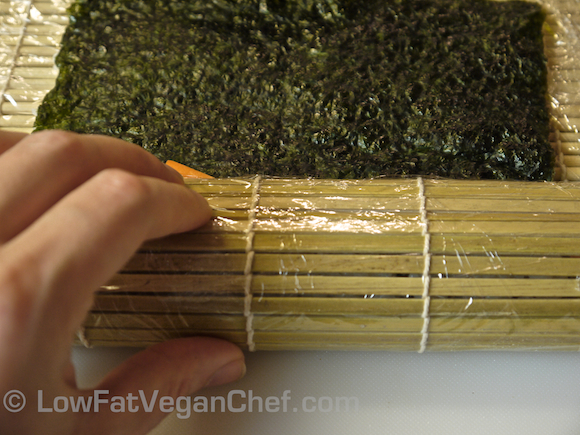
Step 7: Next we’re going to grab the bottom of the sushi mat and bring it up and over creating a tube. You want to make one roll so that you cannot see your filling anymore and tuck and squeeze it under with your hands and the sushi mat. You want to make each roll tight so that your sushi stays together and the filling won’t fall out of the middle when you slice it.

Vegan Dragon Sushi Roll Uramaki Inside Out Roll Avocado Vegetables

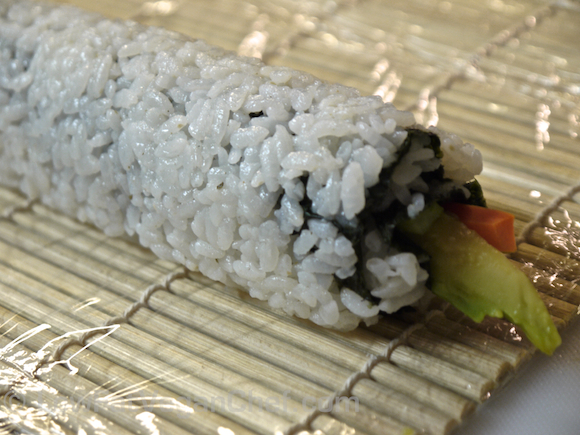
Continue rolling tightly up the nori sheet.

Vegan Dragon Sushi Roll Uramaki Inside Out Roll Avocado Vegetables

This is what it looks like when 1 full roll is done. Continue rolling.

Vegan Dragon Sushi Roll Uramaki Inside Out Roll Avocado Vegetables

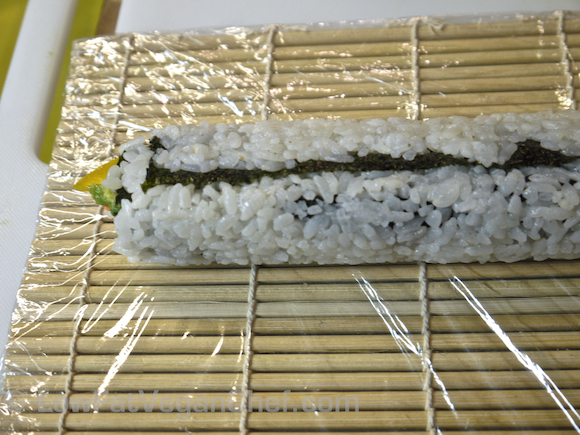
Roll your nori sheet up until the end. You shouldn’t have to wet the end of the nori to seal it. It has moisture from the sticky rice. You want to squeeze it firmly and evenly all across the mat when you get to the end to seal the roll evenly.

Vegan Dragon Sushi Roll Uramaki Inside Out Roll Avocado Vegetables

This is what your sushi roll looks like when it’s sealed.

Vegan Dragon Sushi Roll Uramaki Inside Out Roll Avocado Vegetables

Step 8: Flip your sushi roll over so the seam side is faced down.

Vegan Dragon Sushi Roll Uramaki Inside Out Roll Avocado Vegetables

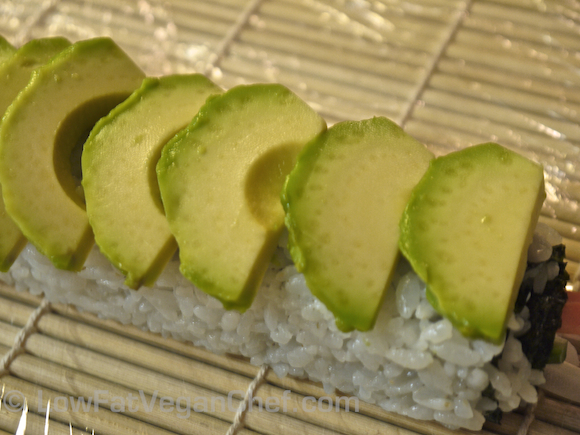
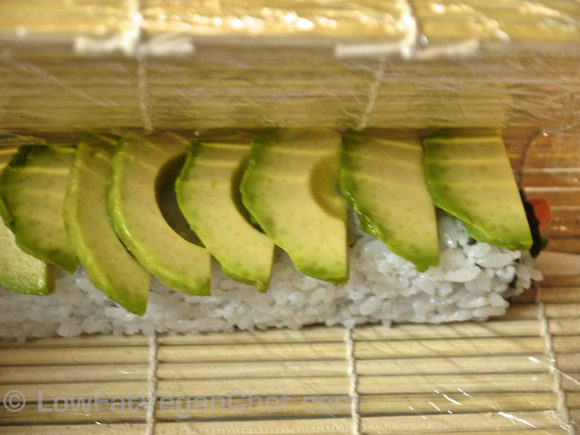
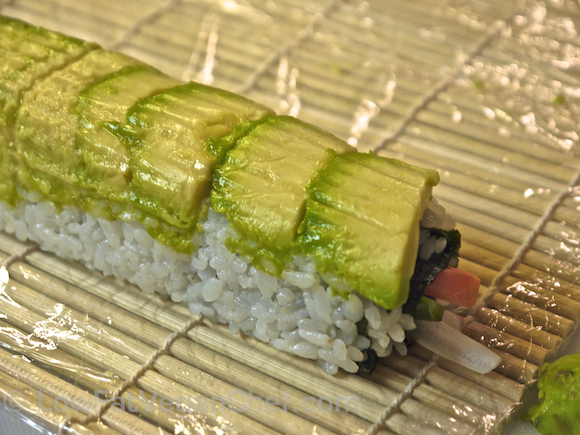
Step 9: Next slice your avocado thinly and lay each piece onto the top of your sushi roll.

Vegan Dragon Sushi Roll Uramaki Inside Out Roll Avocado Vegetables

Step 10: Bring your mat up over the roll and press down on the avocado on the top and sides. Just hard enough to crush it against the rice so it sticks.

Vegan Dragon Sushi Roll Uramaki Inside Out Roll Avocado Vegetables

Step 11: Get a very sharp knife, wet it thoroughly with water and make a 6-8 cuts to the sushi roll to create sushi pieces. This takes some time and patience. You must wet your knife between EACH cut because your knife will be covered in sticky starch from the rice. If you don’t keep the knife wet and clean before each cut you can tear and mangle your pretty sushi roll. I generally cut these ones into 6 pieces. But if you’re feeding children, it’d be better for 8 pieces so it’s not too big for them to bite into.

Vegan Dragon Sushi Roll Uramaki Inside Out Roll Avocado Vegetables

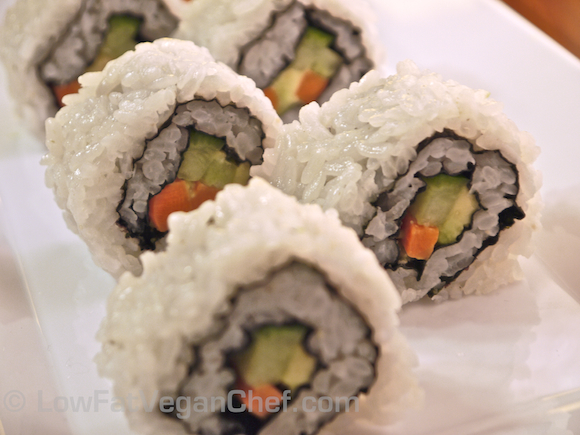
Vegan Dragon Roll

Next plate your sushi and serve with soy sauce or tamari and chopsticks! Enjoy your beautiful vegan Dragon Roll!

Filed Under: How To, Sushi Tagged With: avocado, carrot, cucumber, gluten-free, nut-free, soy-free, sushi, zucchini

How To Prep Veggies For Vegan Sushi Rolls

January 8, 2012 by Veronica Grace 3 Comments

Fb-Button

Vegan California Rolls (Uramaki style)

This post is about how to prep your veggies to make vegan sushi rolls. Check out my recipe for Vegan California Rolls.

Vegan sushi rolls are great because they can appeal to everyone from vegans and vegetarians to people who would rather not eat traditional sushi that contains raw fish.

They are fun to make and can be made up in advance for fancy hors d’oeuvres, a potluck, a themed dinner, a lunch box, or a snack! Choose your favourite fillings and I will give you some tips on how to prepare them for putting into sushi rolls.

Generally, the Japanese do not eat raw plain vegetables in their sushi rolls. They mainly use raw fish, cooked shrimp, cooked crab, pickled daikon radish, egg roe, or cooked egg. The raw vegan friendly items you will find are generally cucumber and avocado. Basically because their texture is desirable raw and you can’t really cook them.

For other harder vegetables they are blanched or gently steamed so they can be easier to chew and more pleasurable to eat. You don’t have to steam your crunchy vegetables if you don’t want to. But I’ll give you some suggestions for which ones to do so for a more enjoyable roll.

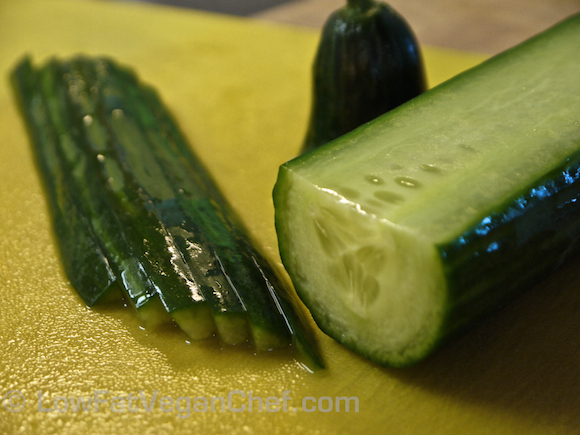
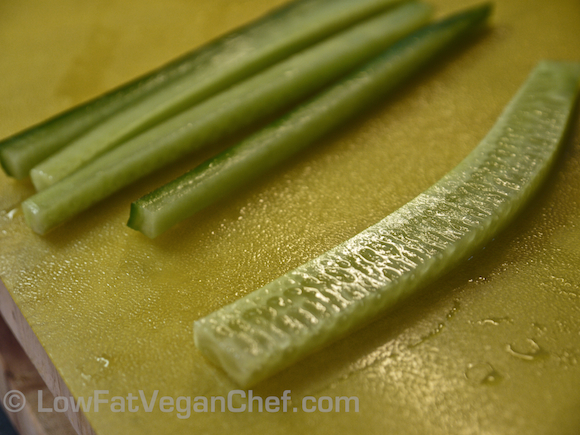
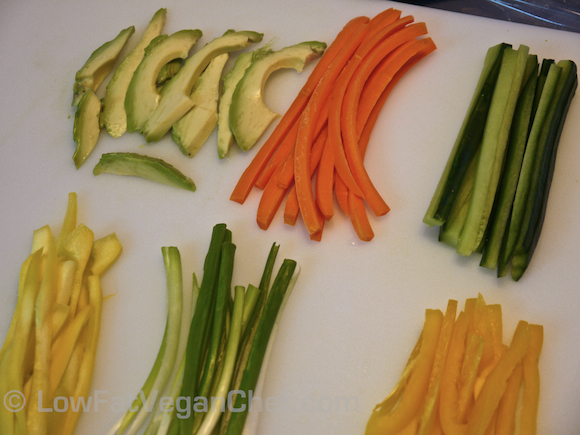
For cucumber, the English variety is best because it has few seeds and is tender. You want to slice the cucumber about in half and then slice a 1/2″ thick slice vertically down the cucumber. Next julienne it in strips. You will need about 2 strips of cucumber for each roll you are making.

Slice out the seed portion from your cucumber. You don’t need to use it to make sushi rolls.

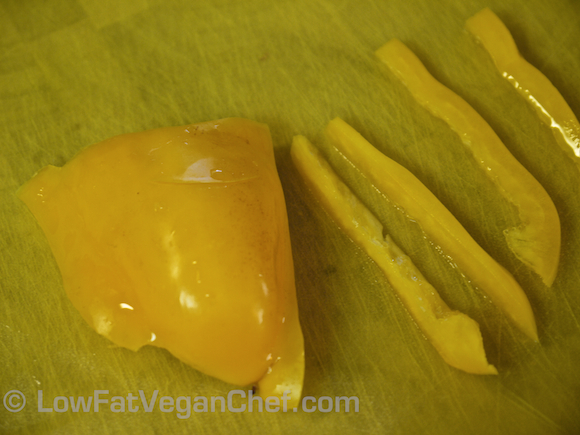
If you’re using Bell peppers (capsicum) you can leave them uncooked and raw and just slice the top off and julienne into strips.

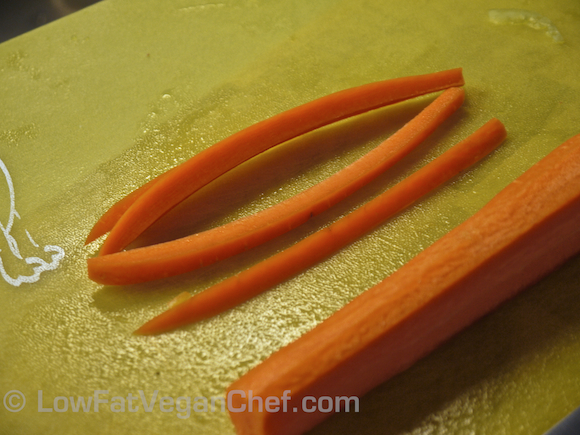
For carrots, peel them and slice just like the cucumber into 1/2″ thick slices and then julienne.

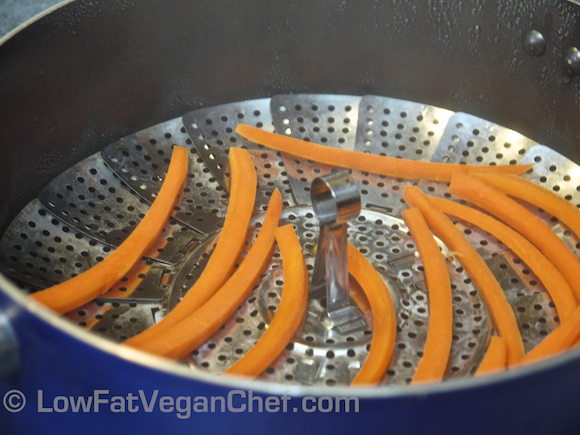
I recommend steaming the carrots gently so they are not rock hard and crunchy in your sushi roll. It’s up to you, but steaming for 1-2 minutes will improve the eatability of your veggie sushi.

The carrots have turned a light orange and are al dente. Set aside to cool before rolling into sushi.

For avocado, ensure you have a ripe one. The one I have here is pretty ripe so that’s why it’s a little mushy. Generally sushi bars use semi ripe or a little underripe avocado because they go through so many of them and if they are firm it’s easier to work with. Personally I think crunchy watery unripe avocado is gross and will not use it in my cuisine. So pick a green avocado a few days before you want to make sushi and let it ripen on the counter. It is ripe when soft to the touch. Cut it open, pull out the seed and make slices into the avocado. You can pull out a slice at a time as you slice it, or scoop it all out with a spoon.

All my veggies are now prepped and ready to fill my sushi rolls.

Additional veggies you may want to use in your vegan sushi rolls:

green onion – leave raw, wash and slice lengthwise once and then horizontally once.
asparagus – cut off the hard bottoms, and steam gently for 1-3 minutes and let cool.
yams/sweet potato – peel and cut into long rectangular strips and steam until just cooked but still firm.
zucchini/courgette – peel and julienne like cucumber and steam gently for 1-2 minutes if desired. This improves flavour.
pickled daikon radish – can be purchased at Asian markets and julienned. They are usually bright yellow in colour and is used in Oshinko sushi rolls.
sprouts – you can simply wash and dry sprouts like sunflower or alfalfa and use in addition to other veggies in a sushi roll. By themselves would not be very flavourful.

You can also roll sliced tofu, marinated tofu, or bean curd skin in your vegan sushi rolls if desired as well.

Filed Under: How To, Sushi Tagged With: avocado, carrot, cucumber, green onion, nut-free, pepper, sushi

Primary Sidebar

Follow Us:

Newsletter

Get The Low Fat Vegan Starter Kit

natural organic skin care line

Free Skincare Samples

Earn Free Crypto At Binance

Earn Free Bitcoin on Gemini Exchange

Earn $10 in Bitcoin With Gemini Exchange
Dr. Fuhrman
Dr. Fuhrman
Dr. Fuhrman

Tags

80/10/10 apple avocado banana blueberries breakfast broccoli Carrots celery chickpeas cilantro corn cucumber Curry dill dinner easy Eat To Live fat-free gluten-free how-to Indian Dishes lemon low-fat mango mexican mushrooms nut-free oil-free pasta pineapple plant-based raw raw vegan rice smoothie soup soy-free spinach tofu tomato tomatoes vegan vegetarian vitamix

Secondary Sidebar

Recipes:

  • Cooked Vegan Recipes
  • *My Recipe Books
  • Breads and Baked Goods
  • Breakfast
  • Brunch
  • Burgers
  • Casseroles
  • Curries
  • Desserts
  • Dinner
  • Dips for Veggies or Chips
  • Eat to Live-Dr. Fuhrman Recipes
  • Engine2Diet
  • Ethiopian Dishes
  • Greek
  • Green Dishes
  • Holiday
  • Indian Dishes
  • Mexican
  • One Pot Meals
  • Pasta
  • Pizza
  • Quinoa
  • Salads
  • Sandwiches and Wraps
  • Raw Vegan Recipes
  • 80/10/10
  • Raw Breakfast
  • Raw Desserts
  • Raw Dips
  • Raw Dressings
  • Raw Entrees
  • Raw Juices
  • Raw Salads
  • Raw Smoothies
  • Raw Snacks
  • Raw Soups
  • Sauces
  • Side Dishes
  • Slow Cooker Recipes
  • Snacks
  • Soups and Stews
  • Spices/Seasonings
  • Sushi
  • Thai
  • Vietnamese

Copyright © 2026 · Foodie Pro & The Genesis Framework