• Skip to primary navigation
  • Skip to main content
  • Skip to primary sidebar
  • Skip to secondary sidebar

Plant Based U

Fat-Free and Low Fat Vegan Plant Based Recipes

  • Home
  • Recipes
    • Raw Vegan Recipes
    • Cooked Vegan Recipes
    • Eat to Live Dr. Fuhrman Recipes
  • Products
  • Coaching
  • Videos
  • Articles
  • About
    • What Is Low Fat Vegan/Whole Foods Plant Based
    • Resources
  • Contact

Side Dishes

Fb-Button

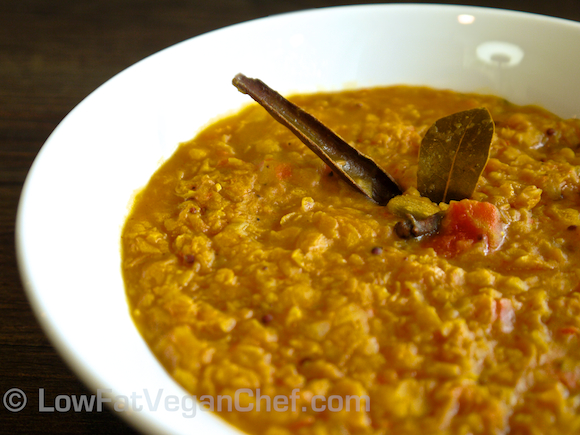
Fat Free Vegan Indian Tarka Chana Dal (An Easy Oil-Free Curry Recipe)

June 4, 2012 by Veronica Grace 23 Comments

Fb-Button

Tarka Dal is also known as Dal Tarka or Tadka depending where you are in India. Like many Indian foods the names of dishes are phonetic so often you will see similar spellings of dal such as dhal or dahl. There is no right or wrong way to spell these dishes, I just use the most common spellings for ease of use.

Dal is a dish that is made with any variety of lentils including but not limited to split red lentils (most common in thin dal soups), black urad dal (used in creamy Dal Makhani), split urad dal (ground with rice to create Dosas which are Indian crepes) toor/tuvar dal which looks just like chana dal and yellow split peas but is smaller, and moong dal a small yellow split lentil that cooks faster than chana or yellow split peas also used in soups.

Cook’s Thesaurus has excellent descriptions and pictures of various lentils and how to tell them apart. This may sound quite confusing at first, but it’s unlikely that you will fully immerse yourself into using every type of lentil in Indian cuisine, so don’t worry. The most important thing is just to make sure you’re buying the right lentil and label what you buy if it’s coming from bulk bins. As they are all different sizes and thicknesses they can take different amounts of time to cook.
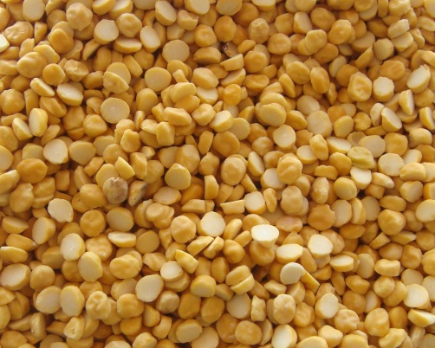
chana dal (skinless split chickpeas)

You can almost see that they look like little chickpeas/garbanzos split in half and are not fully rounded like yellow split peas. Toor/tuvar dal is also yellow and similar in size, but it is not the same.

Chana dal is used in East India and is widely available at Indian markets, bulk dry good sections at the health food store or ethnic market and online. Tarka is a method where spices are cooked/tempered in hot oil and added to the beginning or end of a dish being cooked. Since we’re going for oil free methods of cooking however, all of the ingredients are combined and cooked together in water instead. Tarka dal is usually cooked in 4 steps and can be quite complicated so I simplified the method. For this reason we have slightly increased some of the spices as the flavours will be subdued through cooking. Whole spices are best as they will retain more flavour, if you substitute all the whole spices with powdered spices you may have to reseason it to taste when it’s done cooking and it may not be as flavourful.
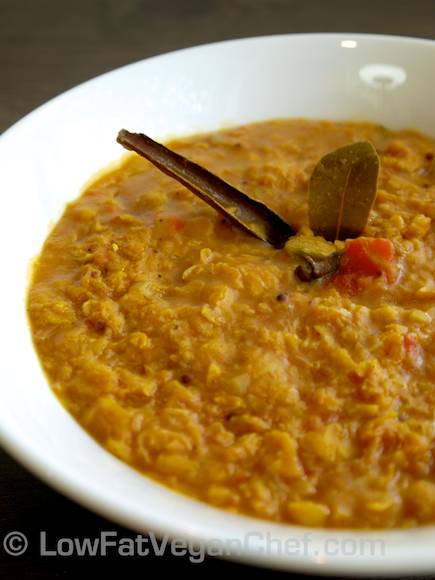
(Oil-Free) Simplified Indian Tarka Chana Dal

Serves 6-8 as a side

Ingredients:

2 cups chana dal (skinless split dried chickpeas, also spelled channa dal, dahl, or dhal)
1 large onion, diced finely
8-10 cloves of garlic, minced
2 inches of ginger, minced (or 1 tsp ginger powder)
1 14.5 oz/411 g can fire roasted crushed tomatoes (I use Muir Glen Organics)
7-8 cups/1.6-1.9 L of water (depending on how thick or thin you want it)
2 tsp turmeric
1 small cinnamon stick
3 black cardamom pods (or green)
8 whole cloves
4 bay leaves
3 tsp cumin seeds
2 tsp black mustard seeds
1-2 tsp red chili powder (or more to taste) I used Frontier Organic Chili powder blend
1 1/2 – 2 tsp salt
Fresh ground pepper to taste
handful of chopped fresh cilantro/coriander (to garnish)

Pressure Cooker Directions:

  1. Combine ingredients (except salt, pepper and cilantro), into a heavy bottomed pressure cooker, mix well, cover and heat over high heat (on gas stove) until a steady stream of steam escapes the pressure valve. Turn the heat down to medium high and cook for 20 minutes or until the dal is just tender (not mushy.)
  2. Season to taste with salt and pepper. Taste test and add additional chili powder if desired. (I added a 1/2 tsp of roasted cumin powder as it’s one of my favourite spices.)
  3. Garnish with fresh cilantro and serve with basmati rice or brown rice if desired.

Slow Cooker Directions:

Alternatively you can try cooking this in a slow cooker on high. Check on it between 4 and 5 hours. When chana is soft, season to taste with salt, pepper and additional spices such as chili powder if desired.

You can also probably cook this over the stove, but you will require more water as it will dissipate. I would guess this would take between 60-90 minutes of cooking time on a stove depending whether it was electric/gas and what temperature it’s cooked at. Make sure you stir it and check on the water level so it does not burn to the bottom of the pot.

Additional Tips:

If serving this to guests unfamiliar with Indian curries, you may want to take out all of the pieces of cinnamon stick, bay leaves, cardamom pods and cloves before serving. Be careful, the dal is hot! Generally we just pick these pieces out while we’re eating. But just make sure to warn people as a mouthful of clove or cardamom can be a little unpleasant!

If you like your dal thick as pictured above you can use the lower amount of water. If you find your dal is a little too runny you can add some corn starch slurry to it to thicken it up. Use 1 tsp mixed in a 2 tablespoons of water at a time and heat through until you get the desired consistency.

You may want to serve this as a side dish, or even as a main meal with rice or Indian flat bread. For a main meal this will make enough to serve 4-6 people.

Refrigerate or freeze any leftovers for a quick healthy meal later on in the week.

Don’t use regular yellow split peas for this recipe. They take a really long time to cook and won’t be the same, despite looking almost like chana dal.

Have you ever had Tarka Dal before? Have you ever tried chana dal?
Filed Under: Cooked Vegan Recipes, Curries, Dinner, Eat To Live - Dr. Fuhrman Recipes, Indian Dishes, One Pot Meals, Side Dishes Tagged With: Curry, fat-free, gluten-free, Indian Dishes, Lentils, nut-free, savory, Spicy

Low Fat Vegan Cheezy Sauce For Steamed Vegetables

April 23, 2012 by Veronica Grace 23 Comments

Fb-Button

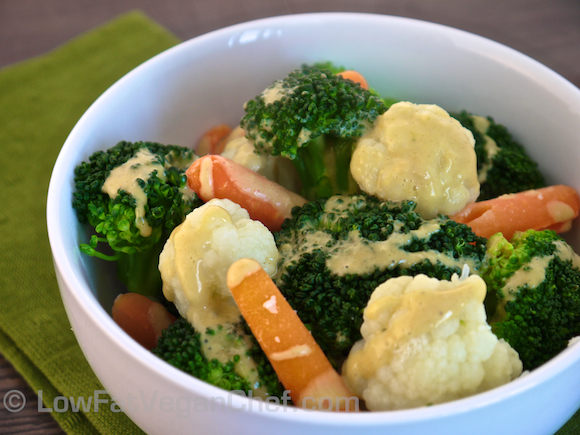
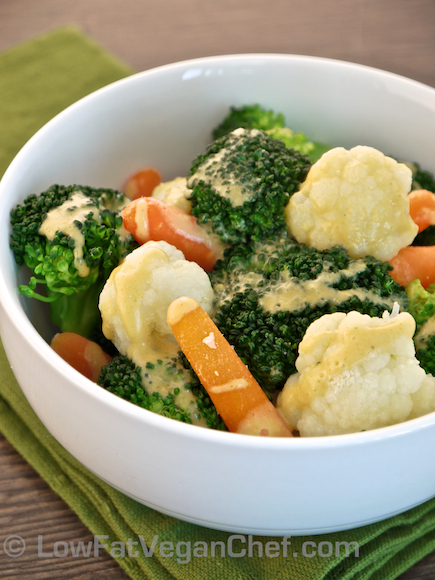
Low Fat Vegan Chef Cheezy Cheese Sauce For Steamed Vegetables

Today I wanted to share a recipe with you from my upcoming second recipe ebook: Low Fat Vegan Chef Presents: Vegan Comfort Foods From Around The World. All the recipes are done and photographed, I just have to write it and put it together. In total there is going to be about 60 recipes in it all with photos! It should be available in a few weeks, so keep your eyes out if you’re missing some home cooked comfort meals!

As I’m currently in Kauai (our second stop in Hawaii) and pretty much away from the kitchen (aside from throwing together cut up fruit, basic salads and steamed vegetables) I haven’t been making any new actual recipes in a week. I kind of feel like I should be making food, but when you’re on vacation you’d rather be snorkelling, swimming or taking pictures! (If you’re like me I guess!)

I thought this would be a great recipe for those not sure what to put on their steamed vegetables for dinner. Most of you have probably had some sort of cheese, Cheese Whiz or cheese sauce on your vegetables prior to eating vegan and have a craving for something cheese-like at the dinner table. Also sometimes kids (and even grown ups!) like to dip their veggies into a sauce or dip and don’t enjoy eating them plain.

Growing up my mom would always make this homemade butter+flour+milk+grated cheese sauce for us when we had pierogies, ham, mixed vegetables, or even a dish called Welsh Rarebit (essentially a fried egg on toast topped with cheese sauce. Her version anyways and no we’re not Welsh or Polish. I have no idea where these recipes came from!). We loved this sauce. We asked for it all the time, we wanted to pour it on everything and we wanted to dip everything into it.

Pretty much everything about my mom’s cheese sauce that made it delicious isn’t really healthy or vegan, so I wanted to create something that was much much healthier and still tasty for those who miss cheese sauce.

The trick to getting a cheese-like taste in your sauces is to use nutritional yeast (this is yellow yeast flakes that are sold at the health food store, this is not brewers yeast, quick rising yeast nor does it have anything to do with baking) and miso paste. Nutritional yeast has a cheese-like tangy flavour and can be used in sauces, dips, dressings, or even shaken onto salads and pop corn. The miso paste is what gives it a strong fermented salty flavour and gives the cheesiness more depth. Nutritional yeast and salt is really not enough, miso paste is essential. You can find this at the health food store or any local asian market. I usually buy yellow/mild or brown rice miso. I don’t use white shiro miso or red miso. But use what you can find. The miso won’t go bad and will last a while and you can use it for more asian sauces, dips and add to soup stocks or make miso soup with it. If you use my recipe ebooks you will find it in several of the recipes as well.

For this recipe I just used a pre pack of fresh mixed vegetables that I got at the store. I wanted to make it simple for people who are new to preparing fresh vegetables and don’t have a lot of time. You can also cut up your own assorted fresh vegetables, or use frozen vegetables as well. The key is to make sure you don’t overcook them and make them mushy. I am constantly checking on them while they steam and testing them with a knife to see if they are soft in the centre. When they are al dente and ALMOST cooked turn off the heat and take off the lid. The veggies will continue to cook with all the hot steam in the pan and they will be overcooked if you continue to leave the heat on them. Leave the cover off so you dissipate some of the steam. No one likes overcooked veggies! This takes some practice, but if you can set a timer and find out the exact time it takes when the water boils you will make things easier next time you make them. Broccoli is the first to overcook and cauliflower is sturdier so I usually put it in the pot for a minute first and then put the broccoli on top to cook.

Low Fat Vegan Chef Cheezy Cheese Sauce For Steamed Vegetables

Low Fat Vegan Cheezy Sauce For Steamed Vegetables

From Comfort Foods From Around The World 

Serves 3-4 for a side dish of veggies

Ingredients:

1 cup almond milk, unsweetened original (I used Blue Diamond brand. Don’t use sweetened or vanilla)
1/4 cup nutritional yeast flakes
1/4 tsp smoked paprika (available at Indian stores, spice markets and Amazon. McCormick also makes one available at Walmart)
1/2 tsp miso paste
Fresh ground pepper (if desired)
1 1/2 tbsp flour (GF if desired)

Directions:

  1. Add almond milk to a sauce pan and heat over medium (or medium low on gas stove) heat until warm. Sprinkle in the nutritional yeast and smoked paprika. Whisk it in.
  2. Add the miso paste and try to break it up so there are no large clumps. Let it heat through a little and keep whisking it. Taste test and add a little more smoked paprika and some ground pepper if desired. If you add more miso it will make it saltier so use caution. (You want a tangy zesty flavour.)
  3. Gently sprinkle in the flour and whisk in to combine. Try to ensure there are no clumps. Heat through for a minute or two until it’s thickened up. Stir it to prevent it from sticking or burning at the bottom.
  4. Have your steamed vegetables ready or turn off the element and cover to keep warm until your veggies are ready.
  5. Drizzle over vegetables and serve. (Have extra ready for your dinner guests to add more if they wish.)
Variations:
Feel free to use soy milk, rice milk, hemp milk etc as desired. I just have a preference for almond milk and don’t enjoy the taste of soy milk myself. To change some of the flavours in this sauce you could omit the smoked paprika and add some garlic and onion granules instead or add some tabasco or chipotle chili powder to make it spicy.

What do you think of this recipe? Did you ever have cheese sauce before you were vegan? What do you like to use now on vegetables?

Filed Under: Cooked Vegan Recipes, Eat To Live - Dr. Fuhrman Recipes, Green Dishes, Sauces, Side Dishes Tagged With: broccoli, Carrots, cauliflower, cheese, cheeze, gluten-free, miso, sauce, soy-free

How To Bake A Russet Potato Without Oil For Baked Jacket Potatoes

March 27, 2012 by Veronica Grace 16 Comments

Fb-Button
Oil Free Vegan Baked Potato Hummus Salsa

Oil Free Vegan Baked Potato with Red Pepper Hummus and Salsa

Just a reminder that my Comfort Soups To Keep You Warm recipe eBook is out! I’m already getting lots of great feedback on how delicious the soup recipes are!

Today I’m going to show you how to bake healthy baked potatoes in the oven without all the oil and fat!

I  think baked jacket potatoes are something that most people love or have fond memories of eating.  It’s a comfort food for them and I know Dr. John McDougall is certainly very fond of them as well! Potatoes can be healthy, or unhealthy depending what you put on them though. If you’re on the McDougall Program you might be interested in baking russet potatoes regularly and without oil of course.


Or maybe you just really like having something warm and filling for dinner, either way baked russet potatoes are a good way to go for a low fat, satisfying meal or side.

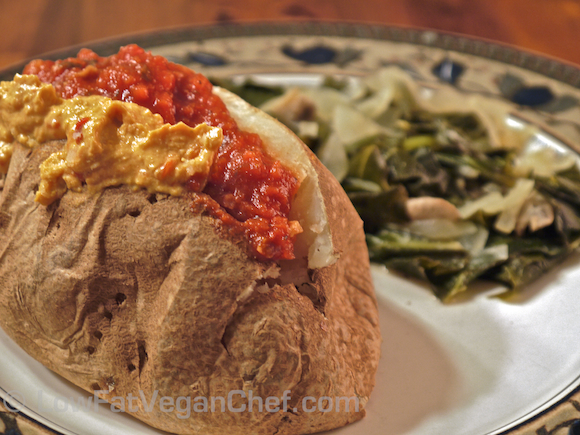
The baked potato above is topped with roasted red pepper hummus (that’s oil free and low fat) and salsa and is served with a side of my Low Fat Vegan Tangy Collard Greens With Coconut Milk and Mushrooms . (It’s also delicious to pour some of the coconut cooking liquid on top of your baked potato.)

So the main reason people like to oil and salt their potato skins before baking them is because it makes the skin all crispy and taste, well salty! The other reason is that it cooks it a bit faster but it raises the temperature it cooks at. Baking in oil at such high temperatures can create carcinogens and adding excess oil to a potato skin is not the best for health.


It’s also not beneficial to your health if you load your baked potato or potato skins with bacon, cheese, butter and/or sour cream. These things are far too rich and the negative effects of these toppings outweigh all the health benefits of eating a baked potato for vitamins and fibre. If you’re watching your weight, cholesterol or salt intake, please don’t add those things to your baked potato. There are many healthier alternatives.

While leaving their rich potato toppings out won’t make it taste exactly the same, it will be healthier for you and you can dress up your potato skins with some healthy low fat vegan alternatives like:

  • Fat free salsa (homemade or jarred)
  • Tobasco sauce
  • Hummus (original or roasted red pepper, low fat of course. Look for oil free or make your own.)
  • Baked beans (homemade or canned)
  • Salt and Pepper
  • Fresh chives or green onions (scallions)
  • Nutritional yeast
  • Fat free vegan queso or “cheezy” sauce
  • Steamed veggies like broccoli or kale

What Potato Do I Use For Baked Potatoes?

Use the dark brown rough skinned russet potatoes you find at the grocery store. They make the best baked potatoes and are also good for mashed potatoes. Don’t use the smooth waxy skinned yellow or red potatoes for baked jacket potatoes, these are better suited for potato salad, mini roasted potatoes, steamed or boiled potatoes and used in stews and soups.


Make sure that you select russet potatoes that are about the same size so they cook at the same time. If you bake medium and large ones together the large ones will not be done when the medium ones are ready.

Should I Cover My Russet Potato In Tinfoil For Baking?

No. I have no idea why people think they should do this, much less why some grocery stores sell russet potatoes in tinfoil. Maybe if you want to barbecue them, but when you put tinfoil on it you are STEAMING the potato from the inside out and not BAKING it. So it is not going to turn out like a baked potato and be all dry and fluffy inside. It will be more watery and dense like potatoes steamed in water. Don’t do this. Bake them uncovered for best results.

How To Bake a Russet Potato Without Oil

from Comfort Foods From Around The World 

Step #1: Preheat your oven to 400 F/ 205 C  (375 F on a convection oven)

Step #2: Wash your russet potatoes well and cut out any “eyes” or bad spots in the potatoes.

Step #3: Use a fork and poke a lot of holes all over your potatoes. This stops them from cooking unevenly and possible exploding in the oven.

Oil Free Baked Oven Roasted Potatoes

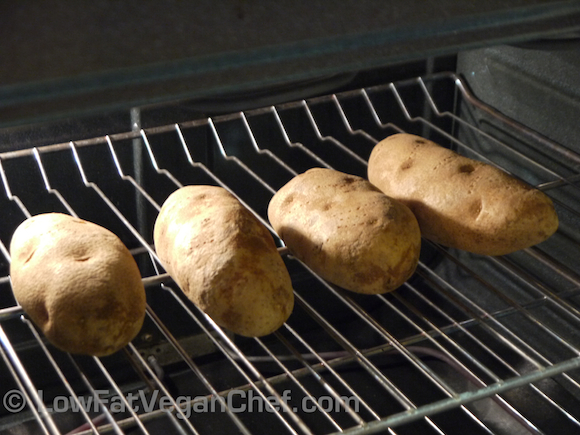
Step #4: When your oven has come up to temperature, place them directly on the rack in the middle of the oven. Leave enough space between them that they are not touching.


Step #5: Bake your potatoes for 50-70 minutes (depending on size) and check on them between 50 and 60 minutes. Using a pot holder or oven mitt, you want to gently squeeze the potatoes and see if they give. If they seem soft all the way through to the middle they are done. If you are not sure you can cut one in half and check. If they need more time, continue to bake, or you can microwave for a few minutes more to finish them off if you’re in a hurry. (Once you know the exact cooking time for your oven and this size of potato, write it down or remember it so you don’t have to check on it and guess next time. Usually they will be done within 60-70 min).

Step #6: To fluff your potato you’re going to make a slit across the top of it, and using pot holders or oven mitts gently squeeze the bottom of the potato together (like how a crab would close it’s claws) and this will push the insides up and open it for filling. (This is something I learned when I worked in a restaurant and had to plate food.)

Step #7: Fill your potato with your (hopefully healthy and vegan) seasonings and serve.

When I bake giant potatoes like this it become a whole meal when served with a side of greens. So this makes it a really easy AND cheap vegan meal!

Time Saving Tip:

You can bake multiple potatoes and keep them for future meals in the fridge and just reheat them for a quick lunch or side dish the next night.

I know a lot of Americans like to “nuke” their raw potatoes, but I really don’t like this. They can get all hard on the bottom and be a different texture. I prefer to bake mine and only reheat if necessary and not to use the microwave to cook anything that was raw.


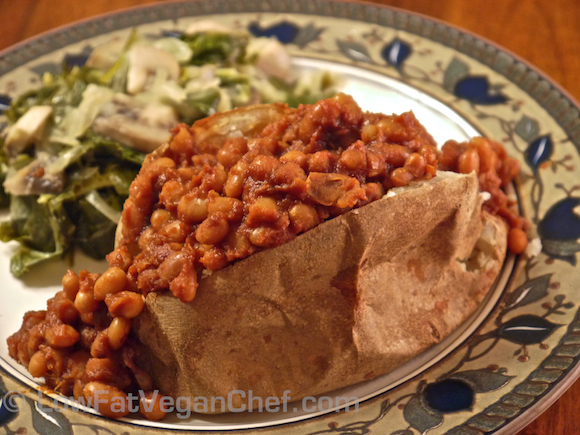
Oil Free Vegan Baked Potato With Baked Beans

Oil Free Vegan Baked Potato With Baked Beans

Here’s another oil free baked potato served with homemade baked beans. The baked beans recipe will be in my upcoming “Comfort Dinner Recipes From Around The World” eBook.

What do you like putting on your oil free baked potatoes?


Filed Under: Articles, How To, Side Dishes Tagged With: Cooking Tips, fat-free, gluten-free, how-to, nut-free, potato, side dish

How To Cook Quinoa Perfectly Every Time On The Stove Or In A Rice Cooker With Photos

January 23, 2012 by Veronica Grace 159 Comments

Fb-Button
How To Cook Quinoa Perfect Every Time On A Stove Or In A Rice Cooker

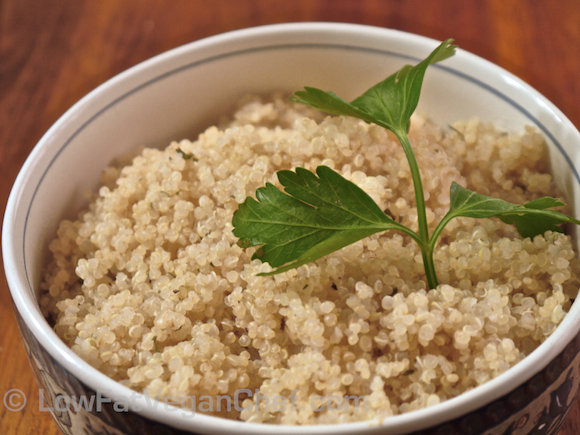
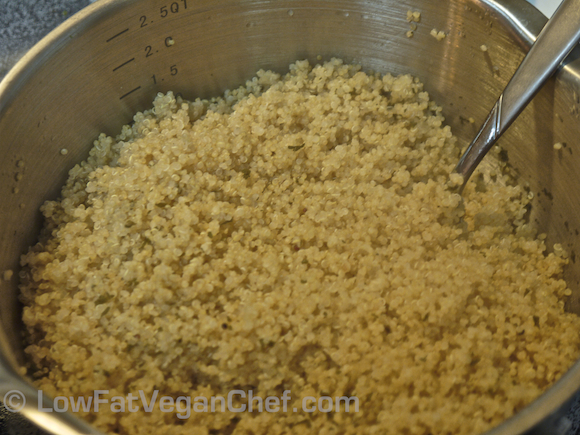
tPerfectly cooked fluffy white quinoa

Quinoa (pronounced Keen-wa) is a delicious low fat superfood grain (actually a pseudo cereal, it is not a grass like wheat is) that comes from South America and is closely related to beets, spinach and tumbleweeds, believe it or not! This is also why it is gluten free. Quinoa is not related to wheat and does not contain any gluten at all either.

Perfectly cooked quinoa is something you can achieve! I’ve eaten quinoa cooked by many different people and there is a world of difference in the enjoyability of quinoa if it is mushy and overcooked, or light and fluffy. Generally what you see at vegan potlucks are mushy overcooked quinoa dishes, while at vegetarian restaurants you get these nice chewy perfectly cooked separate quinoa granules.


The BIGGEST mistake people make when making quinoa is using a 2:1 water to quinoa ratio. Quinoa absorbs much less water than rice, so it is unnecessary to cook it in so much water. Trust me, your quinoa will turn out perfectly if you do it this way (see recipe below). If you insist on having wetter slightly mushier quinoa you may find this ok. But I like to have my quinoa be fluffier so it can absorb some of my sauce or it can be lightly sprinkled into salads or used as a base for a salad.

Once you know how to make quinoa, you will enjoy eating it regularly. It’s an easy replacement for rice or couscous as a side dish and much more nutritious.

How do you know if you’ve overcooked your quinoa? It will probably be very wet (a result of too much water) and will be mushy and not light and fluffy. Quinoa doesn’t absorb as much water as rice so adding too much water can result in mushy quinoa. It could also be sticky and burned on the bottom of yuor pot.


So mix it up!

Let’s get started and teach you how to cook quinoa perfectly. Below are the best quinoa cooking instructions!

How To Cook Quinoa Perfectly Every Time Tutorial

Makes about 6 cups of cooked quinoa (Perfect for dinner and then leftovers or use the extra in cold salads)

For this recipe you will need:

1 1/2 cups dry quinoa (white, or red quinoa)
1 1/2 cups water or vegetable broth (low sodium or homemade)
1 tsp of salt or Herbamare (if desired)
Fresh ground pepper to taste (if desired)
2-3 tbsp lemon juice or other seasonings like parsley flakes or Trader Joe’s 21 Seasoning Salute *optional

Tools:

Measuring Cup
Pot with a lid or a rice cooker. I enjoy using my Zojirushi rice cooker.


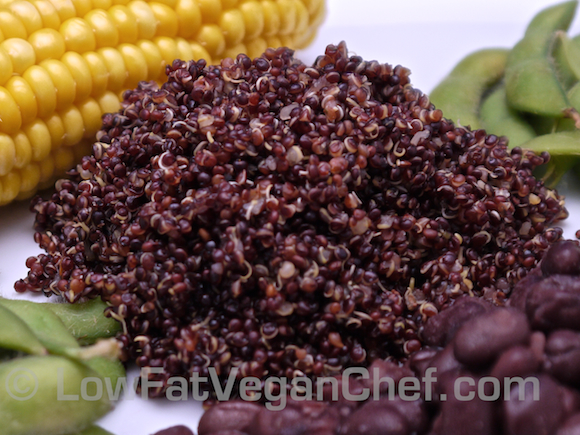
This method will ensure that your quinoa is light and fluffy and never soggy or overcooked. You can make up a big batch for dinner and save extra portions for the fridge or freezer so you can reheat it easily. Using less water (1:1 ratio instead of 2:1) achieves the best results for white or red quinoa. I’ll show you how to cook it on the stove first, and then you can scroll down to view the rice cooker directions. Note, for black quinoa, I found that it was a little crunchy. So I would recommend using 1.25:1 ratio of water to black quinoa. 1 1/4 cups water for 1 cup of black quinoa so it’s moister and softer. Use whatever quinoa you prefer or whatever is cheapest that you can find.

How To Cook Quinoa Perfect Every Time On A Stove Or In A Rice Cooker

Fluffy black quinoa

How To Cook Quinoa On The Stove Top Directions:

How To Cook Quinoa Perfect Every Time On A Stove Or In A Rice Cooker

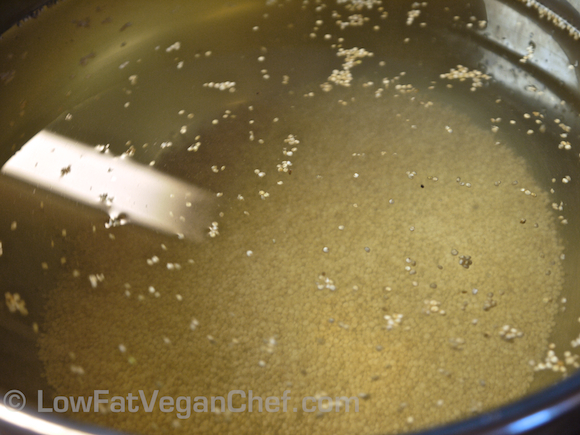
soaking quinoa

Step 1: Soak quinoa in a large bowl for 15 minutes in cool water.

How To Cook Quinoa Perfect Every Time On A Stove Or In A Rice Cooker

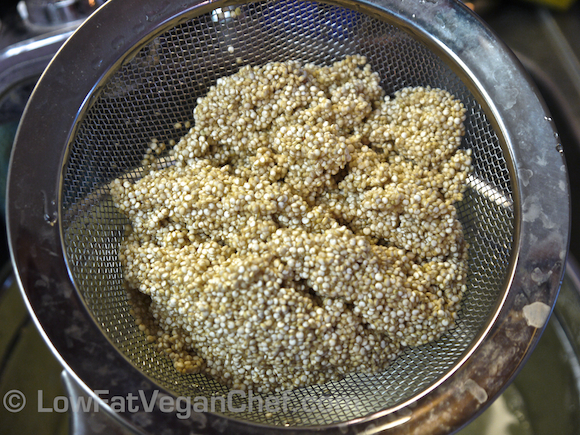
Rinsing quinoa

Step 2: Using a fine mesh strainer, drain and rinse your quinoa until the water is clear and it’s not foamy anymore. About a minute or two and then dump it into a pot.


How To Cook Quinoa Perfect Every Time On A Stove Or In A Rice Cooker

(Stovetop Directions Follow – Scroll Down For Rice Cooker Directions)

How To Cook Quinoa Perfect Every Time On A Stove Or In A Rice Cooker

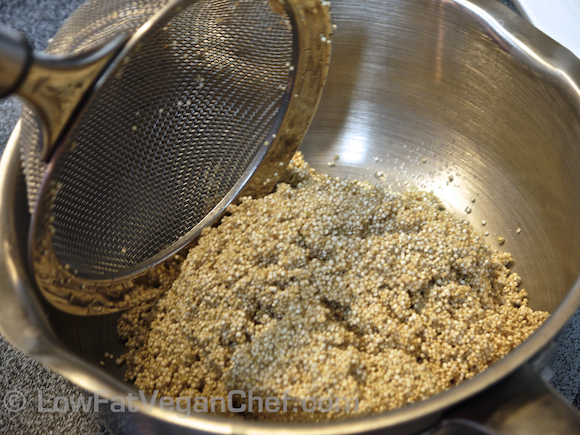
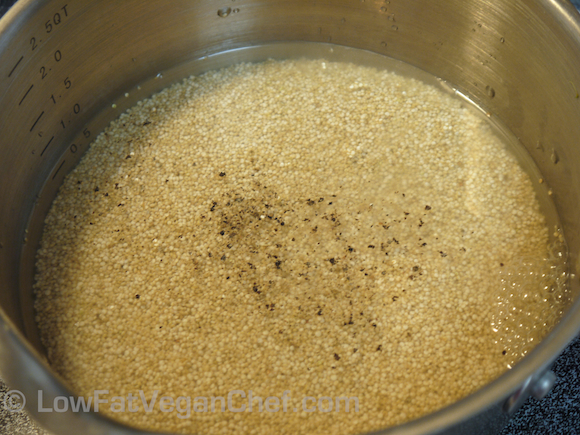
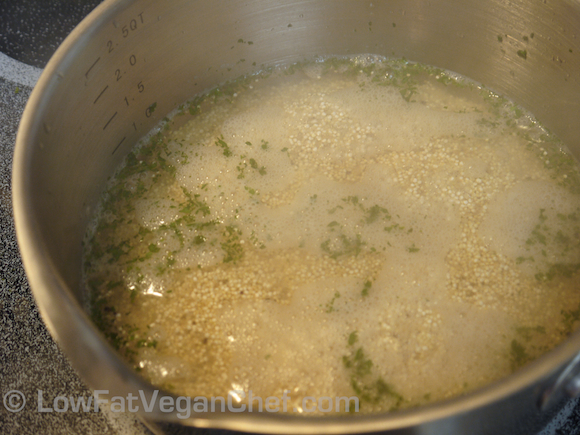
Step 3: Combine rinsed quinoa and water (use a 1:1 ratio) in a pot. Add seasonings. Turn on to medium heat.

How To Cook Quinoa Perfect Every Time On A Stove Or In A Rice Cooker

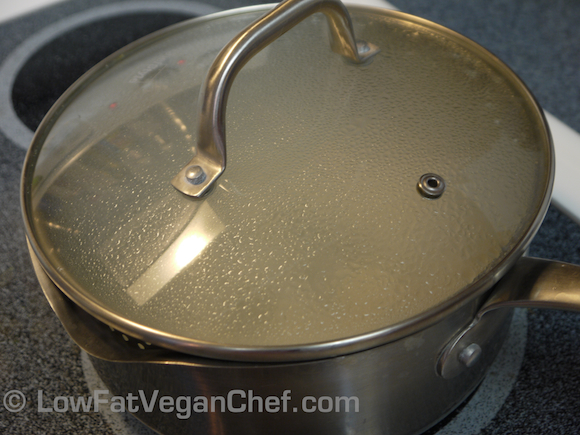
Step 4: When the quinoa is simmering, cover it, reduce it to low heat and cook for 30-35 minutes.

How To Cook Quinoa Perfect Every Time On A Stove Or In A Rice Cooker


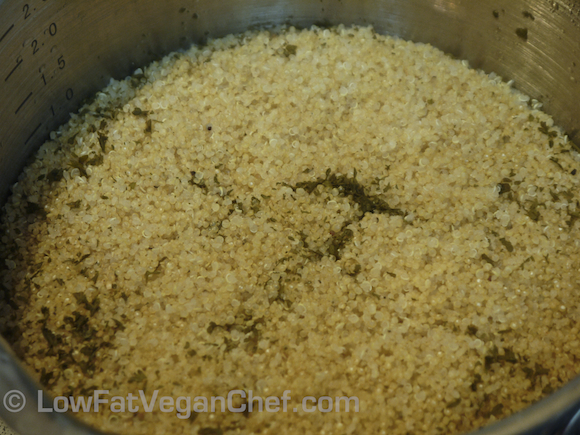
Step 5: When all the water is absorbed remove the pot from heat. Let sit covered for 5 minutes to finish steaming.

How To Cook Quinoa Perfect Every Time On A Stove Or In A Rice Cooker

(Finished quinoa after steaming)

How To Cook Quinoa Perfect Every Time On A Stove Or In A Rice Cooker

Step 6: Fluff with a fork before serving.

How To Cook Quinoa Perfect Every Time On A Stove Or In A Rice Cooker


Serve and refrigerate any leftovers for another dish or to sprinkle on salads.

How To Cook Quinoa In a Rice Cooker Directions:

I love my Zojirushi 5 ½ cup (dry) rice cooker. It can cook white rice, brown rice, sushi rice, porridge, steam vegetables and even bake cake!

I have owned many rice cookers over the years.  And while the cheap $10 ones might be ok in a pinch, they fail at cooking most things other than plain white rice. If you’re interested in cooking whole grains like brown rice or steel cut oats a better quality rice cooker does wonders. Zojirushi makes a number of rice cookers from small personal ones to ones large enough to feed the whole family. There are different settings for white rice, brown rice, sushi rice, sticky rice, porridge and cake. You can also program your rice cooker the night before and fill it with water and steel cut oats for homemade oatmeal every morning. It also handles all the timing for you, so unlike the cheap rice cookers you don’t have to keep checking it and pressing the lever to continue cooking. It has a smart “fuzzy logic” computer inside that knows how long to cook each grain and only turns off when it’s done.


Step 1: Soak quinoa for 15 minutes in cool water.

Step 2: Using a fine mesh strainer, drain and rinse your quinoa until the water is clear and it’s not foamy. About a minute or two.

Step 3: Combine rinsed quinoa and water (use a 1:1 ratio) in rice cooker. Add seasonings if desired.

Step 4: Set to white rice setting and cook.

Step 5: When the cooking cycle is complete, let it steam for 5-10 minutes. Fluff with a fork before serving.

Step 6: Serve with your favourite entree or vegetables.

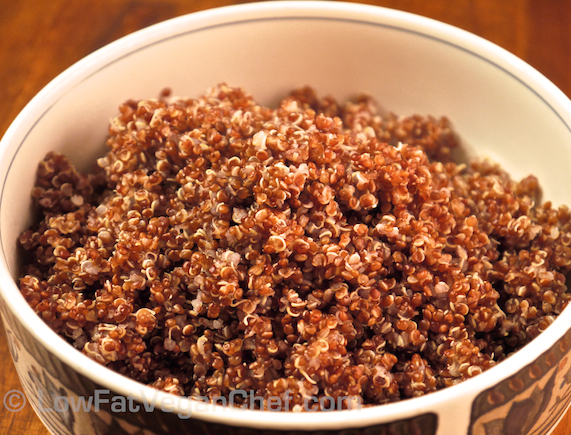
Update! I just made red quinoa with the same stove-top instructions above (because I know some of you don’t have a rice cooker) 

Red quinoa has a much more rich flavour and is more moist and chewier. I wouldn’t say that I prefer white or red more than each other, they just taste a little different. I will continue to make both. I think red is a little stickier so I wouldn’t use it for salads. I think white quinoa would still be the best if you want a tabouli or cold quinoa salad as the grains are individual.

How To Cook Quinoa Perfect Every Time On A Stove Or In A Rice Cooker

Fluffy red quinoa

Enjoy!

What do you think of this tutorial? What do you like to serve quinoa with?


Filed Under: Articles, How To, Side Dishes Tagged With: fat-free, gluten-free, how-to, nut-free, quinoa

Low Fat Vegan Tangy Collard Greens With Mushrooms, Onions and Coconut Milk

January 17, 2012 by Veronica Grace 31 Comments

Fb-Button
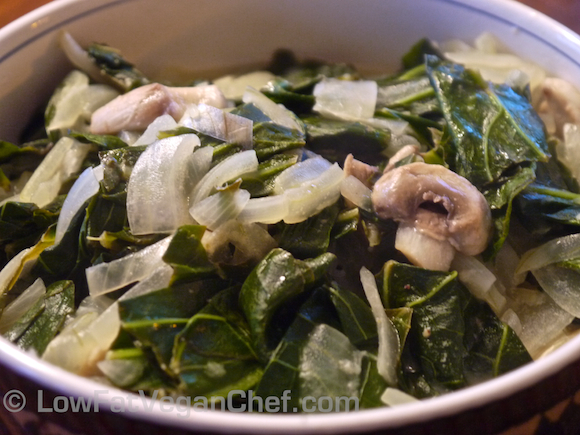
Low Fat Vegan Tangy Collard Greens With Mushrooms, Onions and Coconut Milk

Tangy Collard Greens with Mushrooms, Onions and Coconut Milk

Here is my delicious low fat vegan collard greens recipe!

Reminder: Make sure to subscribe to my bi-weekly newsletter on the right to receive my newest raw and cooked vegan recipes each week! You can also follow me on Facebook, Twitter and Youtube. Link icons are above!

This is an easy oil free and super delicious side dish that you can prepare to accompany any meal! A lot of people know of collard greens, but have no idea how to prepare them healthily, or at all. Generally in the southern United States, it is fried or deep fried and this pretty much negates the benefits of eating collards for health, because your body is dealing with all the denatured carcinogenic fats and free radicals from the oil slathered on it.

To get the health benefits of greens they should be prepared simply. Some of them like baby spinach and tender lettuces can be eaten in raw salads. Collards can be used in raw sandwiches (burrito style rolls) or steamed or sautéed gently.

Depending where you live it may be easy or difficult to find collard greens. I’m in Texas right now, and they are abundant, it only costs about 88 cents (USD) for a giant bunch of them! In Canada, I can only get them in Whole Foods and it costs about $2.99 (CAD) per bunch. So we’re loading up on them here!

Collard Greens Lower Cholesterol Better Than Kale or Broccoli!

“In a recent study, steamed collard greens outshined steamed kale, mustard greens, broccoli, Brussels sprouts, and cabbage in terms of its ability to bind bile acids in the digestive tract. When this bile acid binding takes place, it is easier for the bile acids to be excreted from the body. Since bile acids are made from cholesterol, the net impact of this bile acid binding is a lowering of the body’s cholesterol level. It’s worth noting that steamed collards show much greater bile acid binding ability than raw collards.” Ambrosone CB, Tang L. Cruciferous vegetable intake and cancer prevention: role of nutrigenetics. Cancer Prev Res (Phila Pa). 2009 Apr;2(4):298-300. 2009.

Brief History of Collard Greens

Like kale, cauliflower and broccoli, collards are descendents of the wild cabbage, a plant thought to have been consumed as food since prehistoric times and to have originated in Asia Minor. From there it spread into Europe, being introduced by groups of Celtic wanderers around 600 B.C. Collards have been cultivated since the times of the ancient Greek and Roman civilizations. While collards may have been introduced into the United States before, the first mention of collard greens dates back to the late 17th century. Collards are an integral food in traditional southern American cuisine.

How to Select and Store Collard Greens

Look for collard greens that have firm, unwilted leaves that are vividly deep green in color with no signs of yellowing or browning. Leaves that are smaller in size will be more tender and have a milder flavor. They should be displayed in a chilled section in the refrigerator case to prevent them from wilting and becoming bitter.

Place collard greens in a plastic bag, removing as much of the air from the bag as possible. Store in the refrigerator where they should keep fresh for about three to five days.

Cooking Collard Greens

It is very important not to overcook collard greens. Like other cruciferous vegetables overcooked collard greens will begin to emit the unpleasant sulfur smell associated with overcooking. To help collard greens to cook more quickly, evenly slice the leaves into 1/2-inch slices and the stems into 1/4-inch pieces. You may boil or steam them up to 5 minutes and then season.

For more information on collard greens check out this website http://whfoods.org/genpage.php?dbid=138&tname=foodspice


Oil Free Baked Potato With Tangy Oil Free Collard Greens

Giant baked potato with salsa, hummus and "Tangy Collard Greens"

Low Fat Vegan Tangy Collard Greens with Mushrooms, Onions and Coconut Milk

This collard greens recipe is much lower in fat than traditional collard green recipes that call for frying onions in oil first and then adding the greens. I serve these with giant baked potatoes for a completely filling meal. (Yes, dinner can be this simple and delicious!)

Serves 2

Ingredients:

1 large bunch collard greens, washed
1/2-1 cup of sliced mushrooms of choice
1 medium onion, sliced thinly
1/2 cup light unsweetened coconut milk (So Delicious SugarFree Original is excellent for this, don’t use vanilla or sweetened for this recipe)
1/4 – 1/2 tsp herbamare or salt
1 tbsp of lemon juice (or more if desired)
1/2 tsp sugar or sweetener
1/2 tsp dijon mustard
1 tbsp nutritional yeast
fresh ground pepper to taste

Directions:

1. Take the stems off of the collard greens by turning them upside down and making a small circle with your pointer finger and thumb and squeezing the leaves down and off from the stem. Like you would straighten a pipe cleaner. Cut the remaining parts of the stem off the top if you miss any bits.

2. Bunch all the collards up together on a cutting board and cut into chunks.

3. In a large pot, bring salted water to a boil. When boiling, add the collard greens and cook for 2-3 minutes. Drain well.

4. In a large non stick skillet, turn to medium heat. When it’s hot add the onions and sauté dry for 5 minutes. (TRUST ME, it will NOT burn if you use a non stick pan, and no oil is necessary!) Add the mushrooms, collards, coconut milk and seasonings except for pepper and sauté for 8-10 minutes until collards are at desired tenderness.

5. Taste test and add fresh ground pepper and any additional seasonings like more lemon if desired.

6. Serve as a side dish with your meal. (I love serving these with baked jacket potatoes, beans, or rice.)

Variations:

You can also try this recipe with other greens like kale, mustard greens, turnip greens, beet greens etc.  If you use baby spinach, DO NOT boil it, you can just wilt it in the pan with the coconut milk in a few minutes. Make sure your onions and mushrooms are cooked first before adding the spinach.

If you don’t want to use coconut milk, feel free to use a low fat almond or soy milk instead. The coconut flavour is very mild in this and not essential to the overall taste.

Try other seasonings as well, add some spices like paprika, chili, cumin etc instead of the dijon and nutritional yeast.  Mix it up!

*If you don’t want to use a non stick pan, you can put the collards, onions and mushrooms into a steamer basket, steam for 5 minutes over boiling water and then drain. Season to taste with the coconut milk and seasonings and stir to combine.

See non stick pans – are there safety concerns http://lowfatcooking.about.com/od/healthandfitness/a/nonstickpans.htm  You should NOT worry about cooking oil free over medium heat in a non stick pan. If nothing is flaking off, or food is not being burned onto the pan on high heat for a few minutes this is not a concern.

Have you ever cooked collard greens before? What do you think of this recipe?

Filed Under: Cooked Vegan Recipes, Green Dishes, Side Dishes Tagged With: coconut milk, collards, gluten-free, greens, mushrooms, nut-free, onions, side dish, soy-free

Low Fat Oil Free Vegan Baked Maple Yam Pecan Casserole

January 4, 2012 by Veronica Grace 11 Comments

Fb-Button
Low Fat Oil Free Vegan Maple Syrup Yam Sweet Potato Pecan Holiday Casserole

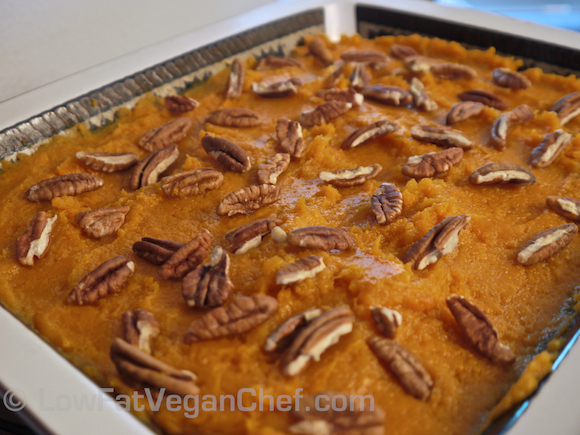
Low Fat Vegan Maple Yam and Pecan Casserole

Featured in my new recipe eBook: Vegan Comfort Foods From Around The World with other holiday favorites like Garlic Mashed Potatoes, Holiday Stuffed Acorn Squash, Cranberry Apple Pecan Stuffing, Cheezy Sauce For Steamed Vegetables and 5 different gravy recipes and more!

I want to  share some of my delicious Christmas dinner recipes I made last year with you. Baked Yam Pecan Casserole is super easy to make and one of my favorite Thanksgiving and Christmas dishes.

It was my extended family’s first “predominantly vegan” Christmas and holiday dinner.  My mom was so thrilled not to have to deal with a turkey, so she just had her husband pick up some pre cooked roast turkey for himself and my grandmother, and the rest of us just at vegan and loaded up on all the delicious sides!

We made my new Cranberry Apple Pecan Stuffing, mashed potatoes and 2 kinds of gravy, vegetables in cheezy sauce. I know some of you will be wanting the recipes, so here’s another one for you to save for special holidays, or whenever you have a serious Yam craving! (Or if you are obsessed with sweet potato casseroles, or sweet potato pie, like they are in the South. I’m in Texas right now lol)

Now these are actually yams, but Americans will still call them Sweet Potatoes. Pretty much anything that seems like a potato and tastes sweet, they call sweet potatoes. In Canada and the rest of the world, they are called yams (In Australia kumara).  Hence why I called the recipe a Yam Casserole. I think the name “sweet potato” is very ambiguous and confusing, as in the USA it encompasses basically any starchy root than is semi sweet, whether it’s golden yams, purple yams, orange yams (like above) etc.  Check out the Wiki on yams if you don’t believe me!

This recipe is SUPER easy and you can of course scale it down if you don’t want lots of leftovers.

This recipe is also oil-free, Earth Balance-free and guilt free! If you don’t have maple syrup, you can certainly use some agave, brown rice syrup or other preferred sweetener.

Low Fat Vegan Maple Yam Pecan Casserole (Sweet Potato Pie -ish)

(You can also half this recipe, if you don’t want leftovers)

Serves 8-10

Ingredients:

5 large yams (orange flesh sweet potatoes in the USA if you insist on calling them that 🙂 )
1/4 cup maple syrup
2 tbsp brown sugar
1 tsp herbamare
1/2 cup pecan halves

Directions:

1. Peel and slice yams into 2″ thick slices. (This is so they cook faster)

2. Steam yams or cook in a pressure cooker just until tender. As soon as you can poke easily with a fork and break them apart they are done.

3. Drain and turn into a bowl and mash with potato masher.

4. Add seasonings and stir gently.

5. Pour into a casserole pan, garnish with pecans and keep warm in the oven at 350 degrees for 20-30 minutes until needed.

6. Serve.

What’s your favourite Christmas or Thanksgiving side? What did you have this year for Christmas dinner? Sweet potatoes or yams?

Filed Under: Cooked Vegan Recipes, Dinner, Holiday, Side Dishes Tagged With: gluten-free, low-fat, maple syrup, pecan, soy-free, sweet potato, yam

Oil Free Low Fat Vegan Cranberry Apple Pecan Stuffing

December 26, 2011 by Veronica Grace 11 Comments

Fb-Button

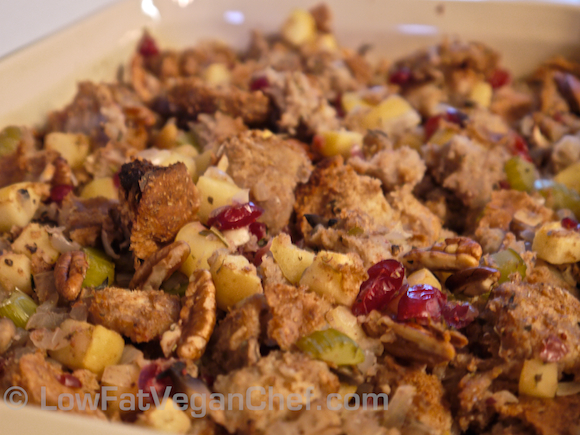
Oil Free Low Fat Vegan Cranberry Apple Pecan Holiday Stuffing

This is a very delicious and healthy, but decadent stuffing recipe you can use for Thanksgiving or Christmas! It contains no butter, margarine or earth balance, and you won’t even notice! It’s full of flavour and very moist and tasty with so many colours and textures to enjoy.

We ate it along with my Baked Maple Yam Pecan Casserole and Decadent Vegan Pecan Pie. Make sure to book mark this!

This photo above was my first time making it and it turned out very well and since then it has become the stuffing recipe that I use from now on. I wanted something with cranberry and pecan in it, and then threw in mushrooms, celery, apple and apple juice as well. In fact my family DEMANDS that I make this savory stuffing recipe each year and no one minds not having turkey flavoured stuffing at all!

This recipe makes a large casserole pan full, so definitely only do the full recipe if feeding a family. If you’re a small family or a single you could half the recipe if you’d like to make less. It definitely won’t disappoint and everyone will rave about how tasty this home made vegan stuffing is.

Fat Free Vegan Cranberry Apple Pecan Stuffing

Ingredients:

15 cups large cubes of bread
1 large onion, diced
2 stalks of celery, sliced
2 cups mushrooms, diced
1 cup cranberries
2 apples, diced
3 1/2 cups apple juice
1 tsp brown sugar
1/2 cup vegetable broth
2/3 cup pecans
1/2 tsp cinnamon
1 1/2 tbsp fresh thyme, chopped
1 1/2 tsp crushed dried rosemary
1/2 tsp dried margoram
1/2 tsp dried savory

Directions:

1. Toast bread crumbs at 350 degrees for 10-15 minutes until dry. Check after 10 minutes to prevent burning. Alternatively you can spread on a cookie sheet and dry out overnight.

2. Slice pecans halves in half. (This makes them spread farther and keeps the recipe lower in fat) Toast pecans at 350 for 5 minutes. Watch carefully to prevent burning.

3. Soak dried cranberries in 3 cups of apple juice for 30 minutes.

4. Saute onions, celery and mushrooms in vegetable broth over medium heat for 8-10 minutes until soft.

5. Saute diced apples in 1/2 cup apple juice, brown sugar and cinnamon until soft.

6. In a large bowl combine ingredients and mix thoroughly until all the herbs are spread out and the bread is moist. If your bread is still a little dry you can pour a little extra apple juice in the bottom of the roasting pan to prevent burning and drying out.

7. Spread out in a large lasagna size roasting pan and bake at 350 for 45 minutes or until heated through.


What do you think? What’s your favourite type of stuffing?

Filed Under: Cooked Vegan Recipes, Holiday, Side Dishes Tagged With: apple, celery, cranberry, mushrooms, pecan, soy-free

Fat Free Plant Based Roasted Brussels Sprouts, Fennel and Portobello Mushrooms (Oil Free Vegan Recipe)

December 9, 2011 by Veronica Grace 20 Comments

Fb-Button

FTC Notice: This blog post contains affiliate links that help support the blog.

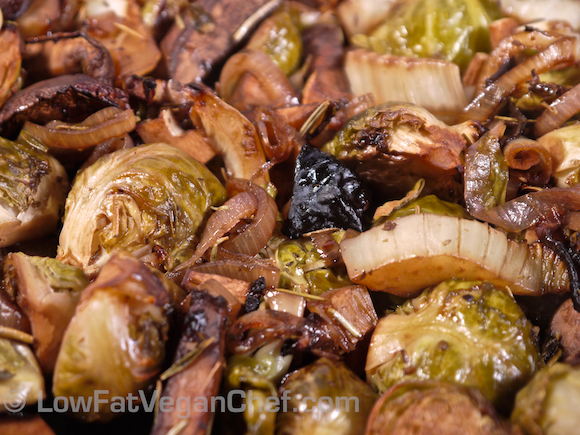
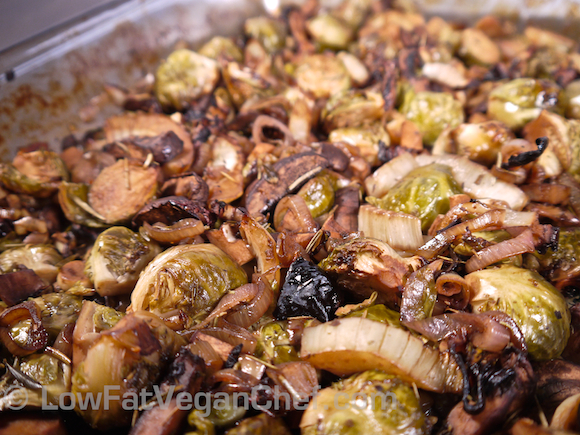
Oil free roasted Brussels sprouts and balsamic vinegar are a delicious combo and a great accompaniment to any meal!

Ahh Brussels sprouts, you either love them, hate them, or fear them…. As a kid I definitely didn’t think I liked them. lol They looked like baby heads of cabbage, and they were green and my mom really never made them. So whenever I would see them at a restaurant or buffet I would avoid them because they were “new and scary”.

Brussels sprouts don’t really scare me now. But you do need to know how to cook them. If you undercook Brussels sprouts they can be really spicy and hard to chew, if you overcook them they can be quite bitter, mushy and unappetizing. I’ve most commonly had them just steamed, but I wanted to try a take on a vegan roasted side dish that had Brussels Sprouts in it.

If you’re going to boil or steam them instead, here’s a quick tip, if you cut an X in the stem of the Brussels sprout it will help it cook faster and more evenly inside, instead of being overcooked on the outside and undercooked on the inside!

I found a vegan Brussels sprouts recipe for inspiration from Celeste’s Vegan Goodness, omitted the oil and switched up portobello mushrooms for the shiitake and added some more seasonings to make it oil free and low fat vegan. If you’ve never tried fennel before either, here’s your chance to check it out. It has a licorice-eque flavour to it and contrasts well with the shallots. This is a delicious way to roast your Brussels sprouts without oil.

(Fat Free Plant Based) Roasted Brussel Sprouts With Fennel and Portobello Mushrooms (Oil Free Vegan Recipe)

Serves 4

Ingredients:

4-5 cups trimmed Brussels sprouts (about 2 lbs)
1 fennel bulb, sliced into half moons
3 1/2 cups sliced portobello mushrooms (about 8 oz)
2 cups sliced shallots (about 3 large)
1-2 cloves of garlic sliced
1 cup low sodium vegetable broth
5 tbsp balsamic vinegar
4 tsp Herbs De Provence
1 tsp Herbamare or sea salt
1/4 tsp fresh ground pepper


Directions:

1. Preheat oven to 400 F/205 C.
2. Place sliced Brussels sprouts in a large mixing bowl.
3. Place sliced fennel in mixing bowl.
4. Slice mushrooms into thick strips and add to bowl.
5. Peel and slice shallots. Remove rings and place and add to bowl.
6. Peel and slice garlic and add to bowl.
7. Add vegetable broth, balsamic vinegar and herbs, salt and pepper. Stir gently to combine. We’re using vegetable broth here instead of oil to season and moisten the ingredients so the herbs will stick.
8. Lightly spritz a 9×12 large roasting pan with light cooking spray or use a reusable non-slip mat (my preference).
9. Pour in veggies and arrange so that they are evenly spaced out.
10. Roast for 30 min. Stir and roast an additional 30-35 minutes until Brussels sprouts are tender.
11. Serve as a side dish or add to salad or Buddha bowls for a savory ingredient.


Additional Tips:

To prepare Brussels sprouts, slice off the tough root at the bottom and peel off 2-6 of the outer leaves depending on how dirty or discoloured they are. Slice in half once peeled.

To prepare fennel, cut off the green tops and fronds. Discard. Slice fennel bulb in half and then cut out the bottom root in a triangle like you would cut out the core of a cabbage. Slice fennel lengthwise.

If you don’t like fennel or don’t have any fennel, you can omit it from the recipe as well. I would just use more Brussels sprouts then to bulk it up.


All done!

Serve with your favourite main dish and devour!

What do you think? Have you ever made roasted brussels sprouts in a dish?


Filed Under: Cooked Vegan Recipes, Dinner, Side Dishes Tagged With: balsamic vinegar, brussels sprouts, fennel, gluten-free, low-fat, mushrooms, nut-free, portobello, rosemary, soy-free

  • « Go to Previous Page
  • Page 1
  • Page 2

Primary Sidebar

Follow Us:

Newsletter

Get The Low Fat Vegan Starter Kit

natural organic skin care line

Free Skincare Samples

Earn Free Crypto At Binance

Earn Free Bitcoin on Gemini Exchange

Earn $10 in Bitcoin With Gemini Exchange
Dr. Fuhrman
Dr. Fuhrman
Dr. Fuhrman

Tags

80/10/10 apple avocado banana blueberries breakfast broccoli Carrots celery chickpeas cilantro corn cucumber Curry dill dinner easy Eat To Live fat-free gluten-free how-to Indian Dishes lemon low-fat mango mexican mushrooms nut-free oil-free pasta pineapple plant-based raw raw vegan rice smoothie soup soy-free spinach tofu tomato tomatoes vegan vegetarian vitamix

Secondary Sidebar

Recipes:

  • Cooked Vegan Recipes
  • *My Recipe Books
  • Breads and Baked Goods
  • Breakfast
  • Brunch
  • Burgers
  • Casseroles
  • Curries
  • Desserts
  • Dinner
  • Dips for Veggies or Chips
  • Eat to Live-Dr. Fuhrman Recipes
  • Engine2Diet
  • Ethiopian Dishes
  • Greek
  • Green Dishes
  • Holiday
  • Indian Dishes
  • Mexican
  • One Pot Meals
  • Pasta
  • Pizza
  • Quinoa
  • Salads
  • Sandwiches and Wraps
  • Raw Vegan Recipes
  • 80/10/10
  • Raw Breakfast
  • Raw Desserts
  • Raw Dips
  • Raw Dressings
  • Raw Entrees
  • Raw Juices
  • Raw Salads
  • Raw Smoothies
  • Raw Snacks
  • Raw Soups
  • Sauces
  • Side Dishes
  • Slow Cooker Recipes
  • Snacks
  • Soups and Stews
  • Spices/Seasonings
  • Sushi
  • Thai
  • Vietnamese

Copyright © 2026 · Foodie Pro & The Genesis Framework