• Skip to primary navigation
  • Skip to main content
  • Skip to primary sidebar
  • Skip to secondary sidebar

Plant Based U

Fat-Free and Low Fat Vegan Plant Based Recipes

  • Home
  • Recipes
    • Raw Vegan Recipes
    • Cooked Vegan Recipes
    • Eat to Live Dr. Fuhrman Recipes
  • Products
  • Coaching
  • Videos
  • Articles
  • About
    • What Is Low Fat Vegan/Whole Foods Plant Based
    • Resources
  • Contact

coconut milk

Fb-Button

Slow Cooker Recipe: Lower Fat Plant-Based Butternut Squash and Chickpea Coconut Curry

November 20, 2015 by Veronica Grace

Fb-Button


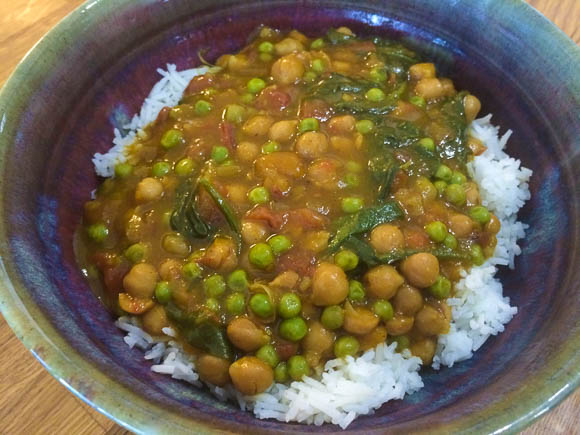
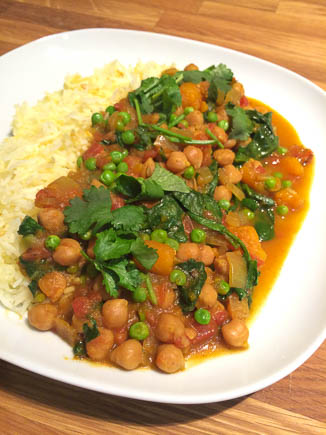
ButternutSquashChickpeaCurry-1

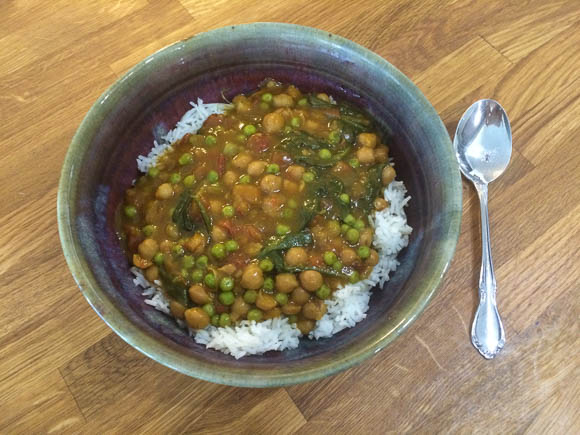
Hey guys! I am still working with Iphone photos for now as my professional Canon camera was stolen and I don’t have funds to replace it yet so thank you for bearing with me. Phone pics are not as pretty for sure, but it will do in a pinch and you get the idea. Besides the food is way more delicious anyway, just make it and see.

With fall well underway and my pantry kind of overflowing in dried beans and lentils that I have been hoarding for way too long, I decided I need to start making recipes using up as much of my dried ingredients as possible. You do not want to know how many bags and bags of dried stuff I have. It’s kind of ridiculous for just 1 person, but I used to like having any ingredient at my finger tips when I got a craving for a new recipe.


It’s also extremely affordable to make plant-based/vegan slow cooker recipes using dried, canned and frozen ingredients, especially when a small amount of work can yield such delicious food and have lots of leftovers. So even though it’s just me, i don’t mind having leftovers of super delicious curries because I can just give away a few portions to hungry friends, and freeze some for easy meals when I’m too tired to cook. Plus why spend $5-7 on a single frozen vegan meal, when you can make a big batch of something a few times a month and freeze it yourself, right? Right.
ButternutSquashChickpeaCurry-1-2

Although I don’t have a slow cooker recipe book yet, I know it’s something that a few of you have been asking for. It does take some time since I can’t make several recipes a day using this method and crank them out for recipe testing. It’s a slower process, but convenient for people who are busy and really hate “active cooking time” i.e. standing at the stove and/or making a big mess and fitfully sobbing when you didn’t stir it enough and it ends up burned… I mean that doesn’t happen to me that often, but I understand not everyone WANTS to live in the kitchen making food day in and day out.

Any slow cooker you have laying around that is a standard size (not individual sized) will do for this recipe, I used my Ninja Cooking System because I could sauté the onions, garlic and ginger right in the cooking insert over the medium heat setting. I don’t like having extra dishes to do when I make slow cooker recipes, so I find this convenient for me and the thing I hate most about cooking is dishes honestly. If you haven’t signed up to my newsletter yet to stay up to date on new (and favourite free) recipes you can sign up in the pink box on the upper right hand side of the screen there too.

ButternutSquashChickpeaCurry

Plant-Based Butternut Squash & Chickpea Coconut Curry (Slow Cooker Recipe)

serves 8-10 side portions or a hungry family of 4-5

Ingredients:

1 medium butternut squash (about 5 cups) peeled, de-seeded and cubed
2 cups dried chickpeas, soaked 8 hours or overnight
1 medium onion, diced
2 large cloves of garlic, minced
2 inch chunk of ginger, minced
1 can 13.5 oz fire roasted diced tomatoes
1 can 13.5 ounce light coconut milk
3 cups/1 litre low sodium vegetable broth
2.5 tablespoons yellow curry powder
1 tsp sugar or honey
2 bay leaves
4 large handfuls of baby spinach or 1 bunch of fresh spinach, rinsed and roughly chopped
2 cups frozen sweet peas
1 teaspoon sea salt or to taste
handful of fresh cilantro, roughly chopped

Directions:

1. Carefully cut the skin off the butternut squash, remove the seeds and cut into 1 inch cubes. To make cutting easier you can slice is in half and microwave the squash for 3 minutes and let cool before cutting.

2. *Optional step: sauté the onions, garlic and ginger in a pan with a little water or in the insert of a Ninja Cooking System.* Assemble all of the ingredients in your slow cooker excluding the peas, spinach, salt and cilantro. Cook on low for 8 hours.

3. About 20 minutes before serving, add in the fresh peas and spinach and stir until spinach is wilted.

4. Taste test and add salt as desired. For a slightly thicker sauce you can use a potato masher and mash some of the squash and chickpeas.

5. Serve over basmati rice and garnish with fresh cilantro. (I prepared 3 rice cups of basmati rice in my Zojirushi rice cooker)

Tips:

Dried chickpeas are best as they will absorb the flavor of the curry as they cook. Don’t use canned chickpeas and cook this for 8 hours as that’s completely unnecessary, 4-6 hours maximum as they’re already cooked.

The night before, sort and rinse the dried chickpeas in a strainer, place in a large bowl and cover with at least 6 cups of water. Alternatively you can do the Quick Soak Method: bring the rinsed chickpeas to a boil in a pot of water and cook for 1 minute and let soak for at least an hour. I find slow soaked chickpeas rather than quick soak chickpeas more tender when cooked, but it’s up to you.

For easy frozen meals later, freeze small portions of the curry and rice separately in tupperware containers.

Question: Have you started using your slow cooker yet this season? What’s your favorite recipe?
Filed Under: Cooked Vegan Recipes, Curries, Eat To Live - Dr. Fuhrman Recipes, Indian Dishes, One Pot Meals, Slow Cooker Recipes, Soups and Stews Tagged With: basmati rice, butternut squash, chickpeas, coconut milk, Curry, lower fat, peas, Slow Cooker, spinach

Creamy Plant-Based Coconut Kale and Chickpea Curry Recipe (Vegan)

November 5, 2013 by Veronica Grace 18 Comments

Fb-Button

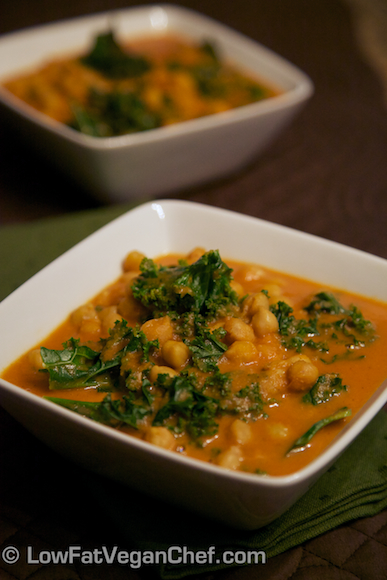
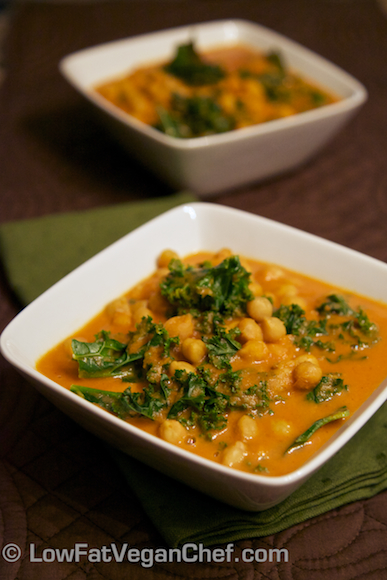
Low Fat Vegan Chef's Creamy Coconut Kale and Chickpea Curry

I had a really bad craving for a creamy plant-based chickpea curry recipe – BUT I still wanted to make sure it wasn’t too decadent so this turned out to be a wonderful compromise. I usually make an all tomato based chickpea curry aka Chana Masala, but I wanted to step out of the box a little, not to mention I had a ton of kale sitting in the fridge. I thought about serving it on the side, but you know what? Kale goes extremely well in a creamy curry sauce too so in it went into the curry!

I used light coconut milk in this recipe, but I do limit the frequency I use coconut milk in my recipe due to the higher fat content. If preferred you can use another plant based milk instead, I just really enjoy a hint of coconut flavour in this curry.

There’s also a special spice mix I blended up which was a nice change from regular old curry powder or garam masala mixes. I like trying something different! So if you can find these whole spices give it a try and use a coffee grinder and make your own spice mix it’s really fast and easy too (not to mention cheaper to make your own spice mixes once you’ve bought your whole spices).


This was a fun recipe to make and it’s definitely going into my regular repertoire, the leftovers were fantastic for lunch the next day too!

Low Fat Vegan Chef's Creamy Plant-Based Coconut Kale and Chickpea Curry

(Vegan) Creamy Coconut Kale and Chickpea Curry

Serves 6

Ingredients:

1 large onion, diced
6 cloves of garlic, minced
2 tablespoons (roughly) fresh ginger chunks, peeled and minced
2 15 oz cans diced tomatoes
1 16 oz can light coconut milk (or substitute another plant based milk)
2 1/2 tbsp spice mix (recipe below)
4-5 tbsp brown sugar or maple syrup *or as desired
1 tsp salt *or to taste
6 cups fresh cooked or 3 15 oz cans of chickpeas, drained
1 bunch of kale destemmed and chopped

Directions:

1. In a large deep skillet, wok or pot sauté the onions, garlic and ginger dry or in a little water or vegetable broth for 5-6 minutes until translucent and fragrant.
2. Add tomatoes and cook until softened about 10 minutes.
3. Add tomatoes and onions to a food processor or Vitamix along with coconut milk and blend until pureed.
4. Add remaining ingredients and simmer together until the kale is softened. Taste test and adjust seasonings as desired.
5. Serve with rice or Indian flat bread.


Spice Mix

3 tsp whole cumin seeds
3 tsp whole coriander seeds
2 star anise
1/2 tsp black peppercorns
1 green cardamom pod
1 tsp ground turmeric
1 tsp roasted or regular cinnamon

Directions:

1. In a dry skillet toast the cumin seeds, coriander seeds, star anise and black pepper corns until fragrant. Be careful to not burn them and remove once lightly toasted and fragrant.
2. Add to a spice grinder with remaining spices and combine until powdered.
3. Store in an spice jar and use as desired in curries.


What’s your favourite curry recipe and what do you serve it with? 


Filed Under: Cooked Vegan Recipes, Curries Tagged With: chickpea, coconut curry, coconut milk, Curry, Indian Dishes, kale, nut-free, soy-free

Low Fat Vegan Tangy Collard Greens With Mushrooms, Onions and Coconut Milk

January 17, 2012 by Veronica Grace 31 Comments

Fb-Button
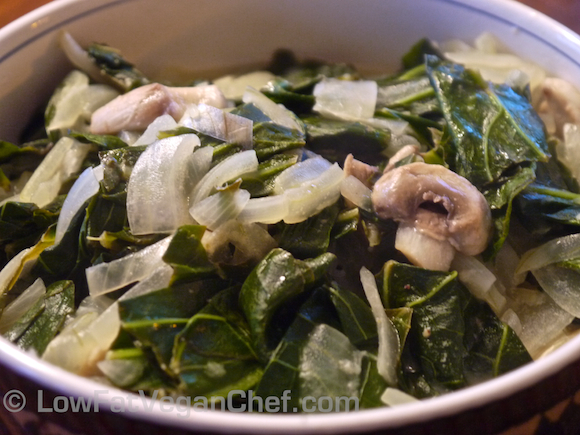
Low Fat Vegan Tangy Collard Greens With Mushrooms, Onions and Coconut Milk

Tangy Collard Greens with Mushrooms, Onions and Coconut Milk

Here is my delicious low fat vegan collard greens recipe!

Reminder: Make sure to subscribe to my bi-weekly newsletter on the right to receive my newest raw and cooked vegan recipes each week! You can also follow me on Facebook, Twitter and Youtube. Link icons are above!

This is an easy oil free and super delicious side dish that you can prepare to accompany any meal! A lot of people know of collard greens, but have no idea how to prepare them healthily, or at all. Generally in the southern United States, it is fried or deep fried and this pretty much negates the benefits of eating collards for health, because your body is dealing with all the denatured carcinogenic fats and free radicals from the oil slathered on it.

To get the health benefits of greens they should be prepared simply. Some of them like baby spinach and tender lettuces can be eaten in raw salads. Collards can be used in raw sandwiches (burrito style rolls) or steamed or sautéed gently.

Depending where you live it may be easy or difficult to find collard greens. I’m in Texas right now, and they are abundant, it only costs about 88 cents (USD) for a giant bunch of them! In Canada, I can only get them in Whole Foods and it costs about $2.99 (CAD) per bunch. So we’re loading up on them here!

Collard Greens Lower Cholesterol Better Than Kale or Broccoli!

“In a recent study, steamed collard greens outshined steamed kale, mustard greens, broccoli, Brussels sprouts, and cabbage in terms of its ability to bind bile acids in the digestive tract. When this bile acid binding takes place, it is easier for the bile acids to be excreted from the body. Since bile acids are made from cholesterol, the net impact of this bile acid binding is a lowering of the body’s cholesterol level. It’s worth noting that steamed collards show much greater bile acid binding ability than raw collards.” Ambrosone CB, Tang L. Cruciferous vegetable intake and cancer prevention: role of nutrigenetics. Cancer Prev Res (Phila Pa). 2009 Apr;2(4):298-300. 2009.

Brief History of Collard Greens

Like kale, cauliflower and broccoli, collards are descendents of the wild cabbage, a plant thought to have been consumed as food since prehistoric times and to have originated in Asia Minor. From there it spread into Europe, being introduced by groups of Celtic wanderers around 600 B.C. Collards have been cultivated since the times of the ancient Greek and Roman civilizations. While collards may have been introduced into the United States before, the first mention of collard greens dates back to the late 17th century. Collards are an integral food in traditional southern American cuisine.

How to Select and Store Collard Greens

Look for collard greens that have firm, unwilted leaves that are vividly deep green in color with no signs of yellowing or browning. Leaves that are smaller in size will be more tender and have a milder flavor. They should be displayed in a chilled section in the refrigerator case to prevent them from wilting and becoming bitter.

Place collard greens in a plastic bag, removing as much of the air from the bag as possible. Store in the refrigerator where they should keep fresh for about three to five days.

Cooking Collard Greens

It is very important not to overcook collard greens. Like other cruciferous vegetables overcooked collard greens will begin to emit the unpleasant sulfur smell associated with overcooking. To help collard greens to cook more quickly, evenly slice the leaves into 1/2-inch slices and the stems into 1/4-inch pieces. You may boil or steam them up to 5 minutes and then season.

For more information on collard greens check out this website http://whfoods.org/genpage.php?dbid=138&tname=foodspice


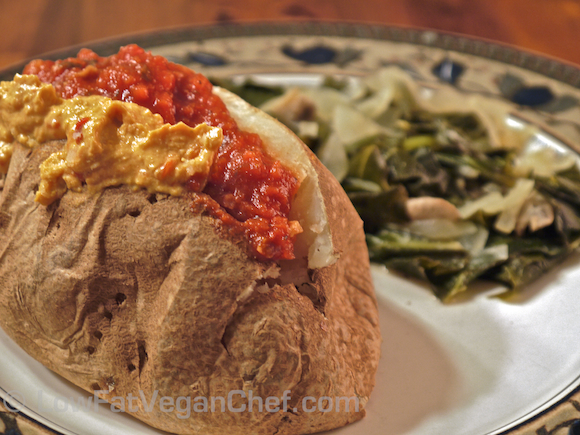
Oil Free Baked Potato With Tangy Oil Free Collard Greens

Giant baked potato with salsa, hummus and "Tangy Collard Greens"

Low Fat Vegan Tangy Collard Greens with Mushrooms, Onions and Coconut Milk

This collard greens recipe is much lower in fat than traditional collard green recipes that call for frying onions in oil first and then adding the greens. I serve these with giant baked potatoes for a completely filling meal. (Yes, dinner can be this simple and delicious!)

Serves 2

Ingredients:

1 large bunch collard greens, washed
1/2-1 cup of sliced mushrooms of choice
1 medium onion, sliced thinly
1/2 cup light unsweetened coconut milk (So Delicious SugarFree Original is excellent for this, don’t use vanilla or sweetened for this recipe)
1/4 – 1/2 tsp herbamare or salt
1 tbsp of lemon juice (or more if desired)
1/2 tsp sugar or sweetener
1/2 tsp dijon mustard
1 tbsp nutritional yeast
fresh ground pepper to taste

Directions:

1. Take the stems off of the collard greens by turning them upside down and making a small circle with your pointer finger and thumb and squeezing the leaves down and off from the stem. Like you would straighten a pipe cleaner. Cut the remaining parts of the stem off the top if you miss any bits.

2. Bunch all the collards up together on a cutting board and cut into chunks.

3. In a large pot, bring salted water to a boil. When boiling, add the collard greens and cook for 2-3 minutes. Drain well.

4. In a large non stick skillet, turn to medium heat. When it’s hot add the onions and sauté dry for 5 minutes. (TRUST ME, it will NOT burn if you use a non stick pan, and no oil is necessary!) Add the mushrooms, collards, coconut milk and seasonings except for pepper and sauté for 8-10 minutes until collards are at desired tenderness.

5. Taste test and add fresh ground pepper and any additional seasonings like more lemon if desired.

6. Serve as a side dish with your meal. (I love serving these with baked jacket potatoes, beans, or rice.)

Variations:

You can also try this recipe with other greens like kale, mustard greens, turnip greens, beet greens etc.  If you use baby spinach, DO NOT boil it, you can just wilt it in the pan with the coconut milk in a few minutes. Make sure your onions and mushrooms are cooked first before adding the spinach.

If you don’t want to use coconut milk, feel free to use a low fat almond or soy milk instead. The coconut flavour is very mild in this and not essential to the overall taste.

Try other seasonings as well, add some spices like paprika, chili, cumin etc instead of the dijon and nutritional yeast.  Mix it up!

*If you don’t want to use a non stick pan, you can put the collards, onions and mushrooms into a steamer basket, steam for 5 minutes over boiling water and then drain. Season to taste with the coconut milk and seasonings and stir to combine.

See non stick pans – are there safety concerns http://lowfatcooking.about.com/od/healthandfitness/a/nonstickpans.htm  You should NOT worry about cooking oil free over medium heat in a non stick pan. If nothing is flaking off, or food is not being burned onto the pan on high heat for a few minutes this is not a concern.

Have you ever cooked collard greens before? What do you think of this recipe?

Filed Under: Cooked Vegan Recipes, Green Dishes, Side Dishes Tagged With: coconut milk, collards, gluten-free, greens, mushrooms, nut-free, onions, side dish, soy-free

Primary Sidebar

Follow Us:

Newsletter

Get The Low Fat Vegan Starter Kit

natural organic skin care line

Free Skincare Samples

Earn Free Crypto At Binance

Earn Free Bitcoin on Gemini Exchange

Earn $10 in Bitcoin With Gemini Exchange
Dr. Fuhrman
Dr. Fuhrman
Dr. Fuhrman

Tags

80/10/10 apple avocado banana blueberries breakfast broccoli Carrots celery chickpeas cilantro corn cucumber Curry dill dinner easy Eat To Live fat-free gluten-free how-to Indian Dishes lemon low-fat mango mexican mushrooms nut-free oil-free pasta pineapple plant-based raw raw vegan rice smoothie soup soy-free spinach tofu tomato tomatoes vegan vegetarian vitamix

Secondary Sidebar

Recipes:

  • Cooked Vegan Recipes
  • *My Recipe Books
  • Breads and Baked Goods
  • Breakfast
  • Brunch
  • Burgers
  • Casseroles
  • Curries
  • Desserts
  • Dinner
  • Dips for Veggies or Chips
  • Eat to Live-Dr. Fuhrman Recipes
  • Engine2Diet
  • Ethiopian Dishes
  • Greek
  • Green Dishes
  • Holiday
  • Indian Dishes
  • Mexican
  • One Pot Meals
  • Pasta
  • Pizza
  • Quinoa
  • Salads
  • Sandwiches and Wraps
  • Raw Vegan Recipes
  • 80/10/10
  • Raw Breakfast
  • Raw Desserts
  • Raw Dips
  • Raw Dressings
  • Raw Entrees
  • Raw Juices
  • Raw Salads
  • Raw Smoothies
  • Raw Snacks
  • Raw Soups
  • Sauces
  • Side Dishes
  • Slow Cooker Recipes
  • Snacks
  • Soups and Stews
  • Spices/Seasonings
  • Sushi
  • Thai
  • Vietnamese

Copyright © 2026 · Foodie Pro & The Genesis Framework