• Skip to primary navigation
  • Skip to main content
  • Skip to primary sidebar
  • Skip to secondary sidebar

Plant Based U

Fat-Free and Low Fat Vegan Plant Based Recipes

  • Home
  • Recipes
    • Raw Vegan Recipes
    • Cooked Vegan Recipes
    • Eat to Live Dr. Fuhrman Recipes
  • Products
  • Coaching
  • Videos
  • Articles
  • About
    • What Is Low Fat Vegan/Whole Foods Plant Based
    • Resources
  • Contact

Sushi

Fb-Button

How To Make A Vegan Dragon Roll Sushi Roll (Uramaki) With Photos!

January 10, 2012 by Veronica Grace 5 Comments

Fb-Button
Vegan Dragon Sushi Roll Uramaki Inside Out Roll Avocado Vegetables

Vegan Dragon Sushi Roll

Dragon rolls are generally not vegan or vegetarian and filled with smoked eel and drizzled with eel sauce. But they look so pretty and are covered in avocado, which is vegan and delicious in sushi.

So here’s my version of a vegan Dragon Roll. It’s very similar to making my vegan California Roll, but we’re going to take the avocado out from the middle, and put it ontop of the roll instead and add some additional filling.

Makes 2 dragon rolls

You Will Need:

1/2 recipe of sumeshi aka sushi rice (found here)
2 pieces nori seaweed
4 sticks julienned cucumber (see my post on prepping veggies here)
4 sticks julienned carrots, steamed gently
4 sticks another vegetable of choice, I used julienned zucchini, steamed gently
4 strips sliced green onion (scallion)
1 small-medium avocado
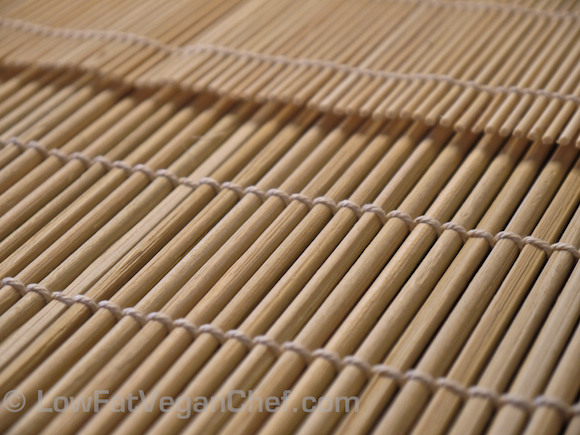
To make this vegan sushi roll we are going to use the thick style sushi mat. (The one on the bottom) It’s much stronger and will give a firm shape to the sushi. I bought a set of sushi mats in a cheap 2 pack on Amazon for about $7 with free shipping. You can also find a single mat for a few dollars on Amazon like this one . Asian stores will sell them as well.

How To Wrap Your Bamboo Sushi Mat For Uramaki – Inside Outside Rolls

We’re going to wrap our sushi mat in plastic wrap/saran wrap. We do this because sushi rice is SUPER sticky and will make a mess on the bamboo mat, yet it comes off easily from the plastic wrap. Basically you’re going to wrap it like you would a present with wrapping paper, tucking in all the sides and the wrap should cling to itself to seal it.
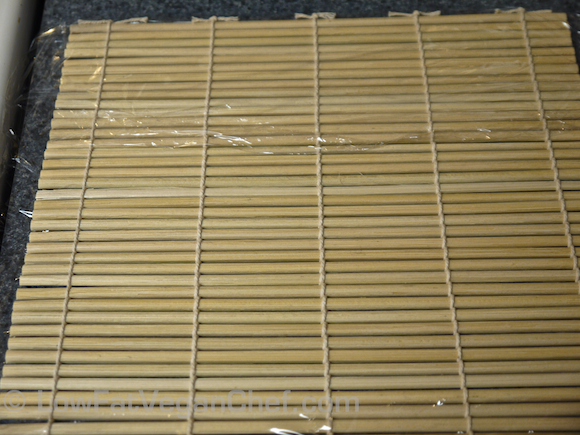
Sushi mat wrapped on one side and sides tucked over

Take a piece of plastic wrap and put it on top of one side of the mat. Flip it over and then tuck in the side and top and bottom so that the back side is totally sealed.
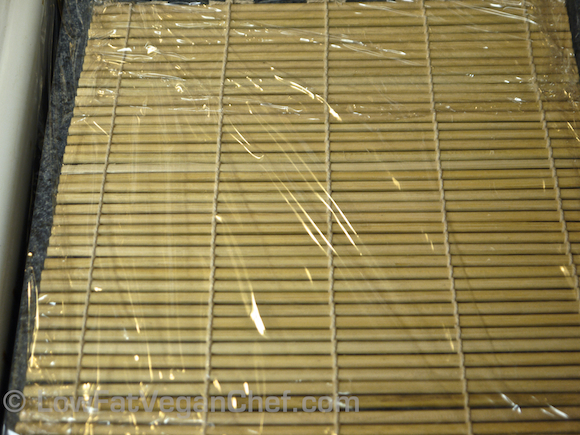
Sushi mat with front side covered in wrap

Next, take another piece of plastic wrap and place it over the front side (that has the sides tucked in) and flip it over and tuck in the sides and top and bottom again.

Sushi mat covered on all sides and pulled tight

Now your sushi mat is ready to make vegan Dragon Rolls.

How To Make A Vegan Dragon Roll (Uramaki / Inside Outside)
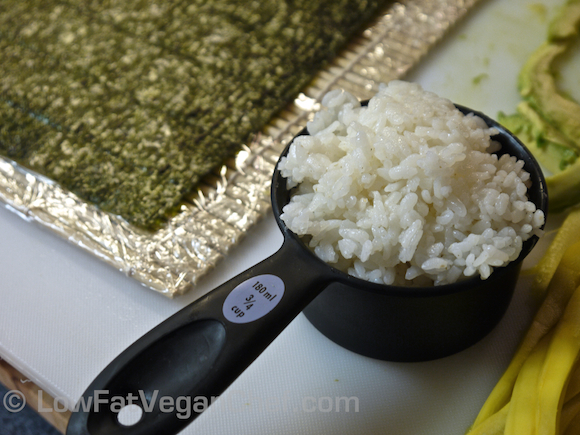
Step 1: Measure between 3/4 and 1 cup of sushi rice depending how much rice you want on your roll. (They are very filling, usually a person can only eat 2 of these rolls max because the rice is so filling.) I used a heaping 3/4 cup of rice and it was just enough for me.
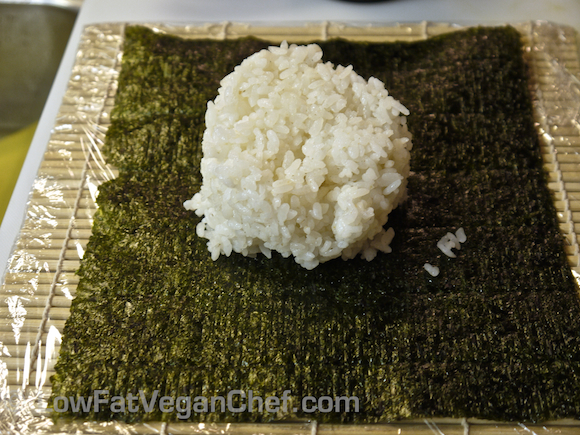
Step 2: Lay your nori sheet SHINY side up (with the dotted line side face down) This is the backside of your nori sheet and we’re going to cover it with rice. Dump your rice into the middle of the nori sheet.
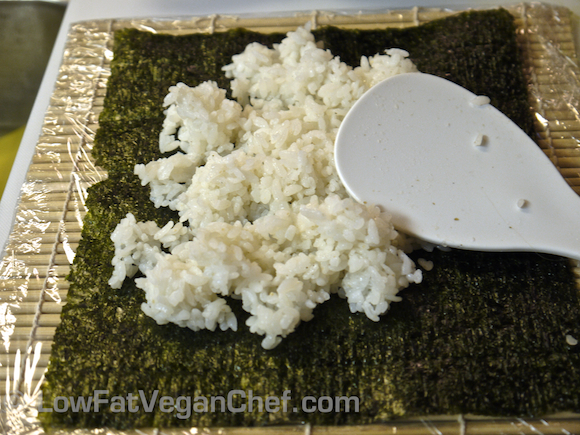
Step 3: Using your rice paddles (or very wet fingers) gently push the rice outwards and to the edges and the corners. This will take a while until you get the hang of it. You can leave a tiny space on the top and bottom of the sheet and this will make the roll easier to roll up.
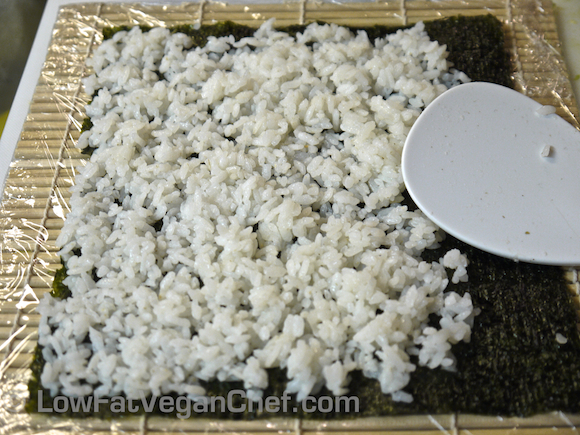
Continue spreading out the rice until you have a layer about 1-2 rice grains thick. It won’t be perfect, but as long as there are no big gaps it will be good.
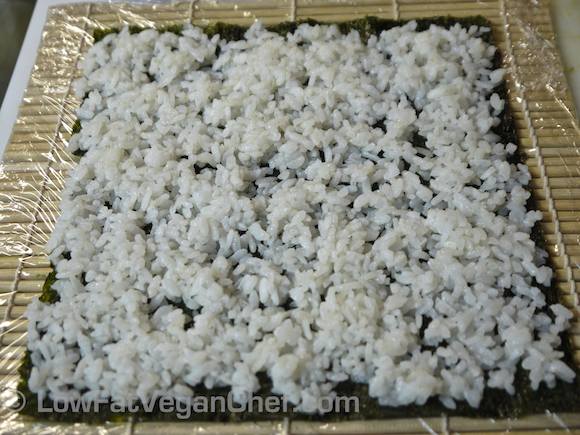
Step 4: Press your rice down on your nori sheet so that no grains are sticking up and it’s level.
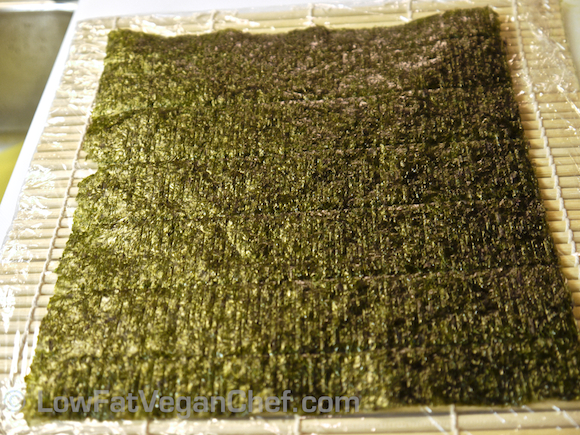
Step 5: Pick up your nori sheet from the bottom, holding tightly and flip it over away from you. Now the dotted section side should be facing you.
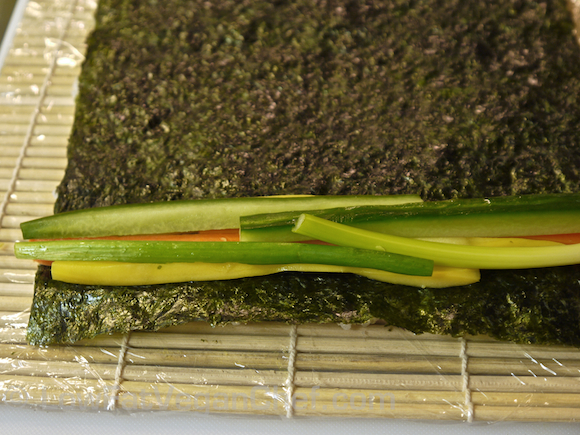
Vegan Dragon Sushi Roll Uramaki Inside Out Roll Avocado Vegetables

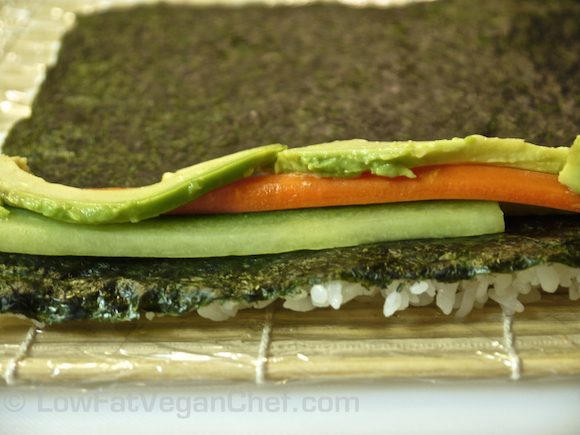
Step 6: Fill your nori sheet with desired filling. In this case for my vegan dragon roll, lay 2 strips of cucumber lengthwise, 2 strips of carrot, 2 strips of green onion and 2 strips of zucchini. Spread them out so they fill the entire roll. It can spill out a little over the side, but not too much. Your filling is going to lay in the first rectangular area of the sheet. After the little bottom bar.
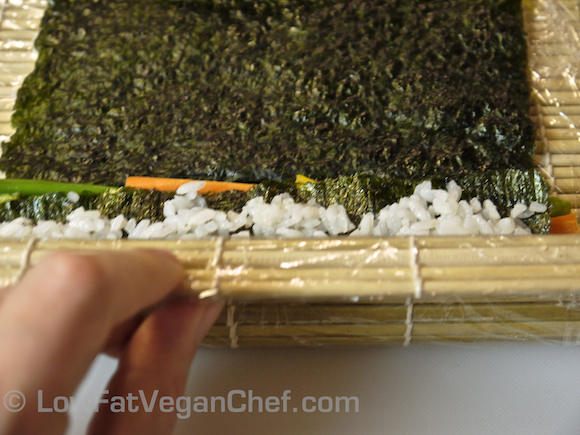
Vegan Dragon Sushi Roll Uramaki Inside Out Roll Avocado Vegetables

Step 7: Next we’re going to grab the bottom of the sushi mat and bring it up and over creating a tube. You want to make one roll so that you cannot see your filling anymore and tuck and squeeze it under with your hands and the sushi mat. You want to make each roll tight so that your sushi stays together and the filling won’t fall out of the middle when you slice it.
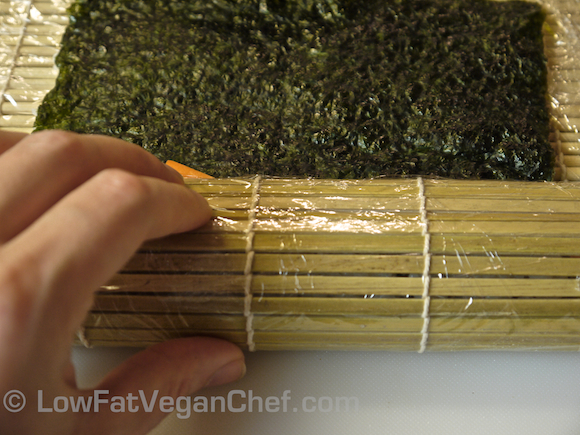
Vegan Dragon Sushi Roll Uramaki Inside Out Roll Avocado Vegetables

Continue rolling tightly up the nori sheet.

Vegan Dragon Sushi Roll Uramaki Inside Out Roll Avocado Vegetables

This is what it looks like when 1 full roll is done. Continue rolling.

Vegan Dragon Sushi Roll Uramaki Inside Out Roll Avocado Vegetables

Roll your nori sheet up until the end. You shouldn’t have to wet the end of the nori to seal it. It has moisture from the sticky rice. You want to squeeze it firmly and evenly all across the mat when you get to the end to seal the roll evenly.

Vegan Dragon Sushi Roll Uramaki Inside Out Roll Avocado Vegetables

This is what your sushi roll looks like when it’s sealed.

Vegan Dragon Sushi Roll Uramaki Inside Out Roll Avocado Vegetables

Step 8: Flip your sushi roll over so the seam side is faced down.

Vegan Dragon Sushi Roll Uramaki Inside Out Roll Avocado Vegetables

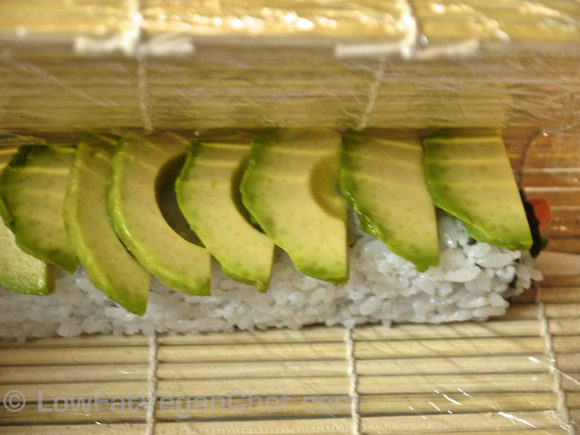
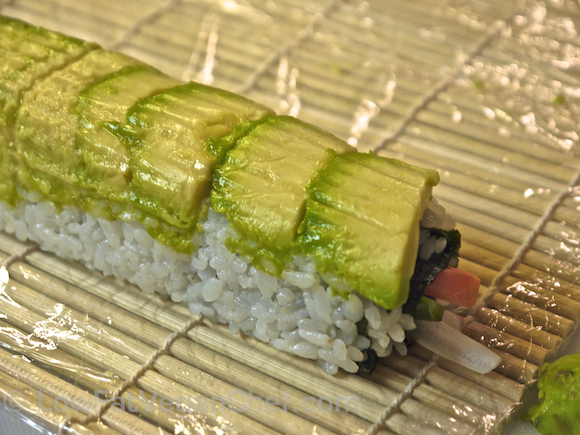
Step 9: Next slice your avocado thinly and lay each piece onto the top of your sushi roll.

Vegan Dragon Sushi Roll Uramaki Inside Out Roll Avocado Vegetables

Step 10: Bring your mat up over the roll and press down on the avocado on the top and sides. Just hard enough to crush it against the rice so it sticks.

Vegan Dragon Sushi Roll Uramaki Inside Out Roll Avocado Vegetables

Step 11: Get a very sharp knife, wet it thoroughly with water and make a 6-8 cuts to the sushi roll to create sushi pieces. This takes some time and patience. You must wet your knife between EACH cut because your knife will be covered in sticky starch from the rice. If you don’t keep the knife wet and clean before each cut you can tear and mangle your pretty sushi roll. I generally cut these ones into 6 pieces. But if you’re feeding children, it’d be better for 8 pieces so it’s not too big for them to bite into.

Vegan Dragon Sushi Roll Uramaki Inside Out Roll Avocado Vegetables

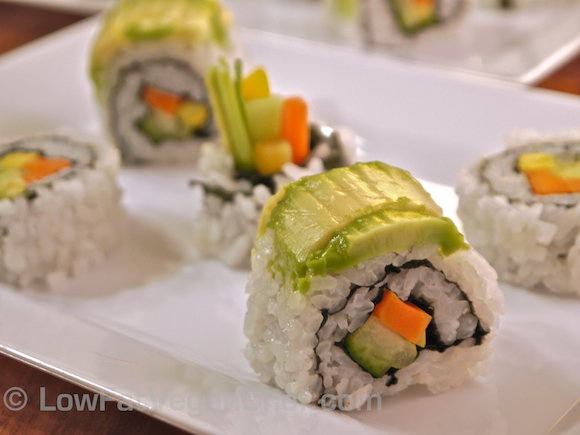
Vegan Dragon Roll

Next plate your sushi and serve with soy sauce or tamari and chopsticks! Enjoy your beautiful vegan Dragon Roll!

Filed Under: How To, Sushi Tagged With: avocado, carrot, cucumber, gluten-free, nut-free, soy-free, sushi, zucchini

How To Make A Vegan California Sushi Roll (Uramaki / Inside Outside Roll)

January 8, 2012 by Veronica Grace 22 Comments

Fb-Button
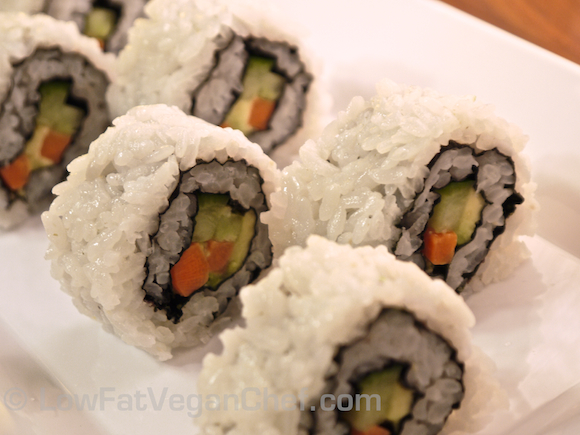
How To Make A Vegan California Sushi Roll With Avocado Carrots Cucumber Inside Out Uramaki Roll

Vegan California Roll (Uramaki Style)

California rolls are not normally vegan, but you can make them that way at home! Who needs to buy expensive veggie sushi rolls at the store when you can make your own at home?

California rolls are probably the most familiar type of sushi roll to North Americans. It was designed by a Japanese chef in the 1970’s in California to hide the seaweed used for the roll inside and instead put the rice on the outside of the roll. Therefore being less intimidating and easier to stomach for those not accustomed to eating seaweed and enjoying it.

This Vegan California sushi roll is a Uramaki style, which means inside out or inside outside roll. It’s appealing to look at and can be topped with many things like avocado (like in a Dragon Roll) Sesame seeds (common on California Roll) or fish (like in a Rainbow Roll).

I’m going to show you how to make a basic vegan California roll. To veganize it, we’ve had to take out the basic ingredients of a California roll though, the crab stick (fake crab made from pollock fish) and the mayonnaise. Obviously crabstick is not vegan, so I omitting that.

I’m pretty against the idea of eating sushi with mayo as well, because it contains eggs and is basically all oil. Vegan mayo is more a transition food, and not a health food. In North America we use way too much mayo as it is, and this is not part of traditional sushi at all. It’s just a condiment used in California to entice Americans into eating sushi who wouldn’t consider otherwise. This roll tastes delicious without it and is creamy from the avocado.

You can scope out your local health food store or vegetarian-friendly Asian shop if you’re dying to get some vegetarian crab stick for the roll. I just personally don’t have a taste for fake meats and fake fish, and prefer vegetable fillings myself.

This is my version of a healthier California-esque sushi roll. (Because most people think inside out sushi rolls are always California rolls! lol)

Thin and Thick Style Sushi Mats

To make this roll we are going to use the thick style sushi mat. (The one on the bottom) It’s much stronger and will give a firm shape to the sushi. I bought a set of sushi mats in a cheap 2 pack on Amazon for about $7 with free shipping. You can also find a single mat for a few dollars on Amazon like this one . Asian stores will sell them as well.

How To Wrap Your Bamboo Sushi Mat For Uramaki – Inside Outside Rolls

We’re going to wrap our sushi mat in plastic wrap/saran wrap. We do this because sushi rice is SUPER sticky and will make a mess on the bamboo mat, yet it comes off easily from the plastic wrap. Basically you’re going to wrap it like you would a present with wrapping paper, tucking in all the sides and the wrap should cling to itself to seal it.

Sushi mat wrapped on one side and sides tucked over

Take a piece of plastic wrap and put it on top of one side of the mat. Flip it over and then tuck in the side and top and bottom so that the back side is totally sealed.

Sushi mat with front side covered in wrap

Next, take another piece of plastic wrap and place it over the front side (that has the sides tucked in) and flip it over and tuck in the sides and top and bottom again.

Sushi mat covered on all sides and pulled tight

Now your sushi mat is ready to make vegan Uramaki sushi (Inside out) rolls.

How To Make A Vegan California (Uramaki style) Sushi Roll

Makes 4 Rolls

You Will Need:

1 recipe of sushi rice (found here)
4 pieces nori seaweed
8 sticks julienned cucumber (see my post on prepping veggies here)
8 sticks julienned carrots, steamed gently
8-12 slices of avocado

Step 1: Measure between 3/4 and 1 cup of sushi rice depending how much rice you want on your roll. (They are very filling, usually a person can only eat 2 of these rolls because the rice is so filling.) I used a heaping 3/4 cup of rice and it was just enough for me.

Step 2: Lay your nori sheet SHINY side up (which the dotted line side face down) This is the backside of your nori sheet and we’re going to cover it with rice. Dump your rice into the middle of the nori sheet.

Step 3: Using your rice paddles (or very wet fingers) gently push the rice outwards and to the edges and the corners. This will take a while until you get the hang of it. You can leave a tiny space on the top and bottom of the sheet and this will make the roll easier to roll up.

Continue spreading out the rice until you have a layer about 1-2 rice grains thick. It won’t be perfect, but as long as there are no big gaps it will be good.

Step 4: Press your rice down on your nori sheet so that no grains are sticking up and it’s level.

Step 5: Pick up your nori sheet from the bottom, holding tightly and flip it over away from you. Now the dotted section side should be facing you.

How To Make A Vegan California Sushi Roll With Avocado Carrots Cucumber Inside Out Uramaki Roll

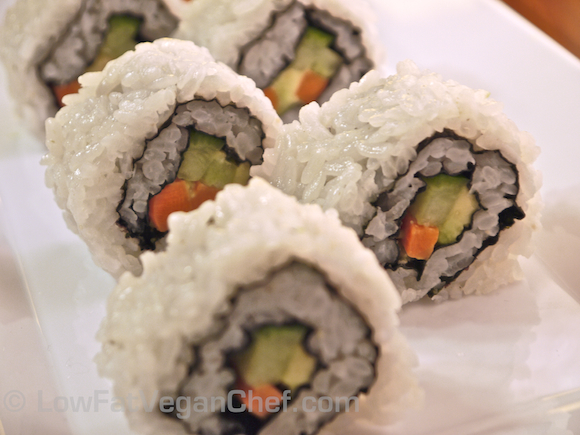
Step 6: Fill your nori sheet with desired filling. In this case for my vegan California roll, lay 2 strips of cucumber lengthwise, 2 strips of carrot and 2-3 slices of avocado. Spread them out so they fill the entire roll. It can spill out a little over the side, but not too much. Your filling is going to lay in the first rectangular area of the sheet. After the little bottom bar.

Step 7: Next we’re going to grab the bottom of the sushi mat and bring it up and over creating a tube. You want to make one roll so that you cannot see your filling anymore and tuck and squeeze it under with your hands and the sushi mat. You want to make each roll tight so that your sushi stays together and the filling won’t fall out of the middle when you slice it.

Continue rolling tightly up the nori sheet.
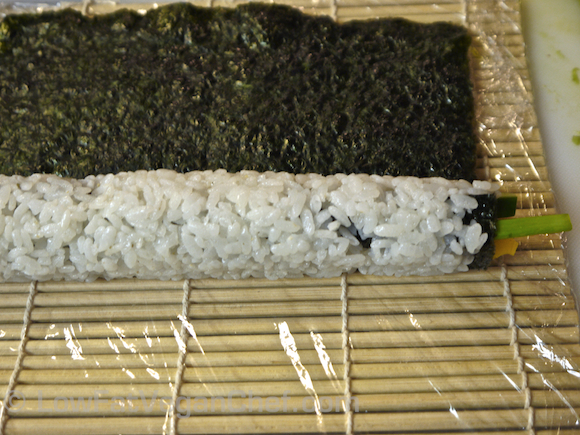
This is what it looks like when 1 full roll is done. Continue rolling.

Roll your nori sheet up until the end. You shouldn’t have to wet the end of the nori to seal it. It has moisture from the sticky rice. You want to squeeze it firmly and evenly all across the mat when you get to the end to seal the roll evenly.
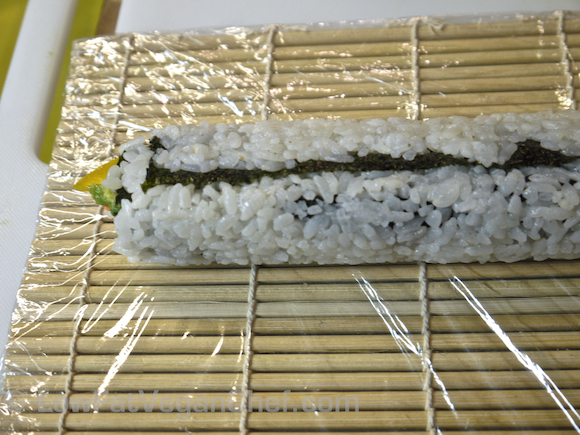
This is what your sushi roll looks like when it’s sealed. If you want to add sesame seeds to your sushi roll, now is the time to do it. Sprinkle sesame seeds over the top and bottom of the roll and use the sushi mat to press the sesame into the roll.
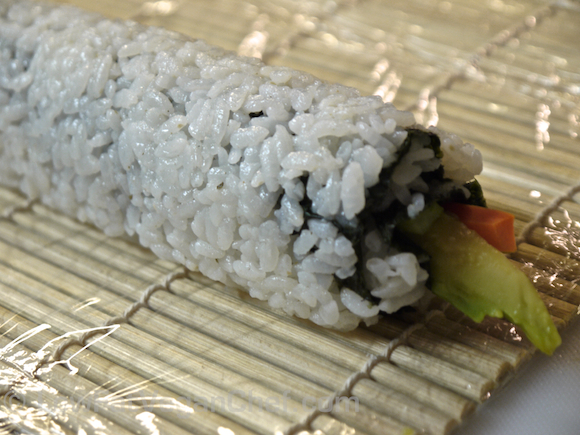
Step 8: Flip your sushi roll over so the seam side is faced down. Get a very sharp knife, wet it thoroughly with water and make a 6-8 cuts to the sushi roll to create sushi pieces. This takes some time and patience. You must wet your knife between EACH cut because your knife will be covered in sticky starch from the rice. If you don’t keep the knife wet and clean before each cut you can tear and mangle your pretty sushi roll. I generally cut these ones into 6 pieces. But if you’re feeding children, it’d be better for 8 pieces so it’s not too big for them to bite into.
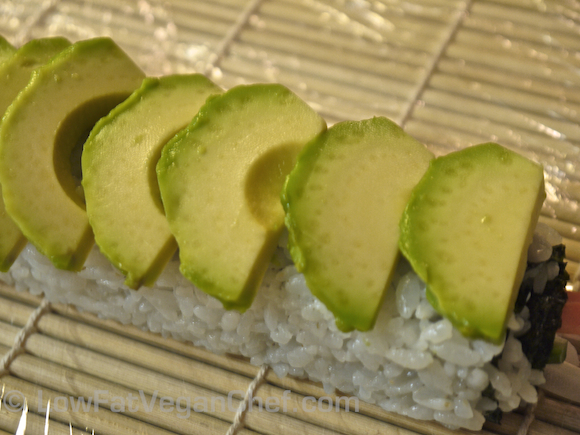
How To Make A Vegan California Sushi Roll With Avocado Carrots Cucumber Inside Out Uramaki Roll

Next plate your sushi and serve with soy sauce or tamari and chopsticks!

Filed Under: How To, Sushi Tagged With: avocado, gluten-free, nut-free, soy-free, sushi

How To Make Perfect Sushi Rice For Vegan Sushi Rolls With Photos!

January 8, 2012 by Veronica Grace 12 Comments

Fb-Button

Sushi rice is called sumeshi in Japanese. It is essential to making sushi, and contrary to what you may think it is not just plain white rice that is used. It is cooked and then seasoned to have a tangy sweet taste.

This page will tell you how to make the perfect sushi rice for sushi. Check out my recipe for Vegan California Rolls when you’re done.

How To Make Perfect Sushi Rice With Step By Step Photo Instructions

To make this recipe you will need:

2 cups sushi rice (short grain)
2 cups filtered water
3 tbsp rice vinegar
2 tbsp sugar
1 tsp herbamare or salt (You can use more if you wish, but you’re going to dip the sushi in soy sauce anyways which is very salty)

Tools needed:

Fine mesh strainer or sieve
Rice paddle or wooden spoon
Large Wooden/Glass/Ceramic/Plastic bowl (not metal)

Step 1: Measure out 2 cups dried sushi rice (short grain white or brown rice. It must be short grain!) You can double if desired, but this will make enough sushi for at least 4 large rolls and a small roll or two. Enough for 2 adults for dinner, or two single lunches.

Step 2: Rinse your rice through a fine metal sieve until the water runs clear, OR soak in a large bowl of water and mix around by hand to get the excess starch off. Rinse and soak a few times until the water is clearer. This is important and will make your rice turn out better.

Step 3: (Optional) Let your rice soak for 30 minutes.

Step 4: Place rice and 2 cups water into rice cooker or pot. (If using more rice, always use a 1:1 (same) ratio of rice and water)

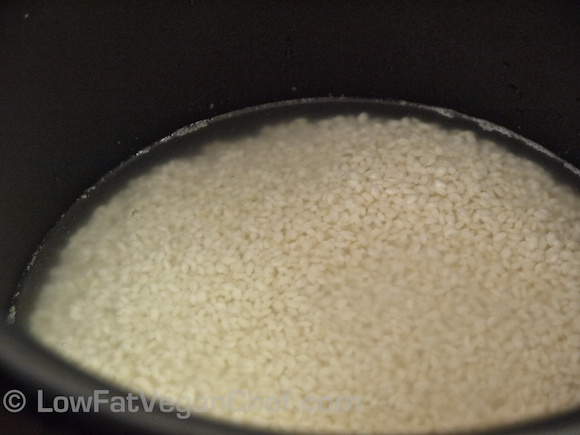
Rinsed sushi rice in rice cooker

Step 5: Rice cooker instructions: Set the white rice program and let it cook. My favourite rice cooker is my Zojirushi 5 1/2 cup rice cooker because it has settings for white rice, brown rice, mixed rice, porridge and cake. Yes you can even cook cake in this rice cooker! It’s wicked. Check it out. If fancy rice cookers aren’t of any use to you, check out this Hamilton Beach rice cooker (for $45 with free shipping) I use frequently when cooking at my mom’s house. It’s great too for basic rice and has never overcooked or burned the rice. I used to use those $10 rice cookers with just an on off button, but often times they would turn off before the rice was done, overheat and cause overcooked or crusty rice. If cooking for a family, I highly suggest getting a decent rice cooker to free you up from the stove and the guesswork of making perfect rice. When the rice is done cooking and the buzzer goes off, leave the rice for 10 minutes to let steam. Don’t open it and don’t touch it.

Stove top instructions: In a pot, place the rinsed rice and equal parts of water and bring to a boil. Stir the rice occasionally to prevent any grains from sticking to the bottom of the pot. Once it reaches a boil, turn down the heat to medium low, cover with a lid and steam. Do NOT open the lid until the rice is done steaming. You will lose your moisture and heat and jeopardize your rice being cooked evenly. Use a clear glass lid if you can. The rice is done cooking when the water disappears, this happens between 8 and 10 minutes depending on the type of stove you have. Remove the rice from heat.

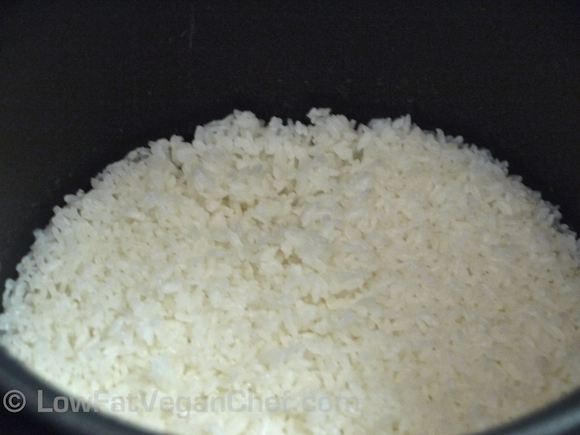
Perfectly cooked sushi rice

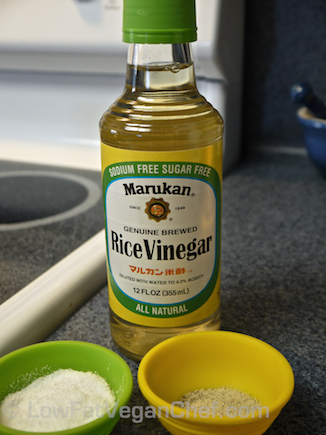
Step 6: Measure 3 tbsp rice vinegar, 2 tbsp granulated sugar and 1 tsp herbamare or salt. You can use more salt if you want, but really its not necessary if you’re going to be dipping your sushi in soy sauce which is super salty anyway.

Rice vinegar, sugar and herbamare (salt)

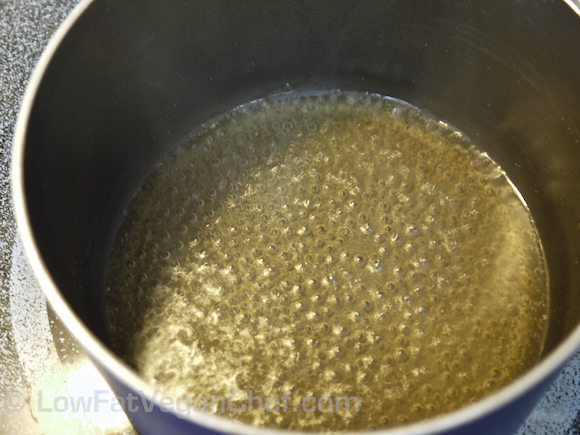
Step 7: Make sushi vinegar. Heat a small pot (not metal) over medium heat and add vinegar, sugar and herbamare (or salt). Stir.

Combine vinegar, sugar and salt in pot

Sushi vinegar is ready

When it is bubbling and everything is dissolved remove from heat and let cool.

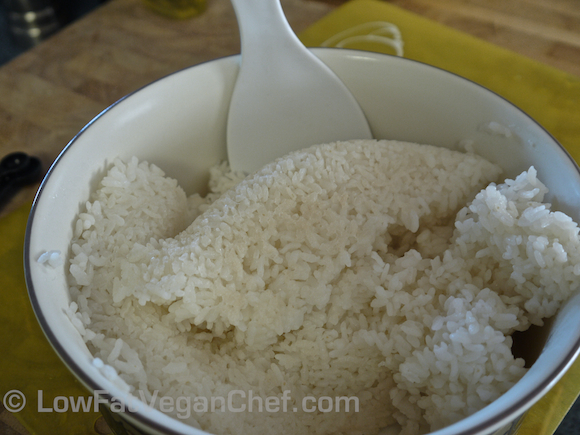
Step 8: Remove rice from pot or rice cooker with a wooden spoon or that plastic rice scoop you have. You basically want to scrape the bottom and dump the rice in 1 or 2 strokes so that you don’t damage the sushi rice too much and mash it. Pour it out into a wooden, glass or plastic bowl. If you put it in a metal mixing bowl, you risk the chance of ruining the flavour when pouring vinegar on it and it reacting with the metal. Don’t do it. Only scoop out perfectly cooked rice, if any is stuck or undercooked, leave it in the pot.

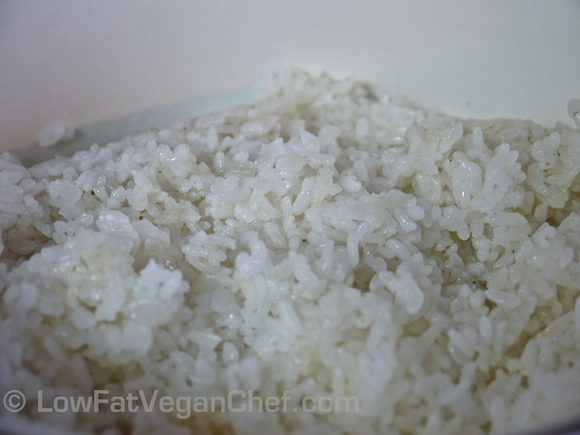
Sushi rice removed from pot

Step 9: Gently cut into sushi rice with paddle to break up.

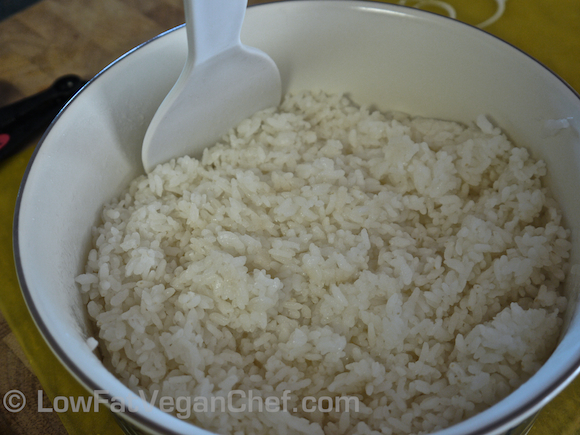
Perfect seasoned sushi rice

Step 10: Season sushi rice by drizzling sushi vinegar evenly across rice. Cut into rice gently again to combine and spread out the seasoning.

Let your perfect sushi rice cool off before making sushi. If it’s too warm it can stick to the sushi mat and be hard to work with. Now you are ready to prep your veggies or filling for sushi rolls!

Filed Under: How To, Sushi Tagged With: gluten-free, how-to, nut-free, rice, rice cooker, soy-free, sushi

How To Prep Veggies For Vegan Sushi Rolls

January 8, 2012 by Veronica Grace 3 Comments

Fb-Button

Vegan California Rolls (Uramaki style)

This post is about how to prep your veggies to make vegan sushi rolls. Check out my recipe for Vegan California Rolls.

Vegan sushi rolls are great because they can appeal to everyone from vegans and vegetarians to people who would rather not eat traditional sushi that contains raw fish.

They are fun to make and can be made up in advance for fancy hors d’oeuvres, a potluck, a themed dinner, a lunch box, or a snack! Choose your favourite fillings and I will give you some tips on how to prepare them for putting into sushi rolls.

Generally, the Japanese do not eat raw plain vegetables in their sushi rolls. They mainly use raw fish, cooked shrimp, cooked crab, pickled daikon radish, egg roe, or cooked egg. The raw vegan friendly items you will find are generally cucumber and avocado. Basically because their texture is desirable raw and you can’t really cook them.

For other harder vegetables they are blanched or gently steamed so they can be easier to chew and more pleasurable to eat. You don’t have to steam your crunchy vegetables if you don’t want to. But I’ll give you some suggestions for which ones to do so for a more enjoyable roll.

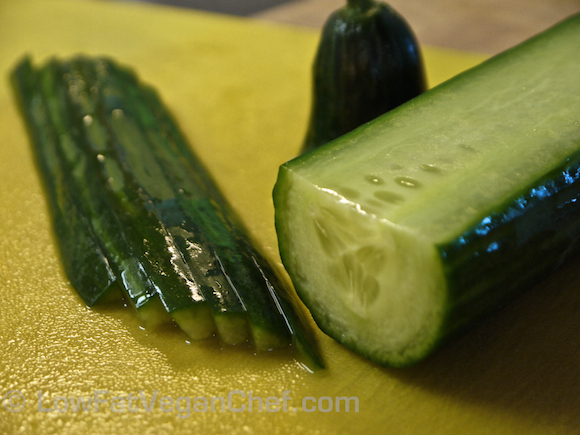
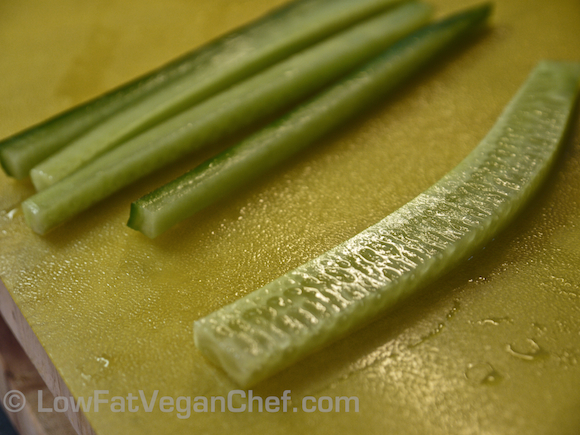
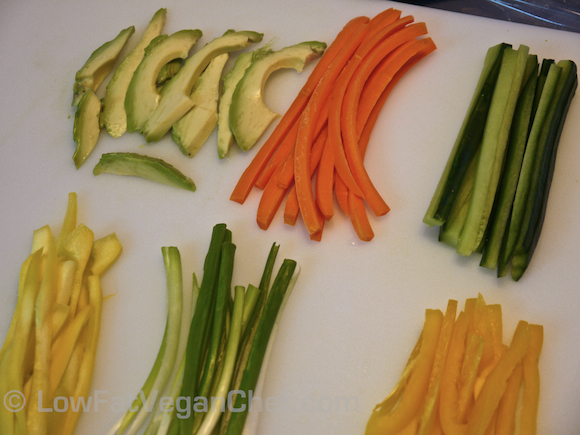
For cucumber, the English variety is best because it has few seeds and is tender. You want to slice the cucumber about in half and then slice a 1/2″ thick slice vertically down the cucumber. Next julienne it in strips. You will need about 2 strips of cucumber for each roll you are making.

Slice out the seed portion from your cucumber. You don’t need to use it to make sushi rolls.

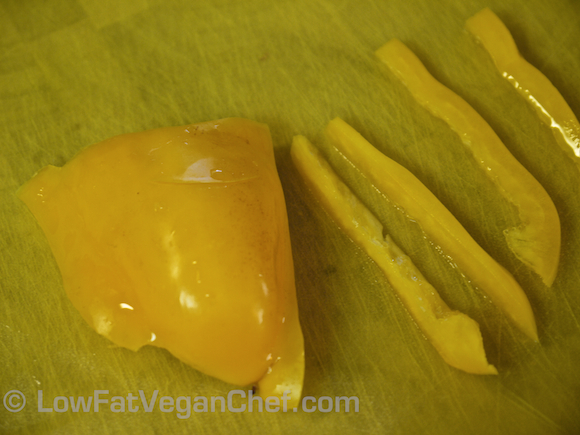
If you’re using Bell peppers (capsicum) you can leave them uncooked and raw and just slice the top off and julienne into strips.

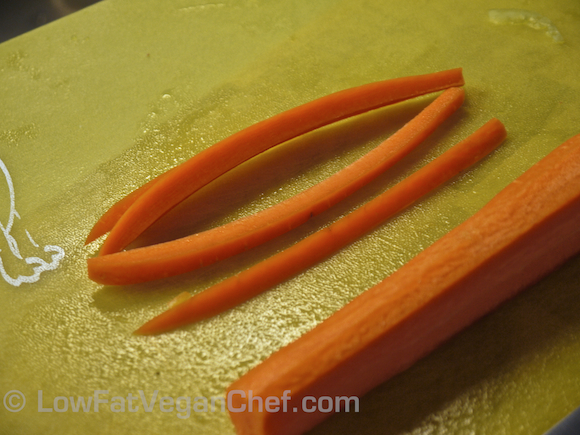
For carrots, peel them and slice just like the cucumber into 1/2″ thick slices and then julienne.

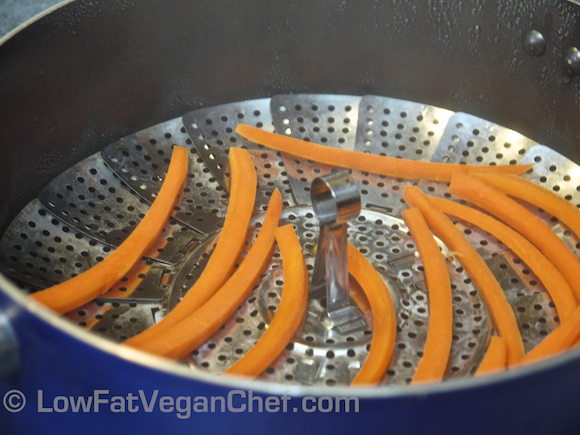
I recommend steaming the carrots gently so they are not rock hard and crunchy in your sushi roll. It’s up to you, but steaming for 1-2 minutes will improve the eatability of your veggie sushi.

The carrots have turned a light orange and are al dente. Set aside to cool before rolling into sushi.

For avocado, ensure you have a ripe one. The one I have here is pretty ripe so that’s why it’s a little mushy. Generally sushi bars use semi ripe or a little underripe avocado because they go through so many of them and if they are firm it’s easier to work with. Personally I think crunchy watery unripe avocado is gross and will not use it in my cuisine. So pick a green avocado a few days before you want to make sushi and let it ripen on the counter. It is ripe when soft to the touch. Cut it open, pull out the seed and make slices into the avocado. You can pull out a slice at a time as you slice it, or scoop it all out with a spoon.

All my veggies are now prepped and ready to fill my sushi rolls.

Additional veggies you may want to use in your vegan sushi rolls:

green onion – leave raw, wash and slice lengthwise once and then horizontally once.
asparagus – cut off the hard bottoms, and steam gently for 1-3 minutes and let cool.
yams/sweet potato – peel and cut into long rectangular strips and steam until just cooked but still firm.
zucchini/courgette – peel and julienne like cucumber and steam gently for 1-2 minutes if desired. This improves flavour.
pickled daikon radish – can be purchased at Asian markets and julienned. They are usually bright yellow in colour and is used in Oshinko sushi rolls.
sprouts – you can simply wash and dry sprouts like sunflower or alfalfa and use in addition to other veggies in a sushi roll. By themselves would not be very flavourful.

You can also roll sliced tofu, marinated tofu, or bean curd skin in your vegan sushi rolls if desired as well.

Filed Under: How To, Sushi Tagged With: avocado, carrot, cucumber, green onion, nut-free, pepper, sushi

Primary Sidebar

Follow Us:

Newsletter

Get The Low Fat Vegan Starter Kit

natural organic skin care line

Free Skincare Samples

Earn Free Crypto At Binance

Earn Free Bitcoin on Gemini Exchange

Earn $10 in Bitcoin With Gemini Exchange
Dr. Fuhrman
Dr. Fuhrman
Dr. Fuhrman

Tags

80/10/10 apple avocado banana blueberries breakfast broccoli Carrots celery chickpeas cilantro corn cucumber Curry dill dinner easy Eat To Live fat-free gluten-free how-to Indian Dishes lemon low-fat mango mexican mushrooms nut-free oil-free pasta pineapple plant-based raw raw vegan rice smoothie soup soy-free spinach tofu tomato tomatoes vegan vegetarian vitamix

Secondary Sidebar

Recipes:

  • Cooked Vegan Recipes
  • *My Recipe Books
  • Breads and Baked Goods
  • Breakfast
  • Brunch
  • Burgers
  • Casseroles
  • Curries
  • Desserts
  • Dinner
  • Dips for Veggies or Chips
  • Eat to Live-Dr. Fuhrman Recipes
  • Engine2Diet
  • Ethiopian Dishes
  • Greek
  • Green Dishes
  • Holiday
  • Indian Dishes
  • Mexican
  • One Pot Meals
  • Pasta
  • Pizza
  • Quinoa
  • Salads
  • Sandwiches and Wraps
  • Raw Vegan Recipes
  • 80/10/10
  • Raw Breakfast
  • Raw Desserts
  • Raw Dips
  • Raw Dressings
  • Raw Entrees
  • Raw Juices
  • Raw Salads
  • Raw Smoothies
  • Raw Snacks
  • Raw Soups
  • Sauces
  • Side Dishes
  • Slow Cooker Recipes
  • Snacks
  • Soups and Stews
  • Spices/Seasonings
  • Sushi
  • Thai
  • Vietnamese

Copyright © 2026 · Foodie Pro & The Genesis Framework