• Skip to primary navigation
  • Skip to main content
  • Skip to primary sidebar
  • Skip to secondary sidebar

Plant Based U

Fat-Free and Low Fat Vegan Plant Based Recipes

  • Home
  • Recipes
    • Raw Vegan Recipes
    • Cooked Vegan Recipes
    • Eat to Live Dr. Fuhrman Recipes
  • Products
  • Coaching
  • Videos
  • Articles
  • About
    • What Is Low Fat Vegan/Whole Foods Plant Based
    • Resources
  • Contact

Eat To Live - Dr. Fuhrman Recipes

Fb-Button

Fat Free Vegan “Clean Out The Refrigerator Fuhrman Soup” or How To Make Homemade Soup From Scratch Easily

February 15, 2012 by Veronica Grace 27 Comments

Fb-Button

Low Fat Vegan Clean Out The Refrigerator Vegan Vegetable Soup Nutrient Dense Soup

FTC Notice: This post contains affiliate links that go towards supporting the blog.
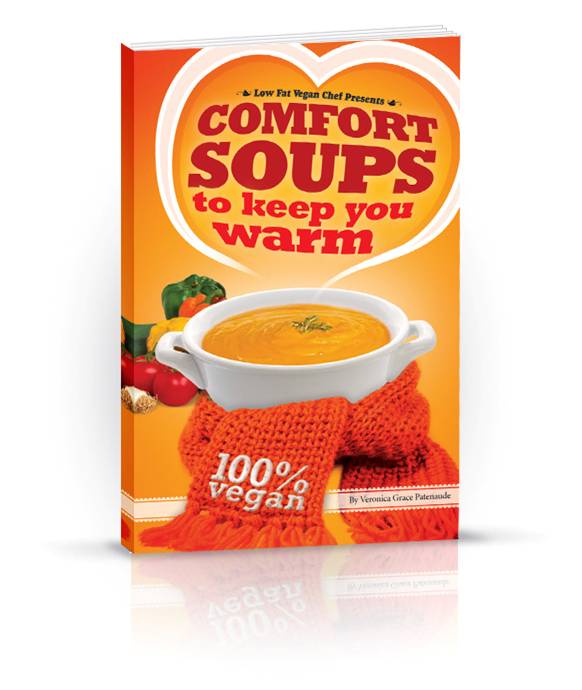
This recipe is featured in my Comfort Soups To Keep You Warm recipe ebook along with 29 other AMAZING vegan soup recipes, vegetable stock recipes, and all the tips and tricks to making ANY kind of soup. It’s going to teach you basically to be a soup making expert and be able to cook delicious healthy meals at home, very easily from what you have around.

Somedays you just don’t know what to make for dinner, or only have odds and ends leftover from previous recipes. You look in your refrigerator and see a few carrots, an onion, some celery, some greens and maybe some mushrooms that have seen better days.


What do you do with it all?

You make homemade vegetable soup of course! This is what I do when I feel creatively drained or uninspired to make a new recipe from scratch.

This is also a great way to eat a “Nutrient Dense” or “Eat To Live” style vegan meal like Dr. Joel Fuhrman recommends. (Check out his books Super Immunity, or Eat To Live, if you already haven’t) Lots of low calorie, high antioxidant plant foods, gently cooked together are wonderful. In Feb 2012 I was at the McDougall 3-Day Advanced Study Weekend, and Dr. Fuhrman was telling us the benefits of eating just 1/2 an onion a day, about 1 tomato and just 1 mushroom and how nutritious these are to add to your diet regularly. He has an amazing wealth of knowledge, and I am definitely going to be making more nutrient dense, low calorie green vegetable based dishes from now on.

This soup is a great way to get more of these antioxidants and phytochemicals into your diet in a fairly easy no-fuss way. It’s also a great vegan cabbage soup recipe that is low calorie and packed with veggies.

It is also especially handy to keep some vegetable broth on hand (low sodium is always preferable) for just such an occasion, so you don’t have to make your own vegetable stock as well when you’re short on time. (When I do have time I like to make fresh vegetable stock every week and keep it in the fridge for daily sautéing and making soup with)


Making your own nutrient dense vegan homemade soup from scratch is quite easy. The hard work is only peeling and chopping your veggies. Basically use what you have and always start cooking the onions and the hardest vegetables first (so peel and prepare those first) and they can start cooking while you finish peeling/washing and slicing the other veggies.

It also helps to have some fresh herbs on hand. My top picks would be thyme, dill, basil, cilantro or parsley. These can easily be used up in soup recipes if you have any stray or wilting bits left, so don’t throw them away.

And as with making almost any homemade soup, I always throw in a few bay leaves. They really add a lot of flavour and are great for seasoning soup, vegetable stock or dried beans.


Basic Ingredients For Making Your Own Homemade Nutrient Dense Soup

  • Low sodium vegetable broth (water and salt is not a good enough substitute for this, low salt bouillon and water will do in a pinch)
  • Any vegetables such as carrots, celery, mushrooms, potatoes, yams/sweet potatoes, golden beets, turnips, broccoli, cabbage, spinach, kale, swiss chard, peas, corn, etc
  • Beans or grains (if desired) white beans, lentils, chickpeas, pinto beans, black beans, barley, rice, pasta, etc (make sure beans are pre cooked, or canned before adding)
  • Fresh herbs/dried herbs like thyme, bay leaf, dill, basil, rosemary, cilantro, parsley, Italian herb seasonings, Herbs De Provence etc
  • Base flavor enhancers like canned tomatoes, tomato paste, coconut milk or almond milk (depending whether you want a tomato-ey or creamy soup) *This is optional
  • Seasonings like salt, pepper, lemon juice, lime juice, sweetener (to balance acidity from tomatoes or lemon if desired) cumin, chili pepper, cayenne, smoked paprika, etc

If you add some things from each category (especially ones that you personally like…) and can season to taste and balance out blandness by kicking it up with some lemon, salt and a little sweetener if desired you will have a great soup on your hands.

Also a trick I have for bringing out sweetness to tomato based soups is to add golden beets to it. Golden beets can be found at your health food store, and some grocery stores or farmers markets. They are becoming more popular nowadays. They look almost like small yellowish turnips, but they are beets! (For one thing they don’t turn your hand red and make a mess) They contain natural sugars that leak out into the vegetable broth, so it balances out the harsh acidity of tomato based vegetable soups and goes really well with beans or barley as well. Just make sure you cut the pieces into little cubes, and start cooking them right away with the onions in broth. They take the longest to cook, so you don’t want them to be crunchy while the rest of your vegetables are soft.


Additional Pointers For Cooking Homemade Soup

If you want a fast soup, cut all your veggies (especially potatoes and beets) into smaller cubes so they cook faster. Always add these first to the pot along with carrots and celery. Fresh hard herbs like thyme or rosemary need to go in at the beginning of the soup. Dried or tender herbs like basil, cilantro or parsley can go in near the end of cooking to retain their flavour. Quick cooking veggies like greens, broccoli, asparagus or cauliflower should be added 3-5 minutes before your soup is done so they don’t fall apart and go mushy. Canned corn is very forgiving and can go in at the beginning of cooking and will hold it’s firmness. Canned beans should go in the last 10 minutes or so of cooking as they are fairly soft already and you don’t want them to be mushy and overcooked. Always salt and pepper your soup at the end. Don’t just keep adding salt every time you stir it. When some of the water dissipates you can be left with an over salted or over spiced soup. Always reserve taste testing for the end when everything’s cooked and you can doctor up the flavour from there. Start with a little salt, pepper, spice, or sweetener and keep tasting and adding until you get it right to your liking. Always use low sodium, sodium free and sugar free canned foods so you can control the salt and sugar content of the soup. Read labels! *Note about adding pastas to soup. I really prefer cooking most pastas separately and then putting it into serving bowls and pouring the soup over it. This makes your soup nice and clear and pretty and reduces the risk of over cooking it. If you do cook the pasta in the soup, it’s going to use up some of the water and make it murky with the starch. Check the cooking time of your pasta and add it part way through the soup when the vegetables are starting to be almost soft enough.


And now my made up on the spot “throw it all in a pot” and cook it soup. This is a great way to get more greens into your diet or use up any extras that you don’t have a recipe planned for. This soup is packed with green vegetables, but is light and refreshing. We ate this by itself and basically ate the whole pot because it’s very low in calories. This is a great first course or “weight-loss soup” as well. Fill up on healthy vegetables!
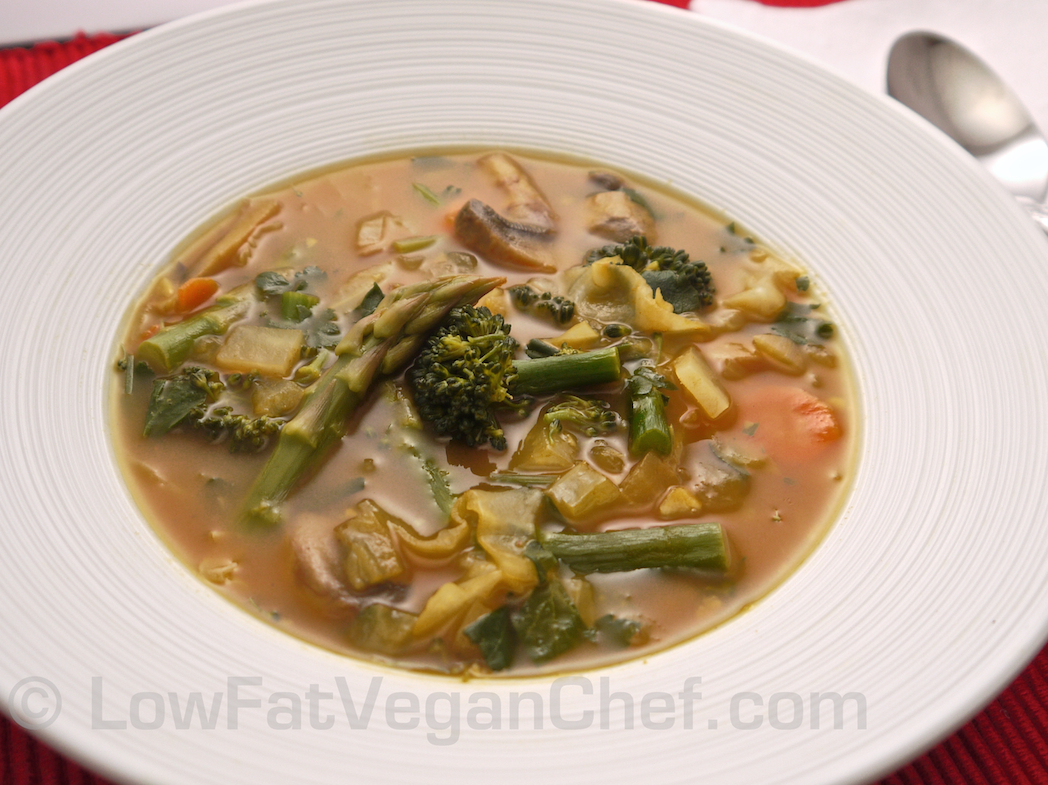
Low Fat Vegan Clean Out The Refrigerator Vegan Vegetable Soup Nutrient Dense Soup

“Clean Out The Refrigerator” Homemade Vegetable Soup

Featured in Comfort Soups To Keep You Warm by Veronica Grace

Serves 6

Ingredients:

2 litres/quarts vegetable broth, (low sodium or homemade)
1 large onion, diced
4-6 cloves of garlic, minced
1-2 bay leaves
1 tbsp fresh thyme, or 1 tsp dried (or favourite herbs, like dill, basil, etc)
2 carrots, sliced
2 stalks of celery, sliced
1 medium golden beet or turnip, diced small (smaller is better)
1-2 cups of sliced mushrooms
6-8 asparagus spears, ends trimmed and cut into thirds (or other green vegetable of choice like zucchini)
2 cups broccoli or broccolini florets
2 cups sliced green cabbage, or other greens like kale or Swiss chard
handful of parsley, chopped
juice of half a lemon
Herbamare or sea salt and fresh ground pepper to taste


Directions:

1. Add 1 cup vegetable broth to a large soup pot and turn onto medium heat. Add bay leaves, thyme, onions and beets and sauté for 5-6 minutes. Add more broth if necessary to beets until they are almost covered.  (While this is cooking you can continue peeling/slicing your other veggies)

2. Add the mushrooms, garlic, carrots, celery, cabbage and the rest of one carton of vegetable broth. Stir and let it keep cooking over medium-medium high heat for about 10-15 minutes. Add more vegetable broth if needed from the other carton. You want your vegetables to be almost done before adding the broccoli and asparagus. Check on the beets, if they are still too hard keep cooking until they are almost done.

3. Add the remaining vegetable broth and bring it up to a boil. When it’s boiling, turn it back down to medium-medium high and add the asparagus, broccoli and parsley (and any spinach if using). Cook for 2-4 minutes (depending on the size you cut them) and test the broccoli and asparagus for doneness. You don’t want them too wilted or mushy. When done immediately take off heat.

4. Add lemon juice, salt and pepper and season to taste. Adjust seasonings if desired.

5. Serve!


What do you think of this “Eat To Live” style recipe? Have you ever made homemade soup before? What do you do with your leftover vegetables?

Filed Under: *My Recipe Books, Cooked Vegan Recipes, Eat To Live - Dr. Fuhrman Recipes, How To, One Pot Meals, Soups and Stews Tagged With: asparagus, broccoli, cabbage, Carrots, celery, Eat To Live, fat-free, gluten-free, mushrooms, nut-free, soup

Fat Free Vegan Eggplant Chickpea Indian Curry With Fire Roasted Tomatoes

February 12, 2012 by Veronica Grace 27 Comments

Fb-Button

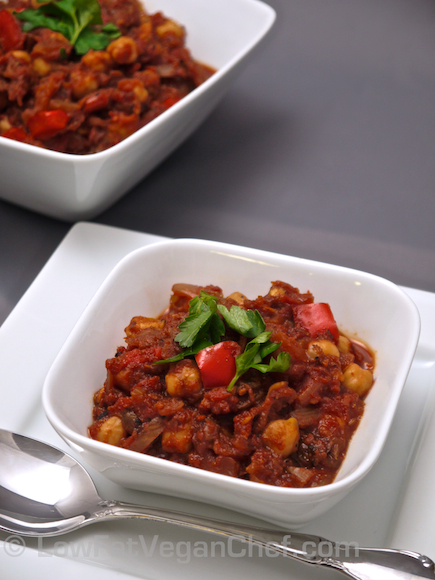
Fat Free Vegan Eggplant Chickpea Curry Aubergine Oil Free Baingan Bharta

Fat free vegan cooking is really easy, once you know how to skip the oil and prepare delicious home cooked meals that taste just as good if not better without the extra grease and calories.

I love eggplant (aubergine) and eggplant curries, I also love chickpeas in almost everything. The bad thing about Indian food is that it is normally so oily and greasy and this can make it unhealthy and too rich. Eggplant absorbs MORE oil than ANY other vegetable just from sautéing in oil. If you cook it in oil on the stove it absorbs it so well that it becomes 50% fat by calories just like a potato chip. So I suggest to not slather oil on your eggplant or deep fry it, ever… Regardless of how delicious it may be. Your waistline and arteries will thank you.

The best Indian food I’ve ever had, has actually come from my kitchen. Not because I am an awesome Indian cook or anything, but because I use the freshest ingredients, and absolutely no oil, and we feel awesome after eating it, not like taking a nap as you do from take out. Any time we eat Indian food at a restaurant, we almost immediately regret it. Despite pleading with them to use very little oil, it is still very greasy. Indian and Chinese food in general are prepared with so much oil to keep things from sticking to the pan and slide out easily onto the plates. Also because people kind of expect it to be greasy.

There aren’t too many already vegan Indian staple dishes but Baingan Bharta (Eggplant Curry) and Chana Masala (Chickpea Curry) are two of them, and of course my favourites. I have made them separately before, but I wanted to start practicing my photography for a new cookbook I’m working on, and this means I pretty much have to shoot in portrait style. As I am mostly a landscape photographer, this is difficult for me to get used to and setting up the shot. As you have way more background in it, you need to add things to decorate.

This isn’t my best. I need some more props, but I didn’t have white rice, or dal or anything to put in the background, so it’s a little sparse.

I will continue practicing, and I spent the evening ironing all my pretty coloured napkins so they are ready to go for next time.

This recipe is not an original of mine, it is adapted from Fat Free Vegan. I also doubled the recipe as this was my main I and served it with rice and saved the leftovers. Another good reason to double recipes, is that it doesn’t really take more time to make more of it, and then if you have left overs you can eat it for lunch, or even use this as filling for a delicious wrap on the go! The recipe below is the single version.

Fat Free Vegan Eggplant Chickpea Curry

Serves 4 as a side dish

Ingredients:

1 large eggplant/aubergine, or two small (this needs to be prepared in advance)
1 medium onion, chopped
1/2 red bell pepper seeded and diced
1 1/4 teaspoon cumin seeds
1 1/4 teaspoon ground roasted coriander (or regular)
1/2 teaspoon turmeric
3 cloves of garlic, minced
14 oz can Muir Glen Fire Roasted diced tomatoes (or regular)
2 tsp of ginger root, finely minced
1-2 tsp sugar or sweetener (to balance acidity, or as desired)
1/2-1 tsp herbamare or salt
1/8-1/2 tsp cayenne pepper (I don’t like spicy, so I use very little)
15 oz can chickpeas (like Eden Organic) , rinsed and drained (low sodium) or 2 cups cooked chickpeas
1/2 -1 cup water, to keep mixture from sticking
1/4 cup minced cilantro
1/4 teaspoon garam masala (start with less and add more to taste)
non stick spray

Directions:

1. Preheat oven to 400 degrees. Prick the eggplant(s) with a fork all over and place on a baking sheet. Bake for about 50-60 minutes, until the eggplant(s) is/are collapsing and soft in the middle. Remove from the oven when done and set aside until cool enough to handle. Slice open the peel, pull the peel off and chop the eggplant flesh into cubes.

2. Heat a non-stick skillet and then spray it lightly with non stick spray (normally I do not do this, but as it’s going to cook for a while, mine started sticking and burning as I have a gas stove). Add the onion and cook until it begins to turn golden about 5-6 minutes.

3. Add the bell pepper and cook for a 3-4 minutes. If anything starts sticking use a tbsp or 2 of water.

4. Clear a spot in the center of the skillet and sprinkle the cumin seeds directly on the hot surface. Stir and toast them gently for about a minute, until they are browning.

5. Stir and then add the coriander, turmeric, garlic, tomatoes, ginger, and cayenne (if desired).

6. Add the eggplant and cook over medium heat, for about 10 minutes. Add water if necessary to keep from sticking.

7. Add the chickpeas and enough water or chickpea cooking liquid to keep the mixture moist, cover tightly, and turn heat to low. Cook for at least 10 minutes, stirring periodically, until sauce has thickened and flavors have blended. Don’t let it burn. (You can hold this dish on low for up to 45 minutes while you prepare the rest of your meal, but add additional liquid as needed and don’t forget to stir, scraping the bottom.)

8. Add sweetener (if desired), herbamare or salt and garam masala. Always use a lower amount first and then taste test, so you don’t use too much of either. Season as desired.

9. Scoop into bowls and garnish with fresh cilantro.

10. Serve with basmati rice or dal.

 Additional Tips: 

Fire roasted tomatoes make every recipe that calls for canned tomatoes, even better. There is a huge difference. My favourite are Muir Glen fire roasted diced tomatoes (now BPA free). If you don’t have time to make your own chickpeas, Eden Organics also come BPA free too. Roasted coriander has a nicer flavour than regular, McCormick (available at many regular grocery stores) makes a great selection of roasted spices. You can make your own roasted spices if you want too. If you have coriander seeds, you can toast them in a pan dry and then grind them in a coffee grinder. Cumin powder can be substituted for cumin seeds if you like, the flavour will be a little different however.

I buy my garam masala from a specialty spice store. If you want to make your own Susan’s V’s recipe is here: 1 tablespoon black cardamom seeds, 1 cinnamon stick (about 2 1/2 inches long), 1 teaspoon cumin seeds, 1 teaspoon whole cloves, 1 teaspoon black peppercorns. Grind in coffee or spice grinder until powdered. Heat a small, dry pan. Add spices and toast just until fragrant, about 1 minute. Remove from heat, transfer to a bowl, and allow to cool. Once cool, store in a sealed jar for future use. Garam masala is always used after cooking is complete to control the spiciness of the dish. Do not add it in while a dish is cooking as you may over spice it and make it too hot.

What do you think of this dish? What’s your favourite use for eggplant or chickpeas?

Filed Under: Curries, Dinner, Eat To Live - Dr. Fuhrman Recipes, Indian Dishes, McDougall Program, One Pot Meals Tagged With: chickpeas, eggplant, fat-free, gluten-free, Indian Dishes, nut-free, roasted tomatoes

Raw Vegan No Fat Sweet Onion Salad Dressing Recipe And Why Fast Food Salads Are Bad For Your Health

February 6, 2012 by Veronica Grace 38 Comments

Fb-Button


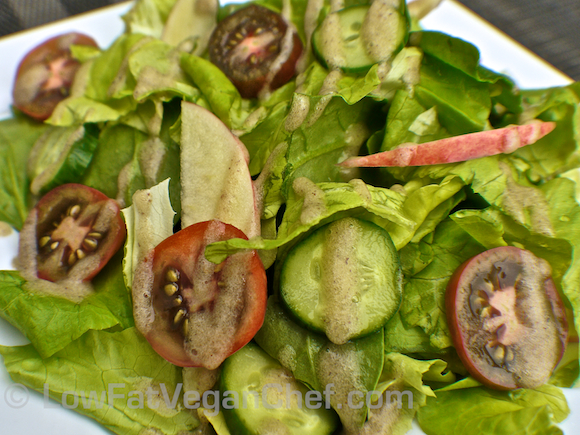
Raw Vegan Fat Free Sweet Onion Salad Dressing Recipe

This is an oil free and fat free  bonus recipe that comes in my Savory Raw Dinner Recipes book and ebook (not shown in the dvd) that I’m going to share with you today. If you are looking for some amazingly delicious and healthy raw food recipes, please check it out. I’ve gotten so much positive feedback on my spin on oil free raw vegan dinner recipes. (Scroll down for the recipe.)

Travel update: We are back home now in Vancouver, BC this week after spending 2 months in Corpus Christi, Texas and enjoying the sun down there (and avoiding the dark clouds and rain here). It’s nice to be back home, but it feels a little surreal. I have to get used to my kitchen again and finding all of my seasonings and kitchen gadgets. So I’m going to ease back into making recipes, as I’ve totally broken my groove from traveling and moving back in and unpacking everything.

Sweet onion dressing was one of my favourite dressings I used to buy from a bottle (because it’s low fat), but it’s filled with high fructose corn syrup, so I decided to make my own and it tastes pretty similar and is much healthier.

Why Do I Make And Prefer Fat Free Raw or Vegan Salad Dressings?

Well because salad is supposed to be healthy and full of nutrients, and not be a fat bomb of a meal. When I was at the Houston, TX airport we grabbed a bite to eat at Wendy’s and I was just curiously looking around me at what other families were getting. I noticed the woman beside me was eating what she thought was a really healthy meal, because there were no burgers or fries in sight: a BLT Cobb Chicken Salad, a cup of chili and a large soda.

Now I don’t know if you know this, but all restaurants and fast food companies market their salads to women, especially mothers and older women who are trying to eat healthier, watch their weight (or lose weight) as their children and husbands love ordering a burger and fries regularly. Everyone generally thinks burgers and fries are less healthy and salads are on the top of the list of healthy meals so this can be misleading when it comes down to the details.

The woman who ordered this was also probably 35-45 lbs over her ideal weight. I don’t say this to be critical, just to give you an idea of who buys these fast food salads and how they are being seriously deceived. The thing that shocked me the most was that she squeezed every last drop of dressing out of her packet and then proceeded to suck on the packet just to double check! Gross! I thought people knew these dressings were very fatty and to only use half the packet or less. I guess not in Texas…

Why Wendy’s and Fast Food Salads Are

NOT Healthy and Actually Bad For You.

Let’s take a look at her “healthy” Wendy’s meal. <- Go here for the nutritional info.

BLT Cobb salad, chicken, bacon, feta cheese, tortilla strips, dressing

Let’s add up her totals here just to get an idea of how “healthy” this meal is. I’ll pretend she only got a small soda, as Wendy’s doesn’t want to acknowledge people drink more than this… yeah right!

 Menu Item  Calories     Fat    Sat Fat   Cholest  Sodium   Fiber
Wendy’s BLT Cobb Salad  450  25g  11g  270mg  1610mg  3g
Thousand Island Dressing  160  15g  2.5g  15mg 290mg  0g
Large Chili  310  9g  3.5g  60mg  1330mg  10g
Small Cola Or Sprite 160  0g 0g  0g  0mg  0g
Total:  1080  49g  17g  345mg  3230mg  13g
 Rec. D. Allowance:  2000  65g  20g  300mg  1500mg  25g


Thousand Island Dressing is the highest calorie dressing they offer. Avoid it at all costs!

Sodas: Wendy’s CONVENIENTLY only lists the amounts for a SMALL cup of every beverage in their nutritional info. This is insanity. Combo meals come with a medium or large drink! This is total deception.

This salad meal with chili is over half the recommended daily calories for an athletic adult women or an inactive man. Most woman in their 40-60’s only need 1600-1800 calories if they are fairly sedentary. So the RDA of 2000 calories is obviously too high for her. It blows the RDA for cholesterol and sodium out of the water, and is almost maxing out the fat and sat fat for the entire day.

Let’s compare this to a typical combo meal at Wendy’s, just to see how it stacks up as a “healthy choice” for woman.

Menu Item  Calories      Fat  Sat Fat   Cholest        Sodium   Fiber        
Single 1/4 pounder  580  33g  14g  105mg  1240mg  3g
Med. Fries  420  21g  4g  0mg  450mg  6g
Small Cola or Sprite  160  0g  0g  0g  0g  0g
 Total:  1160  54g   18g  105mg 1690mg 9g
Diff Between Salad Meal and Burger Combo  -80  -5g  -1g  +240mg  +1540mg  -3g


There isn’t any real health benefit in going for a salad with chicken, bacon, feta cheese, creamy dressing, croutons/tortilla strips, and ground beef chili instead of a burger and fries. You save a little bit of calories, but let’s face it, if you’re a woman you blew your calorie budget for almost 2 meals on one meal, and you killed your cholesterol and sodium recommendations for the day. This is bad news for your heart, arteries, blood pressure, and waistline ladies. Don’t be fooled that restaurant and fast food salads are in ANY way shape or form healthy, low in fat, or low in calories. If you want a salad, the best bet is to bring your own fat free dressing (store bought or homemade) and get a large green garden salad. No croutons, no cheese, no bacon, no meat, no fried noodles, no tortilla strips etc. You can also bring or order a fruit plate, fruit cup, piece of fruit (if available). Or try going somewhere that can do steamed vegetables and plain rice, that’s a healthy meal as well.

Now, are you curious what we got instead at Wendy’s? Bet you had no idea you could eat Low Fat Vegan at Wendy’s!

We got a side salad and a plain baked potato each with a small packet of Italian dressing (they didn’t have light so we made do).

(DO NOT eat the fried croutons this can come with the garden salad!)

Menu Item:  Calories  Fat  Sat Fat  Cholest  Sodium  Fiber
 Wendy’s Garden Side Salad  25  0g  0g  0g  30mg  2g
 Wendy’s Plain Baked Potato  270  0g  0g  0g 25mg  7g
 Italian Vinaigrette (Low Fat)  70  6g  1g  0g  180mg  0g
 Total:  365  6g  1g  0g  235mg  9g


This is your best option at Wendy’s for a low fat, filling, nutrient and fiber rich meal. You can even get an extra baked potato for a more filling meal.

If you want to know more about why oils, nuts and seeds are NOT good for your health check out this great dvd by vegan RD and Nutritionist Jeff Novick      From Oil To Nuts. It will dispel every half truth and myth you’ve ever heard about oils and nuts being “heart healthy”, “good for weightloss” “super foods” and more. I’ve shown it to all of my friends and they were just shocked. They are much more conscientious about their food choices now and have lost weight and lowered their cholesterol and risk for heart disease and cancer.

Wow, what a difference it makes just ordering vegan sides (that are not deep fried and free of creamy dressings/butter/margarine) compared to the regular fast food fare. You can get a large snack or a mini meal, for about $3.50 or less. If you want a larger meal, just order 2 baked potatoes. We always skip the butter, margarine, sour cream and fatty dressings. You can use ketchup or a vinaigrette to season it, or better yet bring a little packet or container of salsa, or barbecue sauce etc if you’re planning ahead.

It is actually NOT that hard to eat vegan and relatively low fat when traveling. Of course it’s not 100% unrefined and ideal, but it’s a heck of a lot better than just saying oh well and getting that pack of fries or fatty oil and cheese salad like many vegans and vegetarians do.

Our first option of course when in airports is always to scope out the Asian food and look for steamed veggies, rice, vegan sushi rolls, rice paper wraps, or stir fries. Keep that in mind next time, if you are new to eating vegan or low fat vegan and worry about eating on the go.

Now on to my recipe oil free vegan salad dressing recipe.

This is a really easy no oil, fat free vegan salad dressing recipe that you can make with ingredients you probably already have on hand. I know I had all of these already, so it was simple enough. I put mine into an empty condiment style bottle so it could be squirted easily on the salad in small amounts.

(Oil Free) No Fat Raw Vegan Sweet Onion Salad Dressing


Makes about 1 1/2 cups of dressing

Ingredients:

5-6 tbsp of apple cider vinegar
1 cup peeled cucumber, chopped
1 clove of garlic
1 cup of sweet vidalia onion, diced (about 1/2 large onion) (Walla Walla is another variety you can use too)
8 small dates, pitted
1/4 tsp salt
pepper to taste
2+ tbsp water (to blend or thin as necessary)

Directions:

1. Place ingredients into a Vitamix or food processor and blend until smooth.
2. Taste test and adjust seasonings if desired.
3. Serve over green salad and refrigerate any leftovers.

Tip:

To make the onion flavour more mild, you can chop the onion in advance and let it sit out or in the fridge and oxidize so that some of the strong oils dissipate and it won’t be as intense.

This is a dressing I would use in smaller quantities because of the bite. I wouldn’t make an entire family sized salad with it, and eat it myself. It might sting your tongue a little if you eat the whole recipe in one meal. Side salads or a medium sized salad would be best with this recipe.

For more information on Savory Raw Dinner Recipes click here

What do you think of this recipe? What was your favourite salad dressing you now make vegan or raw?

Filed Under: Articles, Eat To Live - Dr. Fuhrman Recipes, Raw Dressings, Raw Vegan Recipes Tagged With: fat-free, gluten-free, nut-free, onion, raw, soy-free, vitamix

How To Cook Steel Cut Oats (Irish Oats) In a Rice Cooker Or On The Stove

January 29, 2012 by Veronica Grace 52 Comments

Fb-Button

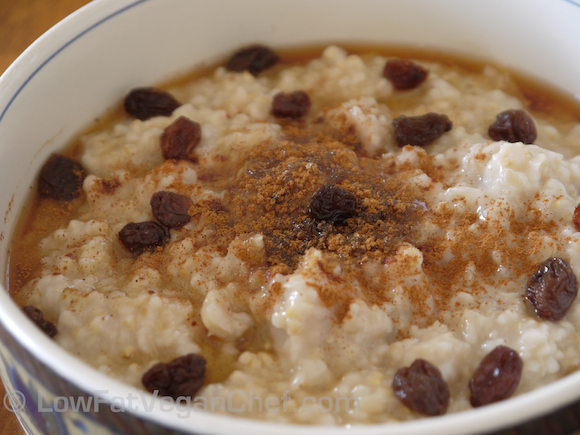
How To Make Steel Cut Oats In A Rice Cooker Or On The Stove with cinnamon, brown sugar and raisins

What Are Steel Cut Oats/Irish Oats?

Steel cut oats are whole grain oat groats (the inner portion of the oat kernel) which have been cut into only two or three pieces horizontally. They are golden in color and resemble mini rice particles and are cylinder-like.

LivingPrepared has a good picture of rolled oats vs steel cut oats. Rolled oats are on the left, steel cut are on the right.

How do steel cut oats differ from rolled oats (old fashioned oats)?

Rolled oats a.k.a. old fashioned oats, are flake oats that have been steamed, rolled, re-steamed and toasted. Due to all of this additional processing they have lost some of their natural taste, nutrition and texture. They are just a more refined form. Most people get confused and think rolled oats are unprocessed and naturally come this way, and that instant oatmeal is the only oat that is processed. This is not quite correct. Rolled oats are still pretty processed and have undergone many treatments.

What is oatmeal or instant oatmeal then?

Instant oats are very processed compared to steel cut oats, they are pre cooked, dried and partially powdered with some flakes left. All you do is add hot water since they are already cooked and broken down. They usually come in packets with sugar and seasonings already in them.

This is why some people choose to eat only steel cut oats, or Irish oats as they are like the whole grain version of oats and the least processed.

Oatmeal Helps Lowers LDL (Bad) Cholesterol

Oatmeal is full of soluble fiber, which we know lowers LDL levels. Experts aren’t exactly sure how, but they have some ideas. When you digest fiber, it becomes gooey. Researchers think that when it’s in your intestines, it sticks to cholesterol and stops it from being absorbed. So instead of getting that cholesterol into your system — and your arteries — you simply get rid of it as waste.

In a study published in the American Journal of Clinical Nutrition, researchers tested cholesterol-lowering drugs against cholesterol-lowering foods in a group of thirty-four adults with high cholesterol. Oat products were among the chosen foods. The results were striking. The diet lowered cholesterol levels about as well as cholesterol drugs. WebMD

Even if you’re not eating cholesterol containing foods (all animal products contain cholesterol because only animals produce cholesterol, not plants) you can still lower your LDL (bad) cholesterol by eating oatmeal, which is helpful for some who still have high cholesterol on a vegan diet. The main reason some vegan diets don’t completely save you from having high cholesterol, is because of the amount of rich plant fats we tend to eat when compensating for a lack of meat and cheese. Salad dressing oils, battered or fried vegetables, fried snacks, vegan pastries and cakes, cookies, crackers etc. When you eat a lot of fatty foods this raises the amount of cholesterol you produce yourself, which is not good. So switching a high fat vegan meal to a low fat meal of oatmeal can make a big difference in your cholesterol numbers and health.

How much oatmeal do I need to cook for one person?

Steel cut oats can expand up to 4 times their dry size. For one person you can make about 1/4 cup for a single serving. When I’m making steel cut oats for my family, I usually make at least 1-1 1/2 cups because then there’s enough for everyone to have a satisfying breakfast. You can also save any leftovers and store it in the fridge for a quick breakfast the next day.

How To Cook Steel Cut Oats (Irish Oats) In a Rice Cooker

(For stovetop or microwave directions scroll down to the bottom)

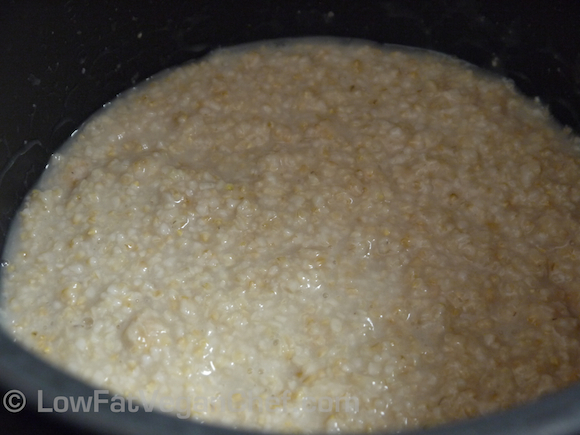
To make your oats, you have to decide how thin you like them. I personally like mine a little thick, like in the picture, as opposed to a thin porridge, so I use a ratio of 3 parts water to 1 part oats. You can use a 4:1 ratio of water to oats if you like it thinner.

I have used several different types of rice cookers. At home I have a Zojirushi 5 1/2 cup rice cooker which has a lot of functions like white rice, brown rice, mixed rice, porridge and even a cake setting! It works awesome and I use the porridge setting for steel cut oats on it. What’s great about the Zojirushi is it has an internal programmable clock and you can tell it EXACTLY what time you want your rice/grain/porridge ready. So if you want to eat breakfast at 7 am, you set it for 7 am (in military time 07:00) and it will be ready to go at that time. Just do the process below, put the oats and water in and press start the night before and your breakfast will be hot and ready with no hassle the next day. If you’re a single or a couple they have a smaller version the Zojirushi 3 cup rice cooker as well.

I’ve also used this Hamilton Beach Digital Deluxe Rice Cooker that is great for a family on a budget, it has a white rice and a whole grain setting. I use the whole grain setting on this rice cooker for steel cut oats. It works a little differently, it has a delay timer. So what I do is set it so that it starts while I’m sleeping. If I go to bed at 11 pm and want to eat at 7 am, I would set the delay timer for about 5-6 hour delay. 5 hours for a large portion, 6 hours for a smaller portion (single size) and then it will start cooking when the delay timer hits zero and your oats will be ready for breakfast.

(Please do NOT put anything like dairy or animal products that should be refrigerated into a rice cooker overnight as this is a health risk. Only use water and dry grains when using a delay or programmed timer. So don’t add milk or cream to your oats and let it sit out all night, you can stir it in in the next morning before eating)

This is great for when you don’t have time to cook steel cut oats on the stove and want a quick breakfast.

Step 1: Measure out 1 cup of steel cut/Irish oats (or your desired amount). Pour it into a mesh strainer. Give it a rinse to clear any dust or debris. Pour it into the rice cooker.

Step 2: Measure out 3-4 cups of water (or your desired amount) and pour it into the rice cooker.

Step 3: Press the porridge/whole grain/brown rice setting (whichever setting your rice cooker has) and let it cook. It’s going to take a while to cook, similar to cooking brown rice. It should take about an hour to hour and a half depending how much you put in.

How To Make Steel Cut Oats In A Rice Cooker Or On The Stove with cinnamon, brown sugar and raisins

Step 4: Your steel cut oats are done and ready to season. You can add more water to thin if desired, add almond milk, maple syrup, brown sugar, cinnamon, raisins, sliced bananas, granola etc. Whatever you’d like to dress it up. This way you can control the amount of sugar in your oatmeal instead of eating the prepackaged instant oatmeal.

Step 5: Serve!

How To Make Steel Cut Oats In A Rice Cooker Or On The Stove with cinnamon, brown sugar and raisins

How To Cook Steel Cut Oats (Irish Oats) On The Stove:

Add your 1 cup of oats to 3-4 cups of water to a large pot and bring to a low boil over medium high heat. When it’s boiling, reduce the heat to low and simmer for 20 minutes and stir every few minutes to prevent sticking. Season as desired and serve.

Time saving tip: Boil 4 cups of water the night before and add 1 cup of dry steel cut oats. Stir and let it soak over night. In the morning put it into a pot and cook over low heat for 9-12 minutes until the oats are tender. Season as desired and serve. (If you use this method, disregard the method above)

How To Cook Steel Cut Oats (Irish Oats) In a Microwave:

I have not tried this method personally, but it should be really easy. Place 1/2 cup of steel cut oats into a large (at least) 8 cup microwave safe bowl (not metal) and pour 2 cups of water into it. Make sure you use a large bowl to prevent it from boiling over in the microwave. Microwave on high for 5 minutes. Remove and stir and microwave on high for another 5 minutes. (Microwave times might vary depending on strength) Season as desired and serve.

What if I don’t have time to make steel cut oats every day?

The solution is pretty easy, just make a big batch and save the leftovers in individual portions in the fridge. If it’s for one person, multiply your recipe by 5 so you have enough for each day of the week. So you might use 1 1/4 cups to 2 cups of dry steel cut oats, depending if you’re a woman or a really athletic man. And then you cook it with 3-4 times the amount of water. Season it and then separate into containers. Then all you have to do is reheat it in the microwave the next day and add any additional water or non-dairy milk to thin it out, stir and eat. It’s a great time saver if you want to eat more whole foods, without having to rely just on instant oatmeal.

What do you think of this recipe? Have you made steel cut oats before? Are you going to try now?

Filed Under: Breakfast, Eat To Live - Dr. Fuhrman Recipes, How To Tagged With: easy, fat-free, gluten-free, nut-free, oats, soy-free

  • « Go to Previous Page
  • Page 1
  • Page 2
  • Page 3
  • Page 4

Primary Sidebar

Follow Us:

Newsletter

Get The Low Fat Vegan Starter Kit

natural organic skin care line

Free Skincare Samples

Earn Free Crypto At Binance

Earn Free Bitcoin on Gemini Exchange

Earn $10 in Bitcoin With Gemini Exchange
Dr. Fuhrman
Dr. Fuhrman
Dr. Fuhrman

Tags

80/10/10 apple avocado banana blueberries breakfast broccoli Carrots celery chickpeas cilantro corn cucumber Curry dill dinner easy Eat To Live fat-free gluten-free how-to Indian Dishes lemon low-fat mango mexican mushrooms nut-free oil-free pasta pineapple plant-based raw raw vegan rice smoothie soup soy-free spinach tofu tomato tomatoes vegan vegetarian vitamix

Secondary Sidebar

Recipes:

  • Cooked Vegan Recipes
  • *My Recipe Books
  • Breads and Baked Goods
  • Breakfast
  • Brunch
  • Burgers
  • Casseroles
  • Curries
  • Desserts
  • Dinner
  • Dips for Veggies or Chips
  • Eat to Live-Dr. Fuhrman Recipes
  • Engine2Diet
  • Ethiopian Dishes
  • Greek
  • Green Dishes
  • Holiday
  • Indian Dishes
  • Mexican
  • One Pot Meals
  • Pasta
  • Pizza
  • Quinoa
  • Salads
  • Sandwiches and Wraps
  • Raw Vegan Recipes
  • 80/10/10
  • Raw Breakfast
  • Raw Desserts
  • Raw Dips
  • Raw Dressings
  • Raw Entrees
  • Raw Juices
  • Raw Salads
  • Raw Smoothies
  • Raw Snacks
  • Raw Soups
  • Sauces
  • Side Dishes
  • Slow Cooker Recipes
  • Snacks
  • Soups and Stews
  • Spices/Seasonings
  • Sushi
  • Thai
  • Vietnamese

Copyright © 2026 · Foodie Pro & The Genesis Framework