• Skip to primary navigation
  • Skip to main content
  • Skip to primary sidebar
  • Skip to secondary sidebar

Plant Based U

Fat-Free and Low Fat Vegan Plant Based Recipes

  • Home
  • Recipes
    • Raw Vegan Recipes
    • Cooked Vegan Recipes
    • Eat to Live Dr. Fuhrman Recipes
  • Products
  • Coaching
  • Videos
  • Articles
  • About
    • What Is Low Fat Vegan/Whole Foods Plant Based
    • Resources
  • Contact

Saving Money

Fb-Button

The Importance of Reading Labels. Organic Doesn’t Always = Best

February 19, 2013 by Veronica Grace 57 Comments

Fb-Button

Shopping for healthy foods can be somewhat challenging and confusing these days. Most people purchase products based on what the package looks like and health claims put on the front. They don’t always read the ingredient list or check out the nutritional information.

One thing I find particularly confusing and frustrating is the label “organic”. Especially when it comes to processed foods. Organic is only one criteria to determine whether a food is “healthy” and a good choice. Often foods labeled organic can have lots of oil and salt which can make them unhealthy regardless of being organic.

Let’s take a look at some of the organic and conventional canned beans that can be purchased at a regular grocery store. (Please bear in mind I am in Canada and there’s only about 4 choices of brands for each product and there will be more in the USA)

Black Beans
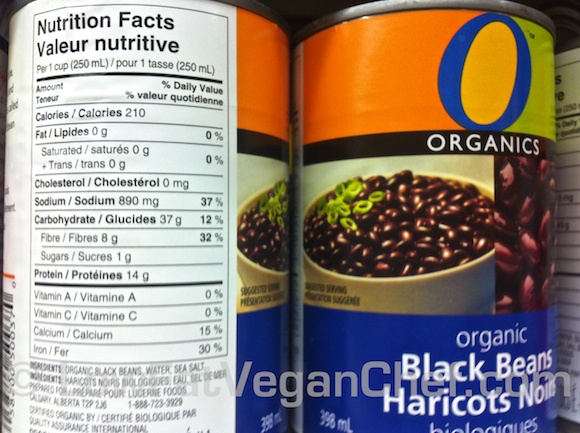
1 cup of organic black beans is 210 calories with 890 mg of sodium. This is shocking! You want to look for foods with around a 1:1 ratio of calories per serving and mg of sodium. This is far too much sodium for a packaged food for me to ever put in my shopping cart. It doesn’t even matter that it’s organic so I just leave it on the shelf.
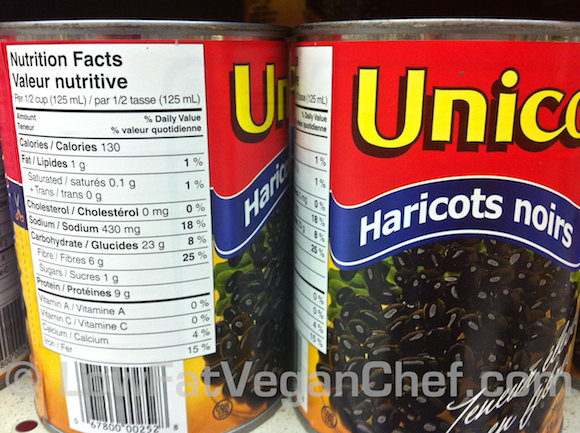
So what about a non-organic brand of black beans such as this popular brand? Well this label is deceiving. They have changed the serving size to only 1/2 cup. For 1 cup of these black beans it contains 260 calories and 860 mg of sodium. This brand has more calories and only slightly less sodium in it. This wouldn’t make it into my shopping cart either.
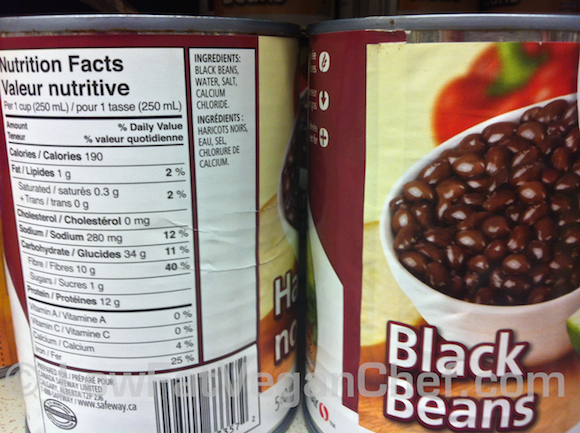
There’s lots of different brands so let’s check out another one. This one is 190 calories per 1 cup and only 280 mg of sodium. This leads me to believe there is less oil and sodium used in the recipe, and while the sodium isn’t quite at the 1:1 ratio it seems to be the best option for non-organic black beans at a fair price. For conventional, yes this could go into my shopping cart if there wasn’t any sodium free variety available.

Chickpeas/Garbanzo Beans

Chickpeas are another product frequently bought by vegetarians and health seekers so let’s take a look at some of these labels.
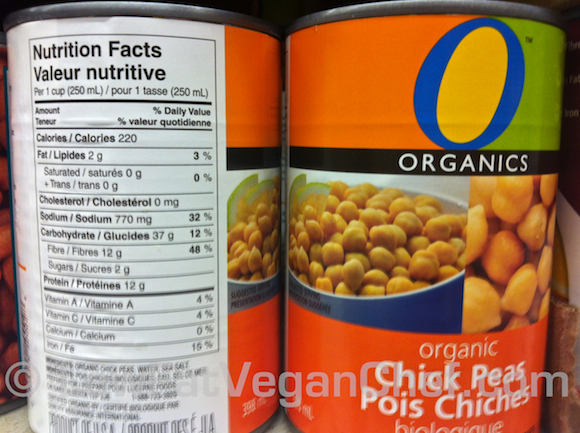
Organic chickpeas, looks good on the front, but check out the nutritional information on the back. 1 cup has 220 calories and 770 mg of sodium. This is far too high and it would not make it into my shopping cart.
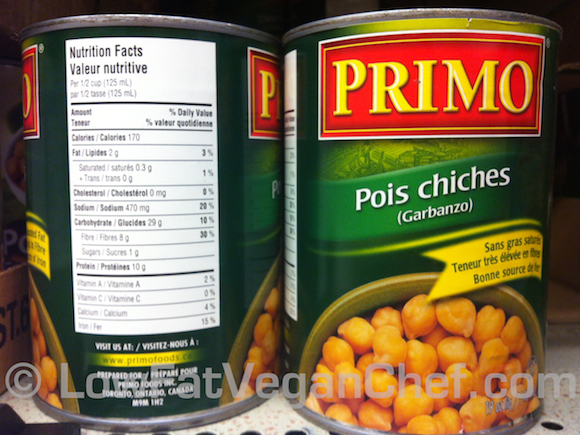
This label is again playing the little trick of changing the serving size. For a 1 cup portion of chickpeas it has 340 calories and 940 mg of sodium. This is shocking! This product would never ever make it into my shopping cart. That is more salt than in a frozen dinner or a pizza.
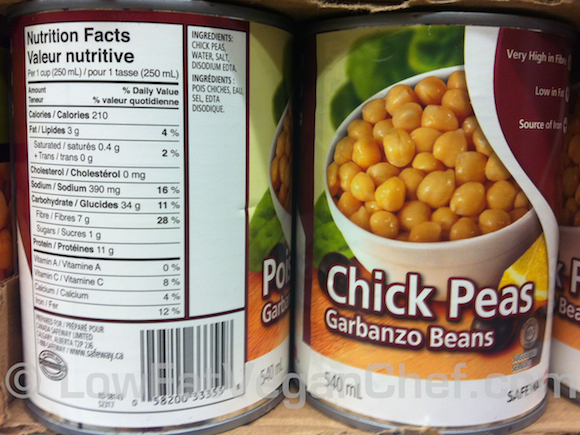
Here’s a more acceptable nutritional label. 210 calories and 390 mg of sodium. It’s not low sodium, but it seems to be one of the “better” choices for the price at the grocery store. If there were no low sodium/sodium free varieties at the store, I would choose this one.

When comparing organic to traditional products there are definitely some clear winners and losers. Overall there is one brand of organic beans that you can always count on to be healthy and good for you. I don’t need to compare any more types of beans, I think you get the message that even products that should be essentially the same are not and it’s important to always read the labels.
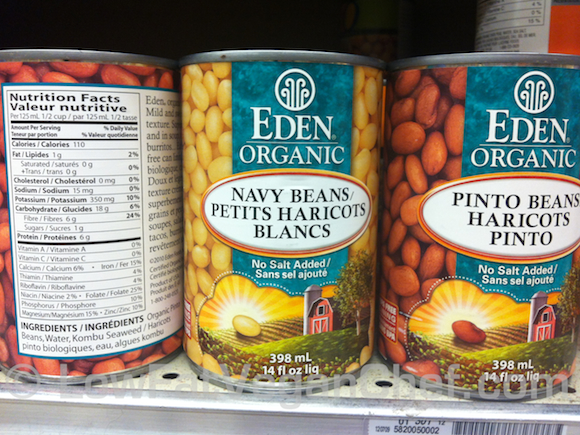
Eden Organics uses no added salt and uses seaweed instead to add some additional flavor to the beans. The great news is that they are also oil free and contain no other preservatives. They also come in a BPA free can, so all around they are the best choice for canned beans. You can find them at regular and health food stores. The only downside is that they are often more expensive than their competitors, but their product is better.

The good thing is, once you find out what brand is the healthiest you don’t have to spend time reading labels anymore for that product, just repurchase it every time. Even if the other brands that are high sodium and are on sale, I still don’t buy them. Sometimes they are in BPA lined cans and have salt and oil in them and there’s no point in buying unhealthy plant foods just because it’s on sale. The other ones are only a few cents more each.

Alternatively you can cook your own beans and control the amount of sodium and reduce the cost of using beans in your cuisine at home.

I detail this in my Comfort Soups To Keep You Warm recipe ebook. You’ll learn how to cook dried beans from scratch, make your own vegetable broth (that is more flavorful than store bought and low sodium)

Cook dried chickpeas at home

homemade vegetable stock

Tuscan Roasted Tomato Chickpea Soup made from scratch

All this and more is can be found in Comfort Soups To Keep You Warm

Are you surprised by any of these labels? Do you read the nutritional labels of everything you purchase at the store? Any other products you’d like me to investigate at the grocery store?

Filed Under: Articles, How To, Saving Money Tagged With: canned black beans, canned chickpeas, Eden Organics, garbanzo beans, high sodium, is organic food better than conventional

Canadians Do You Do Extreme Vegan Couponing? Here’s How!

December 16, 2011 by Veronica Grace 3 Comments

Fb-Button

(For my American readers click here)

Extreme Couponing is not just for the thrifty American Shopper. There are lots of deals to be had by the Canadian consumer!

I’m part way through reading a book called Be Centsable – How To Cut Your Household Budget In Half that teaches you how much easier and worthwhile using coupons is than you ever thought before.

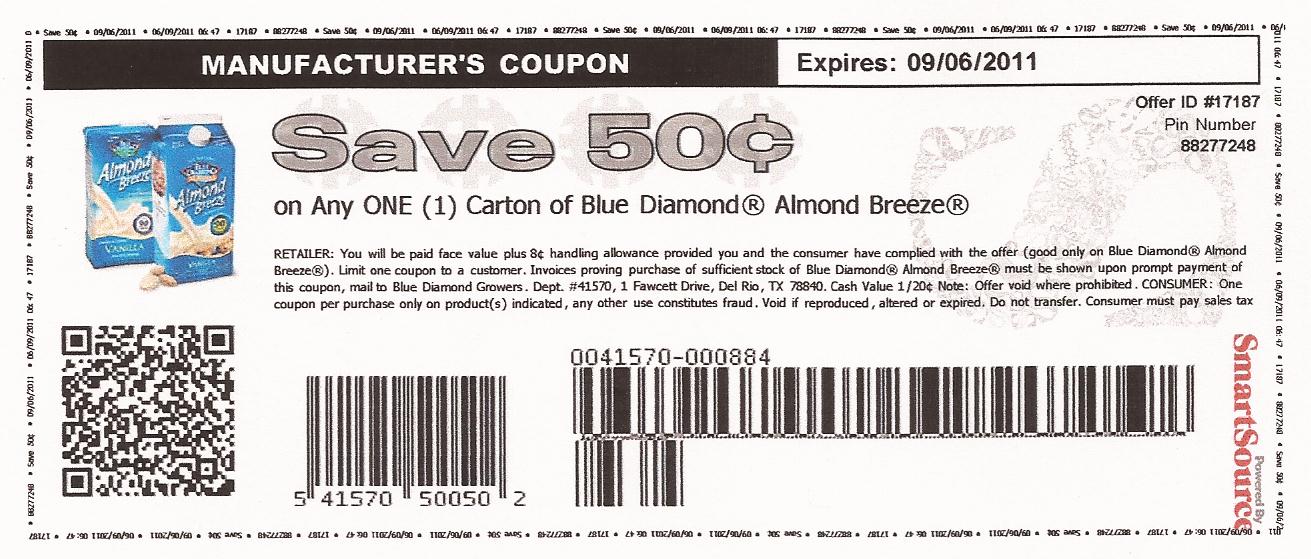
One thing that I didn’t realize is that you CAN stack coupons, but not the exact same coupon. For example you can use a manufacturers coupon that you get in the mail or online, on top of a store coupon (or sale) for the same product. So you can effectively get your product at 50%, 75% or almost 100% off!

This is especially helpful for those with families or babies that go through a lot of extra care products or that need specialty food items. Also for those on a student or single person budget. I was surprised how much I found out within an hour of looking for and signing up for access to free coupons online. It pays to do a little research!

Keep in mind that you will have to give out some personal information to either download or have online coupons mailed to you, but these databases are run securely, you can unsubscribe at any time and you don’t really have to use your real name or your main email address. If you’re concerned about it, make a new email address just for these coupon sites that way when you’re ready to look for your coupons they’re all in one place if you easily get distracted or overwhelmed with daily emails.

The trick to optimizing coupon usage is to do a little research before hand.

#1. Write down prices of products you regularly buy at your local grocery or discount stores (both regular and sale prices), you can also use the receipt and do it at home later and just try to remember if your products were on sale or not. You need to know exactly how much your products cost you at regular price, so you can be aware of cheaper or sale prices elsewhere.

#2. Pick up the weekly flyer at your local grocery store and see if they have any holiday sales on (like a certain % off of your purchase, or $ amount off a total purchase price) in store coupons, or sales on products you need to buy anyway.

#3. Stack your manufacturer coupons on top of the in store coupon or sale price at the check out counter and start saving!

Here is my list of awesome sources for Canadian Coupons:

(For my American readers click here)

Smart Canucks an awesome website that shows coupons from multiple websites including save.ca and brandsaver.ca

Save.ca

The Healthy Shopper  For Organic and Natural Products – This one is awesome!

Brand Saver

Websaver

Flyerland

Right At Home

Go Coupons

Well.ca doesn’t have coupons, but they do run sales and  offers free shipping in Canada which is great

Now remember, you’re not going to start seeing many savings if you just use a coupon here or there and save $0.50 or $1.00 off at the till on top of the sale price, you want to start getting excited about it, watching for sales, stocking up on things you buy anyway when you have coupons and in store discounts and holding off buying extra until you do. You have MUCH better things to be spending your extra savings on like reducing debt, mortgage payments, RSP saving, tuition saving, investing, vacations, etc. Your grocery budget will expand to whatever you let yourself spend, so if you take those direct savings, watch for deals and sales, you will have extra money to do what you need with that didn’t get spent at the grocery store!

For more information on how to make using coupons and organizing your shopping easier check out these books:

Now that you have some awesome resources to get you thinking of ways to save on your every day groceries and household products, what are you waiting for?

Are you going to start looking for coupons before going shopping next week?

Filed Under: Articles, How To, Saving Money Tagged With: canada, canadian, coupon, discount, extreme couponing, groceries, save, shopping

Extreme Vegan Couponing To Save On Groceries: Can You Do It Too?

December 16, 2011 by Veronica Grace 5 Comments

Fb-Button

(For Canadian readers click here for your extreme coupon links)

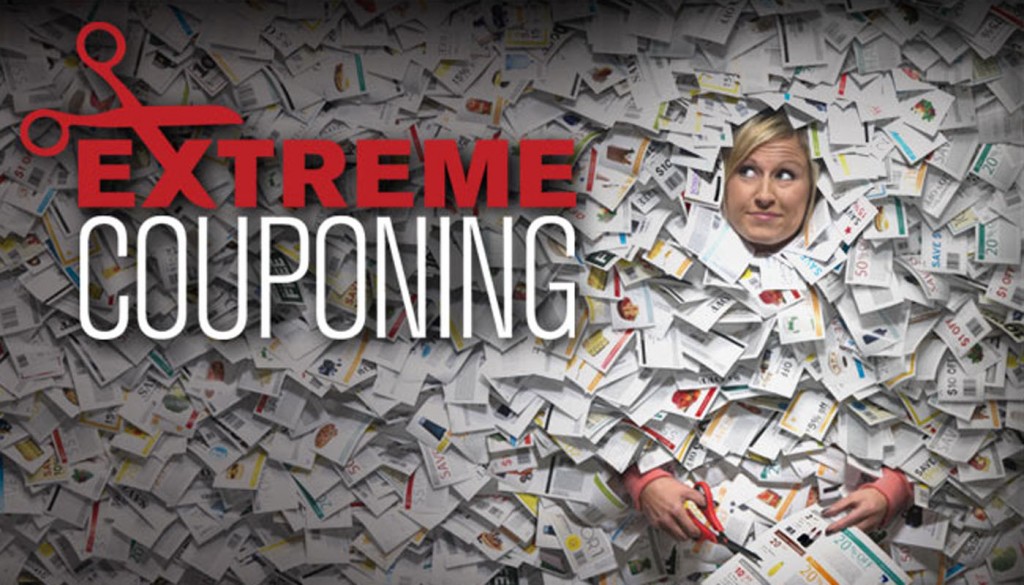
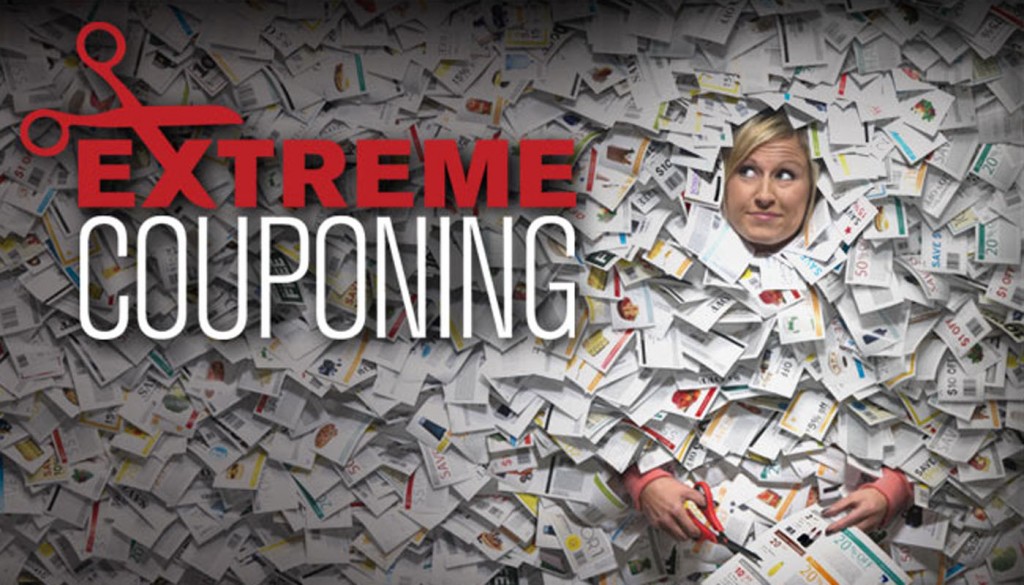
You may have heard about this show called Extreme Couponing that shows how regular people live on an extremely tight or thrifty budget, often paying only a few dollars for hundreds of dollars of groceries and personal care products because their coupons paid the rest.

To some, it may seem silly, like a full time job in coupon scavenging and clipping coupons like crazy in every single flyer every week, but it doesn’t have to be this way to make a big difference in your food cost spending. But when it comes to quality ingredients, organic produce and products can be expensive, so it does pay to save.

Recently I ordered a book from Amazon called Be Centsable – How To Cut Your Household Budget In Half (what a great title I might add!) and I’m only part way through it and I’m convinced that we could be saving A LOT more money if I just collected coupons on products we already regularly buy.

One thing that I didn’t realize is that you CAN stack coupons, but not the exact same coupon. For example you can use a manufacturers coupon that you get in the mail or online, on top of a store coupon (or sale) for the same product. So you can effectively get your product at 50%, 75% or almost 100% off!

This is especially helpful for those with families or babies that go through a lot of extra care products or that need specialty food items. Also for those on a student or single person budget. I was surprised how much I found out within an hour of looking for and signing up for access to free coupons online. It pays to do a little research!

Keep in mind that you will have to give out some personal information to either download or have online coupons mailed to you, but these databases are run securely, you can unsubscribe at any time and you don’t really have to use your real name or your main email address. If you’re concerned about it, make a new email address just for these coupon sites that way when you’re ready to look for your coupons they’re all in one place if you easily get distracted or overwhelmed with daily emails.

The trick to optimizing coupon usage is to do a little research before hand.

#1. Write down prices of products you regularly buy at your local grocery or discount stores (both regular and sale prices), you can also use the receipt and do it at home later and just try to remember if your products were on sale or not. You need to know exactly how much your products cost you at regular price, so you can be aware of cheaper or sale prices elsewhere.

#2. Pick up the weekly flyer at your local grocery store and see if they have any holiday sales on (like a certain % off of your purchase, or $ amount off a total purchase price) in store coupons, or sales on products you need to buy anyway.

#3. Stack your manufacturer coupons on top of the in store coupon or sale price at the check out counter and start saving!

I did some research and found some AWESOME sites for free coupons in both Canada (for my fellow Canadians) and the USA. I really thought that Canada would be at a disadvantage for some extreme couponing, but I’ve already downloaded a bunch of coupons for natural and organic products that we buy anyways, that I can now save money on next time at the health food store. How exciting!

Here is my list of resources for American Coupons:

For Canadian readers click here

Vegan Coupons Go to their Facebook page and great great coupons on vegan friendly products!

Be Centsable Coupon Database (Tracks every coupon, every store sale, including retail! Save big and plan out your grocery, clothing and personal care shopping at a deep discount)

Shop At Home

Coupons.com

Cool Savings

Red Plum

Cell Fire

All You Magazine Subscription Coupons: Every issue of All You contains valuable coupons for fashion, food, makeup and household basics. With high coupon totals each month (more than $60 recently), this magazine pays for itself many times over.

Now remember, you’re not going to start seeing many savings if you just use a coupon here or there and save $0.50 or $1.00 off at the till on top of the sale price, you want to start getting excited about it, watching for sales, stocking up on things you buy anyway when you have coupons and in store discounts and holding off buying extra until you do. You have MUCH better things to be spending your extra savings on like reducing debt, mortgage payments, RSP saving, tuition saving, investing, vacations, etc. Your grocery budget will expand to whatever you let yourself spend, so if you take those direct savings, watch for deals and sales, you will have extra money to do what you need with that didn’t get spent at the grocery store!

For more information on how to save big money on couponing check out these resources:

Be Centsable How To Cut Your Household Budget In Half

Pick Another Check Out Lane, Honey

The Coupon Mom’s Guide To Cutting Your Grocery Bill In Half

If you want to stay organized on the go, check out these cool wallets!

Deluxe Coupon Organizer Wallet

Double Deluxe Coupon Organizer Wallet

What about you? Have you ever clipped coupons, stacked coupons or gone to any of the sites I’ve listed above?

Filed Under: Articles, How To, Saving Money Tagged With: be centsable, clip, coupons, discount, extreme couponing, free, grocery, manufacturer, sale, shopping, stacking

Primary Sidebar

Follow Us:

Newsletter

Get The Low Fat Vegan Starter Kit

natural organic skin care line

Free Skincare Samples

Earn Free Crypto At Binance

Earn Free Bitcoin on Gemini Exchange

Earn $10 in Bitcoin With Gemini Exchange
Dr. Fuhrman
Dr. Fuhrman
Dr. Fuhrman

Tags

80/10/10 apple avocado banana blueberries breakfast broccoli Carrots celery chickpeas cilantro corn cucumber Curry dill dinner easy Eat To Live fat-free gluten-free how-to Indian Dishes lemon low-fat mango mexican mushrooms nut-free oil-free pasta pineapple plant-based raw raw vegan rice smoothie soup soy-free spinach tofu tomato tomatoes vegan vegetarian vitamix

Secondary Sidebar

Recipes:

  • Cooked Vegan Recipes
  • *My Recipe Books
  • Breads and Baked Goods
  • Breakfast
  • Brunch
  • Burgers
  • Casseroles
  • Curries
  • Desserts
  • Dinner
  • Dips for Veggies or Chips
  • Eat to Live-Dr. Fuhrman Recipes
  • Engine2Diet
  • Ethiopian Dishes
  • Greek
  • Green Dishes
  • Holiday
  • Indian Dishes
  • Mexican
  • One Pot Meals
  • Pasta
  • Pizza
  • Quinoa
  • Salads
  • Sandwiches and Wraps
  • Raw Vegan Recipes
  • 80/10/10
  • Raw Breakfast
  • Raw Desserts
  • Raw Dips
  • Raw Dressings
  • Raw Entrees
  • Raw Juices
  • Raw Salads
  • Raw Smoothies
  • Raw Snacks
  • Raw Soups
  • Sauces
  • Side Dishes
  • Slow Cooker Recipes
  • Snacks
  • Soups and Stews
  • Spices/Seasonings
  • Sushi
  • Thai
  • Vietnamese

Copyright © 2026 · Foodie Pro & The Genesis Framework